
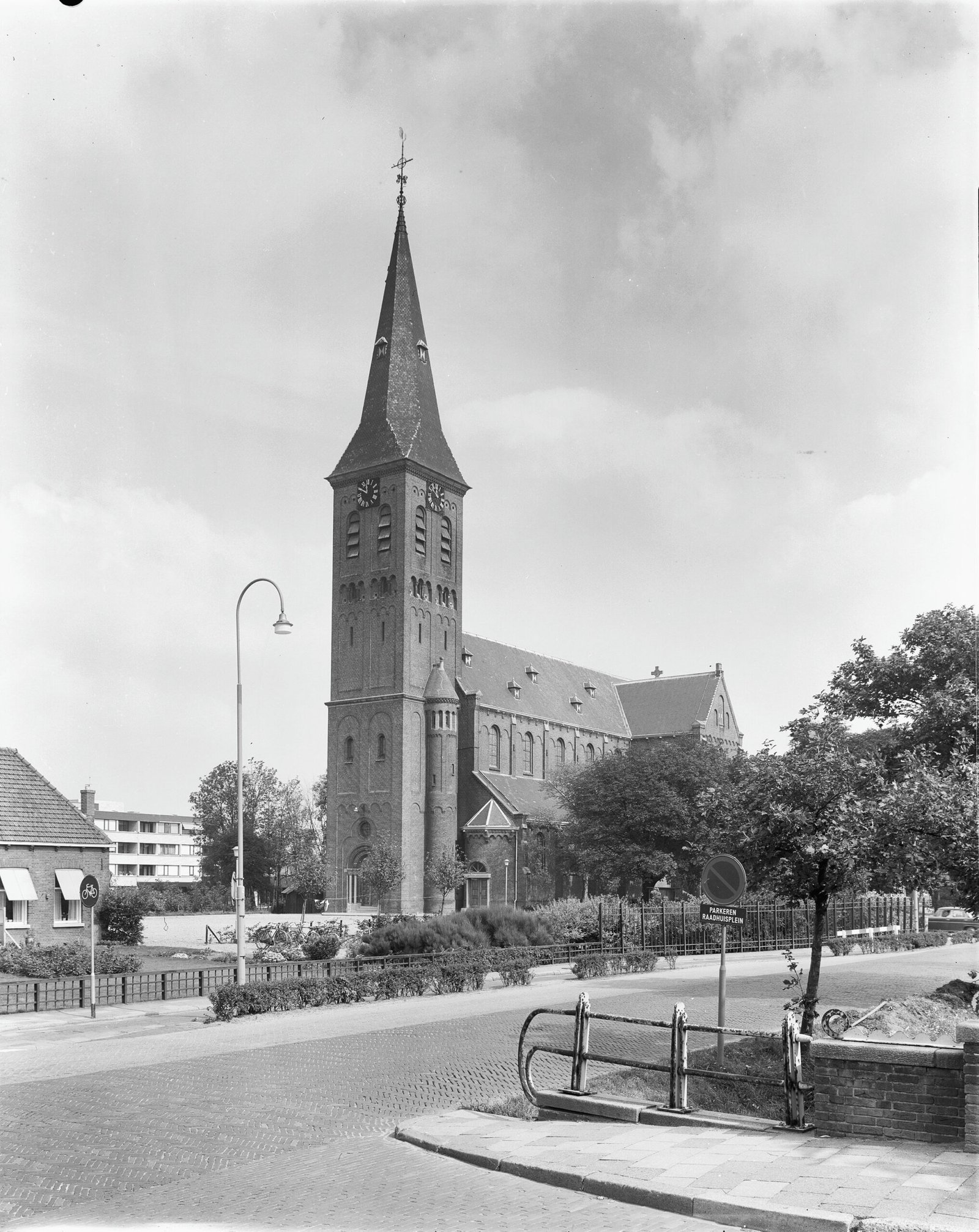
A neo-Romanesque parish church in the Dutch town of Pijnacker, built in 1892 and distinguished by its cruciform plan and sculptural entrance relief depicting John’s baptism of Christ.
At a glance
Saint John the Baptist is a Roman Catholic parish church of modest scale but architectural distinction. Designed by architect Adrianus Bleijs and completed in 1892, it represents the neo-Romanesque vocabulary applied to Dutch religious architecture at the turn of the twentieth century. The building and its attached presbytery hold national monument status.
History
The church was constructed in 1892 under the jurisdiction of the Roman Catholic Diocese of Haarlem. When ecclesiastical boundaries were redrawn, the parish transferred to the Diocese of Rotterdam. The Diocese of Haarlem itself underwent reorganization, becoming the Diocese of Haarlem-Amsterdam. The organ, a notable internal feature, was installed in 1899 by P.J. Adema and Sons.
What you see
The church follows a cruciform groundplan executed in the neo-Romanesque style. Above the entrance door, a bas-relief carving depicts the Baptism of Jesus by John the Baptist, providing both iconographic clarity and sculptural enrichment to the façade. The organ of 1899 represents contemporary craftsmanship in ecclesiastical instrument-building.
Cultural significance
As a work of architect Adrianus Bleijs, the church exemplifies Dutch ecclesiastical design in the late nineteenth century. Its architectural form and decorative program reflect the revival styles that dominated European church architecture during this period, while serving as a marker of the Roman Catholic community’s presence and permanence in Pijnacker.
Key facts
- Country: Netherlands
- City: Pijnacker-Nootdorp
- Built: 1892
- Architect: Adrianus Bleijs
- Style: Neo-Romanesque
- Organ: 1899, P.J. Adema and Sons
- Status: Registered national monument (building and presbytery)
- Coordinates: 52.020636, 4.434319
Practical information & getting there
The church is located in Pijnacker-Nootdorp in South Holland. Contact the parish or local tourism information for current visiting hours and access details.
Sources & resources
Find it on the map
See this place and what’s around it →📷 Become a Cultural Heritage Online photographer
Share your photos of places: they stay published under your name as the author. The more they're seen, the more you get noticed — and soon a contest will reward the most appreciated photos.
Log in or sign up free to add a photoIs this page about you?
This page is read by travellers and heritage enthusiasts who find it on Google. Tell us how you are connected to this place and we will take it from there.