
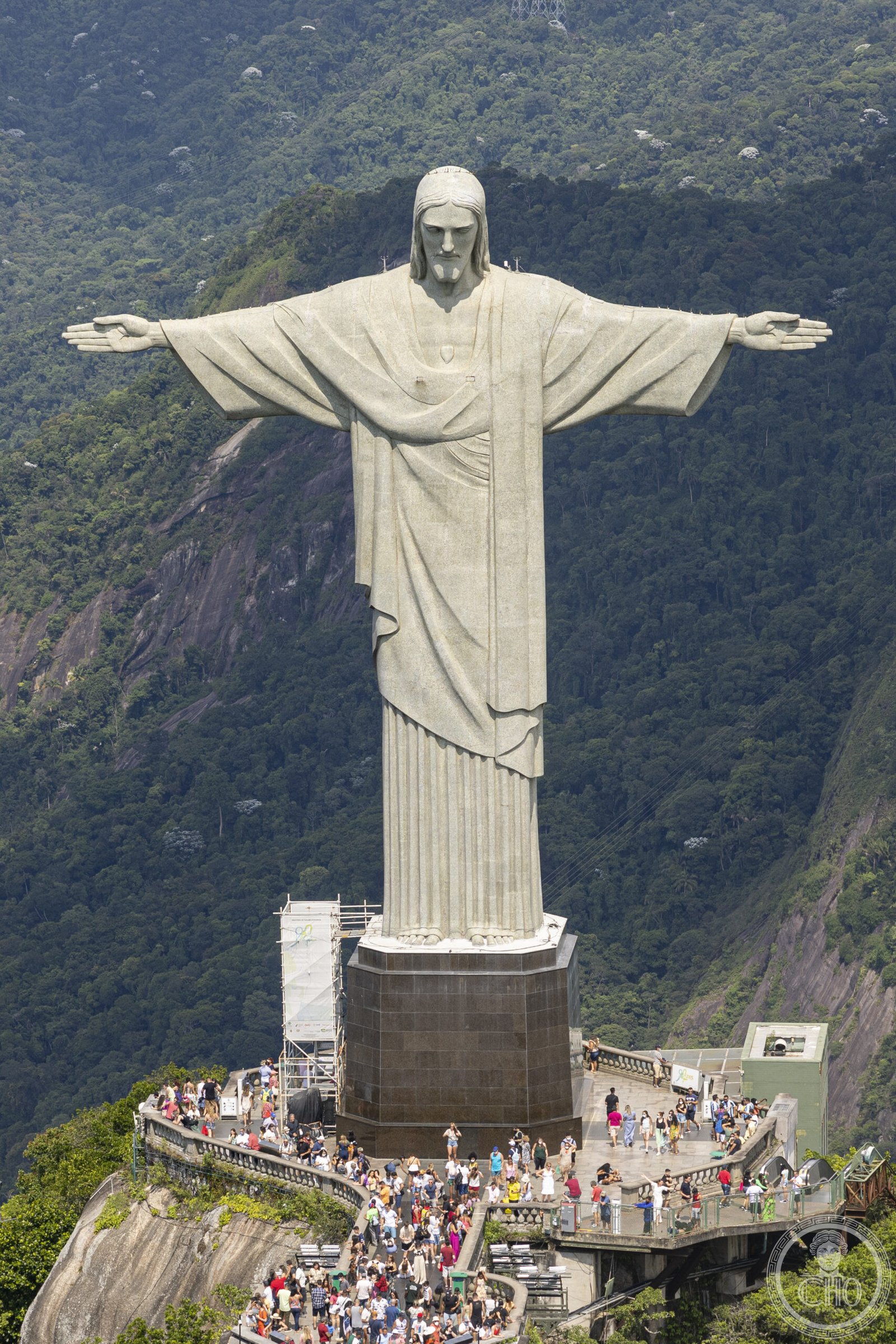
Christ the Redeemer (Cristo Redentor) is an Art Deco statue of Jesus Christ standing atop the 700-metre Corcovado mountain in the Tijuca National Park, overlooking Rio de Janeiro. Created by French-Polish sculptor Paul Landowski and built by Brazilian engineer Heitor da Silva Costa in collaboration with French engineer Albert Caquot, with the face sculpted by Romanian artist Gheorghe Leonida, the statue was constructed between 1922 and 1931 and is recognised as one of the New Seven Wonders of the World (2007).
At a glance
- Type
- Monumental statue / landmark
- Period
- Constructed 1922–1931; inaugurated 12 October 1931
- Style
- Art Deco
- Location
- Corcovado mountain, Tijuca National Park, Rio de Janeiro, Brazil
- Coordinates
- 22.9519° S, 43.2105° W
- Architects / artists
- Paul Landowski (sculpture); Heitor da Silva Costa (engineering); Albert Caquot (engineering); Gheorghe Leonida (face)
- Dimensions
- 30 metres (98 ft) tall, excluding 8-metre (26 ft) pedestal; arms span 28 metres (92 ft)
- Material
- Reinforced concrete and soapstone
Overview
Christ the Redeemer stands at the summit of Corcovado mountain with arms outstretched facing east, offering a panoramic embrace of the city, Guanabara Bay, and the surrounding Atlantic rainforest. The statue is 30 metres tall (excluding its pedestal) with arms spanning 28 metres, and is constructed of reinforced concrete clad in triangular soapstone tiles, which create its distinctive pale, slightly textured surface. It was declared one of the New Seven Wonders of the World following a global poll in 2007 and is the largest Art Deco statue in the world.
History
The idea of a major Christian monument on Corcovado was first proposed in the 1850s and revived in the early 20th century by a group of Brazilian Catholic associations who petitioned for a landmark to mark the centenary of Brazilian independence in 1922. The project was approved in 1921 and construction began the following year, with most of the work carried out between 1926 and 1931. The statue differs considerably from its original design, which showed Christ holding a globe and a cross; the final version with outstretched arms was chosen for its greater visual drama and symbolic resonance. The statue was inaugurated on 12 October 1931 by Brazilian President Getúlio Vargas, with the lighting switched on by a radio signal sent from Rome by Guglielmo Marconi.
What you see
Visitors reaching the summit by the Corcovado rack railway or by road access the statue’s viewing platform and chapel at its base, from which the full scale of the sculpture — 38 metres from pedestal base to the crown — becomes apparent. The panorama from the platform takes in the full sweep of Rio de Janeiro: Sugarloaf Mountain to the south, the beaches of Copacabana and Ipanema, Guanabara Bay with its islands, and the Tijuca rainforest descending the slopes. The soapstone surface of the statue has been repaired and cleaned multiple times; lightning strikes regularly damage the fingers and head, necessitating periodic restoration.
Cultural significance
Christ the Redeemer is the defining symbol of Rio de Janeiro and one of the most recognised images of Brazil worldwide. As a declared New Wonder of the World and a UNESCO-inscribed cultural landscape element (as part of the Rio de Janeiro World Heritage inscription of 2012 covering the Carioca Landscapes), the statue holds exceptional universal value as an example of early 20th-century monumental art integrating engineering, sculpture, and natural setting. It also functions as an active Catholic church, with baptisms and weddings performed in the small chapel within the pedestal.
Practical information
The statue is accessible by the Trem do Corcovado rack railway (departing from Cosme Velho station) or by minibus services from designated stops. The summit is frequently affected by cloud cover, particularly in the morning; afternoon visits often offer clearer conditions. An entrance fee applies; booking in advance is strongly recommended during the Brazilian summer (December–March) and carnival season. The site can be very crowded; early morning opening slots are the least congested.
Getting there
From central Rio de Janeiro, take the metro to Largo do Machado or a taxi/rideshare to Cosme Velho station, where the Corcovado rack railway departs. The railway journey takes approximately 20 minutes and was opened in 1884, predating the statue by nearly 50 years. Alternatively, minibus services depart from Largo do Boticário and from the Tijuca National Park entrance. Visitors to Rio de Janeiro can also combine the Christ the Redeemer visit with Sugarloaf Mountain (Pão de Açúcar) as part of Rio’s classic heritage circuit.
Sources & resources
- Wikipedia: Christ the Redeemer
- UNESCO: Rio de Janeiro: Carioca Landscapes (World Heritage)
- Cultural Heritage Online — curated heritage guides to Italy and the world
See the place
Find it on the map
See this place and what’s around it →📷 Become a Cultural Heritage Online photographer
Share your photos of places: they stay published under your name as the author. The more they're seen, the more you get noticed — and soon a contest will reward the most appreciated photos.
Log in or sign up free to add a photo