
Peace Built in Wood
The Churches of Peace in Jawor and Swidnica, two towns in Lower Silesia in southwestern Poland, are the largest timber-framed religious buildings in the world. Built between 1656 and 1658 in the immediate aftermath of the Thirty Years War, they stand as physical embodiments of the religious compromises encoded in the Peace of Westphalia (1648) and remain living Lutheran congregations to this day. UNESCO inscribed both churches in 2001 as an outstanding testimony to religious tolerance and to the achievements of timber construction in 17th-century Central Europe.
The Peace of Westphalia and Its Architectural Consequence
The Peace of Westphalia ended thirty years of devastating confessional warfare but imposed strict conditions on Protestant worship in the Catholic Habsburg domains of Silesia. Lutherans were permitted to build churches outside town walls, without stone or brick, without towers or bells, and completed within a year — conditions designed to produce modest, temporary structures. Instead, the Protestant communities of Jawor and Swidnica responded with extraordinary architectural ingenuity, erecting massive timber-framed halls that circumvented each restriction while creating buildings of unexpected grandeur and spiritual force.
The Church of Peace in Swidnica
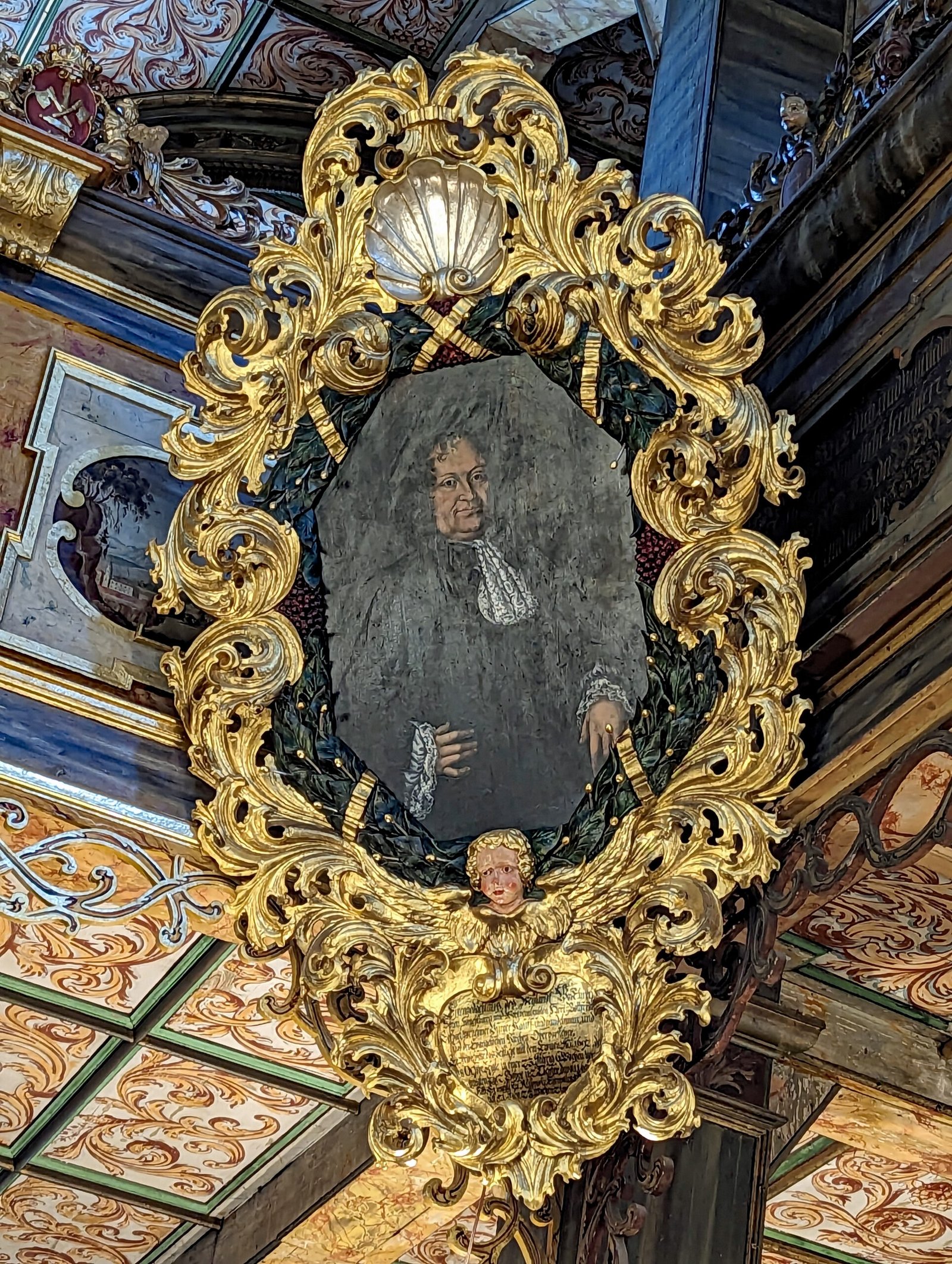
The Swidnica Church of Peace (Kosciol Pokoju) is the larger of the two, capable of accommodating approximately 7,500 worshippers simultaneously — a congregation size rivalling many European cathedrals. The structure is a three-nave timber-framed hall measuring 43 metres long and 14 metres high internally, surrounded by two tiers of painted wooden galleries that wrap around all four sides to maximise seating capacity. The exterior is plastered and painted to resemble stone, disguising the timber construction that Habsburg restrictions required. The interior is an exuberant Baroque theatrical space: painted ceiling, ornate pulpit, carved organ gallery, and altarpiece all contribute to an effect of overwhelming richness achieved entirely in wood and paint.
The Church of Peace in Jawor
The Jawor Church of Peace, though slightly smaller than Swidnica, was completed first, in 1655, and accommodated up to 6,000 worshippers. Its interior follows a similar formula of galleries, painted ceiling, and Baroque furnishings created by local craftspeople and travelling artists working in the Lutheran tradition. The ceiling paintings depict scenes from the Old and New Testaments alongside emblematic images of the struggle for religious freedom, making the interior a pictorial theology of Protestant resistance and salvation. The church also served as a school, and the painted inscriptions and texts covering its surfaces functioned as a didactic environment for Lutheran education.
Timber Construction as Theological Statement
The decision to build in timber — imposed as a humiliation — was transformed by Lutheran theology into a statement about the spiritual value of simplicity and the priority of the Word over material splendour. Yet the communities immediately adorned the timber frames with Baroque painting, gilding, and carving, producing interiors that rivalled Catholic stone churches in their visual complexity. This paradox — imposed poverty sublimated into lavish decoration within a permitted material — makes the Churches of Peace one of the most theologically charged architectural programmes of the 17th century.
The Congregation and Continuity
Both churches have functioned continuously as Lutheran places of worship from their completion to the present day, with only brief interruptions. After World War II the expulsion of the German-speaking Silesian population and their replacement by Polish settlers from the former Eastern Borderlands created a break in congregational continuity: Polish Lutherans inherited churches whose inscriptions, hymnbooks, and paintings were in German. The effort to maintain and interpret this heritage across the linguistic rupture of 1945 has made the churches models for intercultural religious reconciliation in postwar Europe.
Conservation of the Timber Structure
Maintaining timber-framed structures of this scale and complexity presents ongoing conservation challenges. The buildings are susceptible to moisture, fungal decay, insect attack, and fire — hazards managed through continuous monitoring, periodic replacement of damaged structural members, and strict fire suppression systems installed discreetly within the historic fabric. The painted surfaces require regular conservation treatment to prevent flaking and loss. Both churches have undergone comprehensive restoration campaigns since the 1990s funded by Polish and German cultural institutions in a spirit of post-war reconciliation.
UNESCO Recognition
The Churches of Peace in Jawor and Swidnica were inscribed on the UNESCO World Heritage List in 2001 under criteria (iii) and (vi), recognised as unique testimonies to the struggle for religious freedom in 17th-century Central Europe and as outstanding examples of timber religious architecture. Their continued use as active Lutheran congregations, combined with their status as international symbols of tolerance and reconciliation, makes them among the most historically resonant heritage sites in Poland.
Find it on the map
See this place and what’s around it →📷 Become a Cultural Heritage Online photographer
Share your photos of places: they stay published under your name as the author. The more they're seen, the more you get noticed — and soon a contest will reward the most appreciated photos.
Log in or sign up free to add a photoIs this page about you?
This page is read by travellers and heritage enthusiasts who find it on Google. Tell us how you are connected to this place and we will take it from there.