
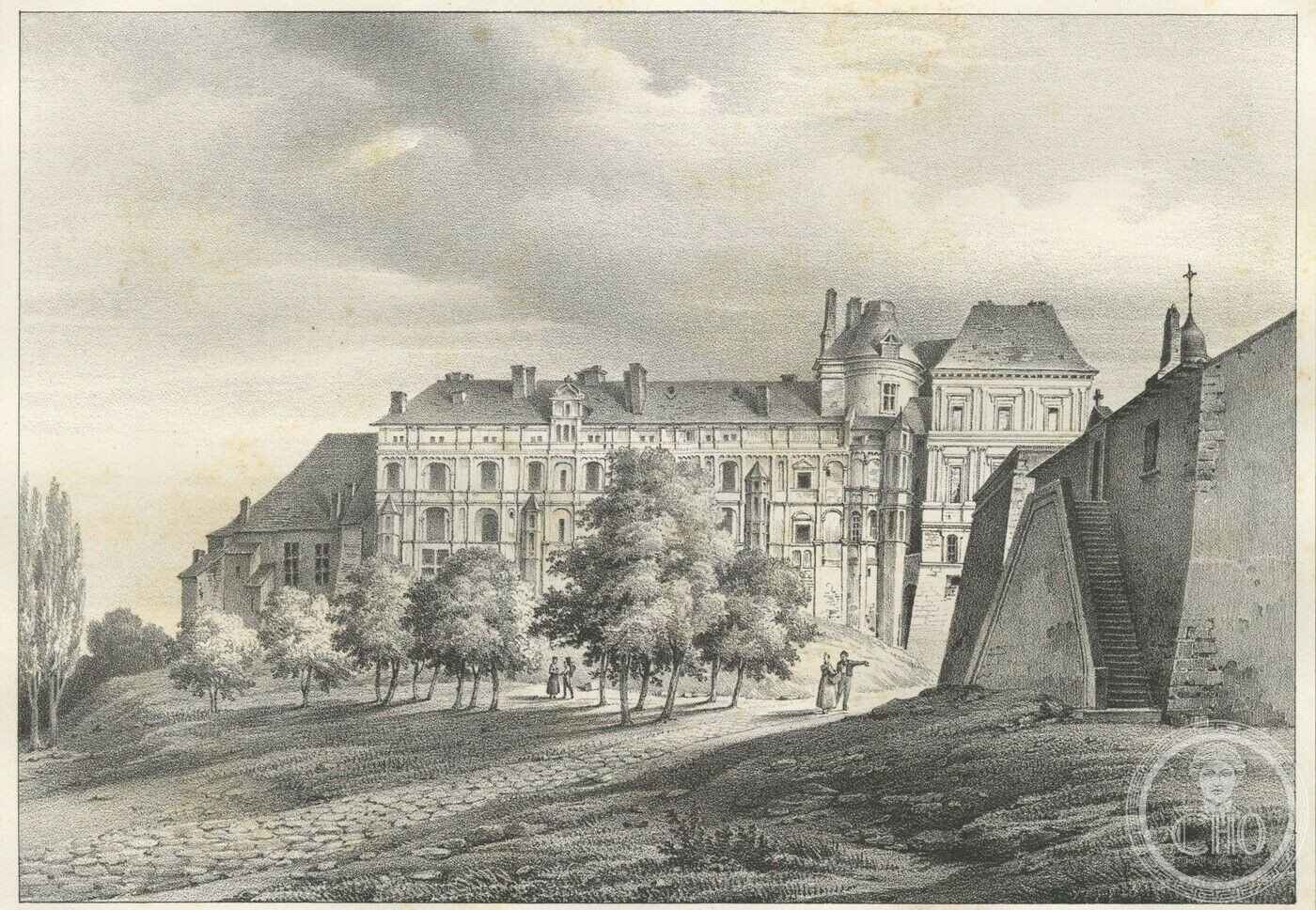
A monumental palace in the Loire Valley that shifted from feudal stronghold to royal residence, embodying four centuries of French architectural evolution across four distinct wings.
At a glance
The Château of Blois dominates the city center, a composite structure built from the 13th to 17th centuries. It served as seat of the Counts of Blois, then dukes and French kings, controlling vast territories across more than three centuries. Four architectural styles coexist within its rectangular footprint, each representing a different era of French design and power.
History
The château began as a medieval fortress in the 13th century, controlling the County of Blois until 1397. It then became the seat of the Duchy of Orléans and rose to royal prominence between 1498 and 1544, when it effectively governed the Kingdom of France under successive monarchs.
Joan of Arc arrived by 1429 to receive a blessing from the Archbishop of Reims before leading her army against the English occupation of Orléans. The château’s strategic and symbolic importance extended far beyond its walls, anchoring French power during the final phase of the Hundred Years’ War.
What you see
Four wings represent distinct periods and styles. Medieval remains from the 13th century survive within the fortification. The Louis XII wing displays Gothic tracery and decorative detail. The Francis I wing introduces Italian Renaissance proportion and ornament. The Gaston of Orléans wing, completed last, reflects Classical restraint and geometry.
The Museum of Fine Arts, established in 1850 within the Louis XII wing, houses paintings, sculptures, and decorative arts spanning the 16th to 19th centuries, including significant tapestry collections.
Cultural significance
Blois exemplifies the architectural dialogue between medieval power and Renaissance refinement that defines the Loire Valley. Its four wings function as a built timeline of French royal taste, documenting the shift from fortress to palace across the Renaissance and Classical periods. The château’s association with Joan of Arc places it within the larger narrative of French national identity and the end of medieval warfare.
Key facts
- Country: France
- City: Blois, Loir-et-Cher
- Coordinates: 47.5855, 1.33095
- Construction: 13th–17th centuries
- Notable visitors: Joan of Arc (by 1429), French kings between 1498–1544
Practical information & getting there
The Château of Blois is located in the city center, making it accessible by foot from Blois’s main districts. For current visiting hours, admission fees, and guided tour availability, consult the official château website or local tourism office. The Museum of Fine Arts operates within the Louis XII wing.
Sources & resources
Find it on the map
See this place and what’s around it →📷 Become a Cultural Heritage Online photographer
Share your photos of places: they stay published under your name as the author. The more they're seen, the more you get noticed — and soon a contest will reward the most appreciated photos.
Log in or sign up free to add a photoIs this page about you?
This page is read by travellers and heritage enthusiasts who find it on Google. Tell us how you are connected to this place and we will take it from there.