
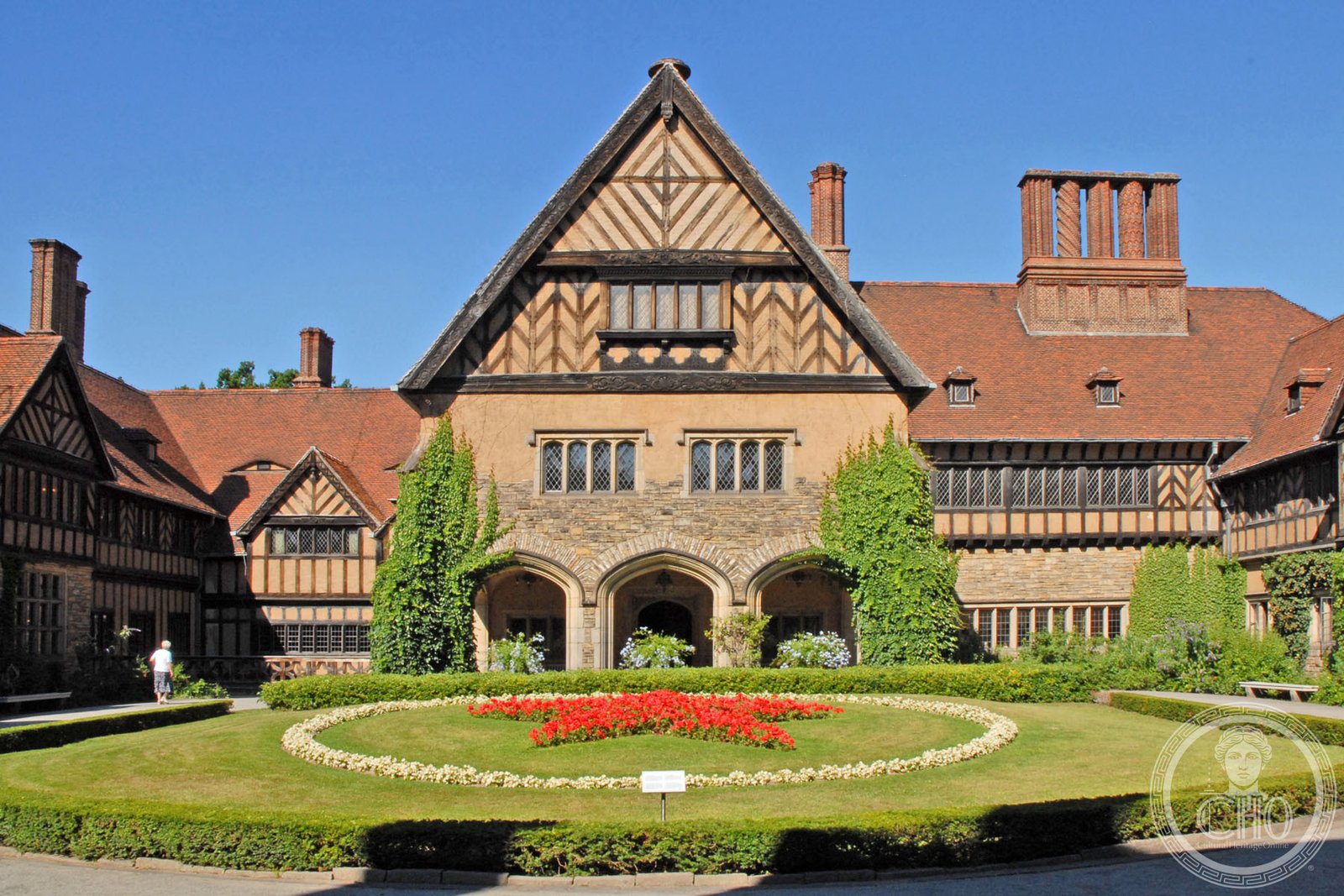
The last palace built by Prussia’s ruling Hohenzollerns, this Tudor-style manor hosted the 1945 Potsdam Conference—where Allied leaders redrew the map of post-war Europe and Asia.
At a glance
Cecilienhof is a twentieth-century palace in Potsdam designed in the style of an English Tudor manor house. Built between 1914 and 1917, it marked the final major architectural commission of the House of Hohenzollern before World War I brought the dynasty’s rule to an end. The palace gained historic significance not through centuries of royal ceremony, but through a single transformative moment: the Potsdam Conference of July–August 1945.
History
Construction began in 1914 and was completed in 1917, during World War I. Cecilienhof served as a royal residence until the German monarchy’s collapse in 1918. The palace’s defining historical event came decades later, when the Soviet Union, United Kingdom, and United States convened there in 1945 to negotiate the structure of the post-war world. Stalin, Churchill (and later Clement Attlee), and Truman met within its walls to resolve questions about reparations, occupation zones, territorial adjustments, and the future conduct of the war against Japan.
What you see
The palace follows the footprint and aesthetics of an English country manor rather than the monumental Prussian baroque or neoclassical styles favored by earlier Hohenzollern rulers. Red brick, steep rooflines, and decorative chimneys evoke Tudor England. The building’s plan forms a distinctive shape—roughly that of a half-timbered letter E—which encloses intimate courtyards. Interiors reflect both royal taste and the diplomatic legacy of 1945; original furnishings and conference chambers remain on display.
Cultural significance
Cecilienhof embodies the convergence of architectural tradition and twentieth-century geopolitics. Its adoption of English Tudor style represented a deliberate aesthetic choice by the Prussian court at a moment of European tension. More enduringly, the palace is inseparable from the Potsdam Conference, an event that fundamentally altered the global order—cementing Soviet dominance in Eastern Europe, establishing occupation zones in Germany, and setting terms for Japan’s surrender. Since 1990, it has been part of the UNESCO World Heritage Site encompassing Potsdam’s palaces and parks.
Key facts
- Location: Potsdam, Brandenburg, Germany
- Coordinates: 52.4192° N, 13.0708° E
- Construction period: 1914–1917
- Architectural style: English Tudor manor
- Historical significance: Site of the 1945 Potsdam Conference
- UNESCO World Heritage Site: Palaces and Parks of Potsdam and Berlin (since 1990)
Practical information & getting there
Cecilienhof is located in the Nördliche Vorstädte district of Potsdam. The palace closed to the public on 1 November 2024 for renovations; check official sources for reopening dates and current visiting conditions. Potsdam is easily reached from Berlin by regional train; the palace grounds are accessible via public transport and on foot from the city center. You will find it part of a larger park system worth exploring.
Sources & resources
Find it on the map
See this place and what’s around it →📷 Become a Cultural Heritage Online photographer
Share your photos of places: they stay published under your name as the author. The more they're seen, the more you get noticed — and soon a contest will reward the most appreciated photos.
Log in or sign up free to add a photoIs this page about you?
This page is read by travellers and heritage enthusiasts who find it on Google. Tell us how you are connected to this place and we will take it from there.