
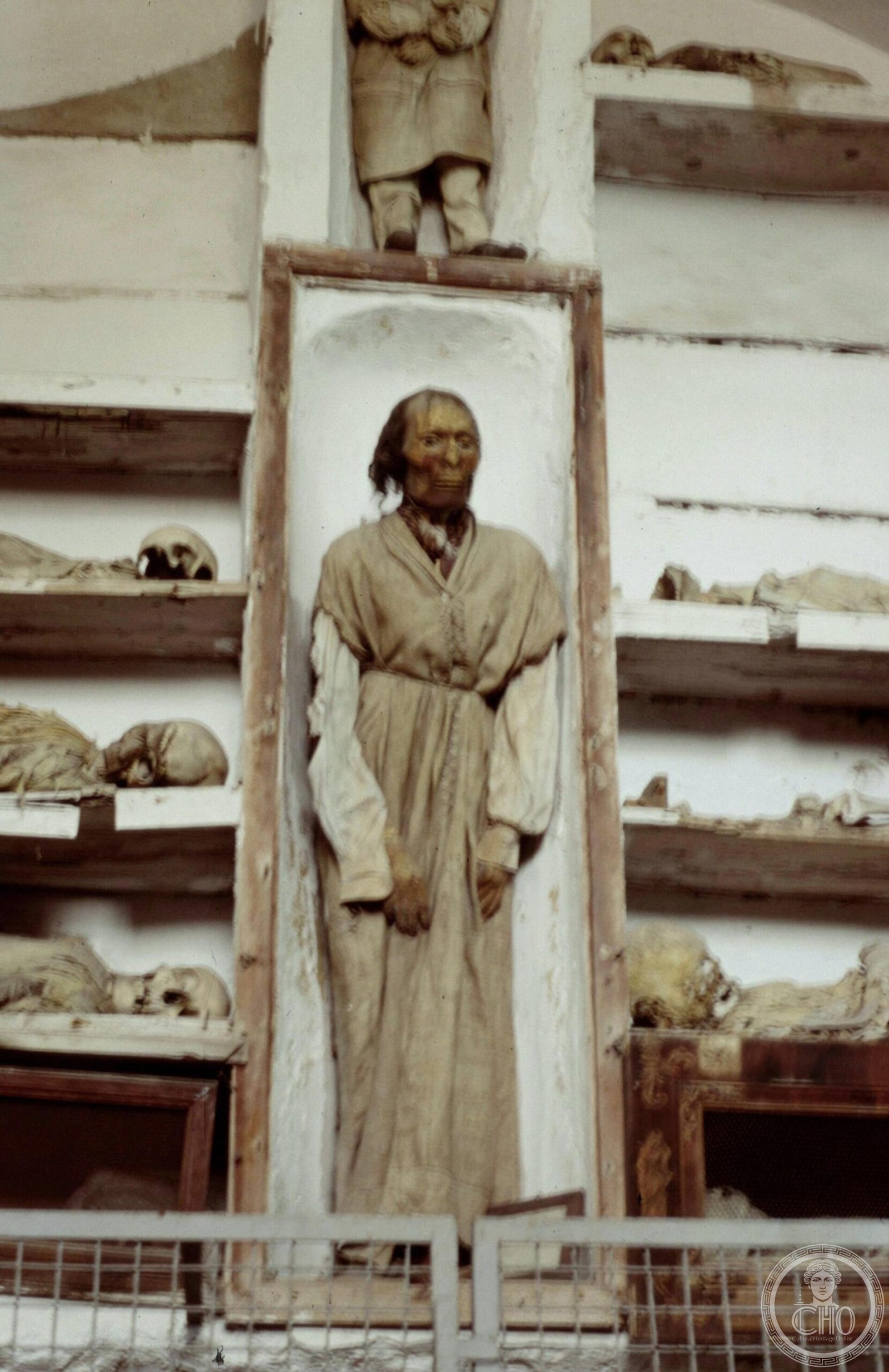
The Capuchin Catacombs of Palermo are an underground burial complex beneath the Convento dei Cappuccini in the Sicilian capital, containing the preserved remains of approximately 8,000 individuals interred between the late sixteenth and early twentieth centuries. Originally reserved for friars, the catacombs were gradually opened to Palermo’s noble and professional classes, whose mummified bodies hang or rest in niches along the corridors, dressed in their finest clothes. The site is today one of the most extraordinary and unsettling records of funerary culture in the Western world, as well as a significant destination for heritage and dark tourism.
At a glance
- Type
- Burial catacombs / religious complex
- Period
- 16th century – early 20th century (active burials c. 1599–1920)
- Style
- Capuchin conventual architecture; underground corridor system
- Location
- Piazza Cappuccini, Palermo, Sicily, Italy
- Coordinates
- 38.1118° N, 13.3393° E
Overview
The catacombs extend beneath the Capuchin convent and are divided into corridors organised by the social status and profession of the deceased — clergy, professionals, women, children, virgins, and monks each occupy separate sections. Most bodies were naturally mummified or treated with vinegar, arsenic, or quicklime before being displayed in niches, on shelves, or in open coffins. The collection includes an estimated 8,000 mummies and skeletons, making the Palermo catacombs among the largest such repositories in Europe.
History
Burials began in 1599 when the Capuchin friars relocated the remains of their deceased brothers from an overcrowded ossuary into newly excavated underground corridors. The dehumidifying properties of the tufa rock facilitated natural preservation of the bodies. By the seventeenth century, wealthy Palermitans began paying for the privilege of burial in the catacombs, viewing continued display of a recognisable corpse as a form of social prestige and a prompt for prayers by the living. The last official burial took place in 1920, though the most famous resident — the two-year-old Rosalia Lombardo, embalmed by Alfredo Salafia in 1920 — was interred shortly after. Her remarkably intact face earned her the informal title “Sleeping Beauty.”
What you see
Visitors walk through long underground corridors lined on both sides by mummified figures, many still wearing the clothing in which they were buried. The degree of preservation varies widely — some bodies retain recognisable features and complete dress, others have partially decayed. Rosalia Lombardo rests in a sealed glass case and is considered the best-preserved human mummy in the world. Stone niches, wooden shelves, and hanging wires organise the remains into the traditional category corridors, providing a sobering taxonomy of Palermitan society across three centuries.
Cultural significance
The catacombs provide an unparalleled visual document of funerary customs, changing fashions, and the social hierarchies of early-modern and modern Sicily. They have been studied by anthropologists, forensic scientists, and historians of religion as evidence of Catholic attitudes towards bodily resurrection and the cult of the dead. The site also holds a significant place in world heritage discussions about the ethical display of human remains.
Practical information
Address: Piazza Cappuccini 1, 90129 Palermo, Sicily, Italy.
Hours: Generally open Monday–Sunday; check the official Capuchin website for seasonal hours and closures.
Admission: Entrance fee applies; guided tours available. Photography permitted without flash in most areas.
Note: The catacombs contain human remains; visitor discretion is advised.
Getting there
From central Palermo, take bus lines 105, 124, or 327 to the Cappuccini stop. By car, the convent is approximately 2 km west of the Palermo Centrale railway station; limited street parking is available on Piazza Cappuccini. Walking from the station takes about 25 minutes through the historic Capo district.
Sources & resources
Find it on the map
See this place and what’s around it →📷 Become a Cultural Heritage Online photographer
Share your photos of places: they stay published under your name as the author. The more they're seen, the more you get noticed — and soon a contest will reward the most appreciated photos.
Log in or sign up free to add a photo