
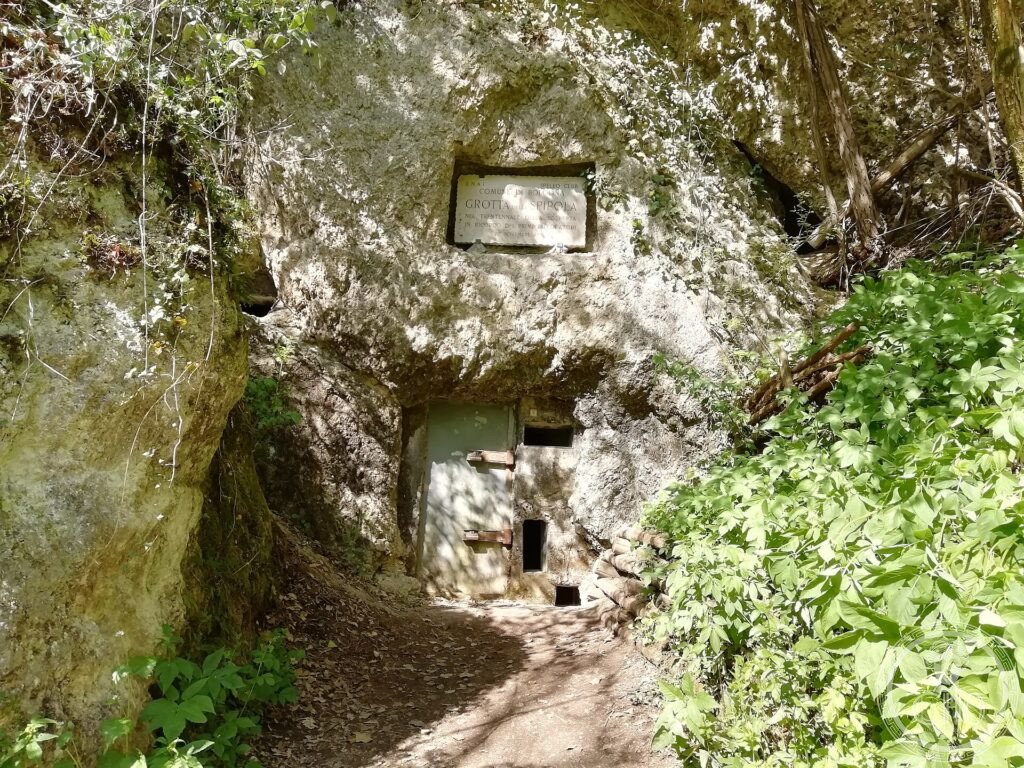
Beneath the hills between Bologna, Reggio and Romagna, gypsum dissolves in water like slow sugar and carves out galleries, sinkholes and more than nine hundred caves. It was here that science, centuries ago, first described karst in evaporitic rocks; in 2023 UNESCO made it a World Heritage site.
At a glance
The Northern Apennine evaporite karst is a serial natural site in Emilia-Romagna, inscribed by UNESCO in 2023 — the 59th Italian World Heritage property. Where most caves form in limestone, here they are carved into gypsum and other evaporite rocks, far more soluble and far rarer to preserve at this scale. The seven component areas hold over nine hundred caves, deep gypsum quarried valleys, sinkholes and springs, and an underground world of geological, paleontological, biological and even archaeological value. This is also where evaporite karst was first studied scientifically anywhere in the world.
Key facts
- Inscribed: 2023 (UNESCO 45th session, Riyadh); the 59th Italian World Heritage site
- Type: serial natural property of seven areas in the Northern Apennines
- Components: Alta Valle del Secchia, Bassa Collina Reggiana, Gessi di Zola Predosa, Gessi Bolognesi, Vena del Gesso Romagnola, Evaporiti di San Leo, Gessi di Onferno
- Scale: over 900 caves; gypsum karst reaching depths of about 265 metres
- First in the world: the earliest place where evaporite (gypsum) karst was described and studied scientifically
- Grotta della Spipola: in the Gessi Bolognesi, one of the largest gypsum caves in Europe
About the site
Gypsum is an evaporite — a rock left behind when ancient seas dried up. Because it dissolves far more readily than limestone, gypsum karst is both spectacular and fragile, and rarely survives in such concentration as here, where the seven areas contain more than ninety per cent of the evaporite outcrops of the region. The result is a hidden landscape of caves, blind valleys, collapse dolines and sulphur springs, formed over hundreds of thousands of years.
These hills have a special place in the history of science: it was in the Northern Apennines that scholars first described the dissolution of gypsum and the cave systems it produces, making this the cradle of evaporite-karst studies. The caves have also preserved fossils, the bones of Ice Age animals, and traces of prehistoric human use, layering natural and human history underground.
What you see
At the surface the gypsum betrays itself in glittering crystalline outcrops, in sudden sinkholes swallowing streams, and in the sheer pale cliffs of the Vena del Gesso Romagnola. Underground, the Grotta della Spipola in the Parco dei Gessi Bolognesi opens into vast galleries that visitors can explore on guided tours; elsewhere the systems are reserved for cavers and researchers. The combination — soluble rock, water and time — produces forms quite unlike the more familiar limestone caves of the Apennines.
Practical information
- Visiting: the Grotta della Spipola and the Parco dei Gessi Bolognesi e Calanchi dell’Abbadia offer guided cave visits and trails
- Other areas: the Vena del Gesso Romagnola and the Gessi di Onferno have their own visitor routes and reserves
- Caves: cool and damp year-round — bring a layer and sturdy shoes; book guided cave tours in advance
- Time needed: half a day for a park and a cave visit
Getting there
The Gessi Bolognesi and the Grotta della Spipola lie just southeast of Bologna, around San Lazzaro di Savena, easily reached from the city by car or bus. The Vena del Gesso Romagnola runs between Imola and Faenza, and the Gessi di Onferno are near Rimini. GPS (Grotta della Spipola): 44.4510° N, 11.3730° E.
Nearby
- Bologna — the porticoes (UNESCO), the two towers and the university city, minutes away
- Vena del Gesso Romagnola — another component area, with the Parco regionale and the village of Brisighella
- San Leo — the cliff-top fortress town above the Evaporiti di San Leo
Sources
- Commissione Nazionale Italiana per l’UNESCO — site dossier (unesco.it)
- MiC — Ufficio UNESCO, “Carsismo nelle Evaporiti e Grotte dell’Appennino Settentrionale”
- Parchi dell’Emilia-Romagna — Gessi Bolognesi and component areas
- UNESCO World Heritage Centre — 2023 inscription
Find it on the map
See this place and what’s around it →📷 Become a Cultural Heritage Online photographer
Share your photos of places: they stay published under your name as the author. The more they're seen, the more you get noticed — and soon a contest will reward the most appreciated photos.
Log in or sign up free to add a photo