
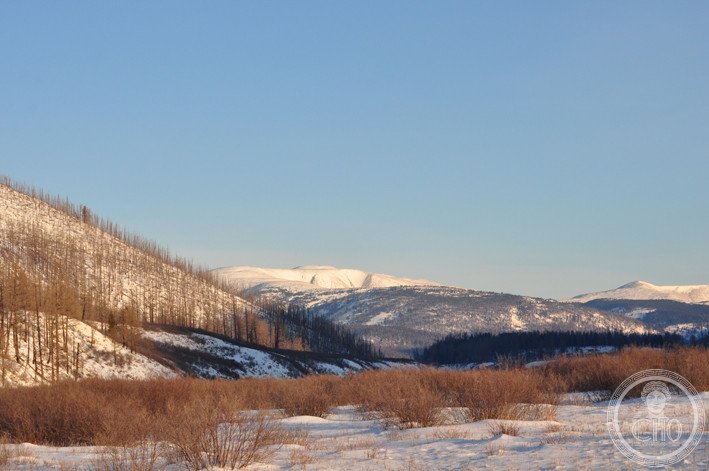
Among the steppes and forests of north-eastern Mongolia, Mount Burkhan Khaldun stands as the holiest place for the Mongols: the mountain where Temujin — the future Genghis Khan — took refuge as a boy from his enemies, where he prayed before every great campaign, and where, by tradition, he was buried after his death in 1227. Protected as the “Great Forbidden Taboo” since the thirteenth century with strict bans on access, it is the centre of the Great Mongol sacred landscape “Ikh Khorig”, inscribed by UNESCO in 2015.
At a glance
Burkhan Khaldun (“God Mountain” in Mongolian) is the highest peak of the Khentii mountain range (2,362 m) in north-eastern Mongolia, in Khentii province. It is the focal point of the UNESCO World Heritage Site “Landscapes and Archaeological Remains of the Orkhon Valley and the Burkhan Khaldun Sacred Mountain” (ref. 1440, inscribed 2015). The mountain is inseparable from the biography and mythological legacy of Genghis Khan (c. 1162–1227): he was born in the Onon River valley nearby, took refuge on Burkhan Khaldun as a young man, prayed there before his campaigns, and is traditionally believed buried in a secret location on or near the mountain. The “Great Taboo” protecting the area was established by Genghis Khan himself and maintained by Mongol rulers for centuries.
Key facts
- UNESCO: World Heritage since 2015 (Sacred Mountain of Burkhan Khaldun and its surrounding landscape, ref. 1440)
- Height: 2,362 m (highest peak of the Khentii Range)
- The Great Taboo (Ikh Khorig): a forbidden zone established by Genghis Khan himself around the mountain; access was prohibited under penalty of death
- Genghis Khan’s tomb: exact location unknown; Burkhan Khaldun is the primary candidate; no excavations permitted
- Ovoo: a sacred cairn at the summit, visited by pilgrims; annual shamanic and Buddhist ceremonies held
- Landscape: dense Siberian taiga (larch and pine) on the slopes; steppe at the base; headwaters of the Onon, Kherlen and Tuul rivers
History
Around 1177, the young Temujin — not yet Genghis Khan — was captured by the Merkit tribe and his wife Börte abducted. Fleeing his enemies, he took refuge on Burkhan Khaldun. According to the Secret History of the Mongols (the oldest surviving Mongolian literary work), Temujin climbed the mountain alone, prayed to Tengri (the Eternal Blue Sky), and promised to remember the mountain’s protection forever. He kept that promise: after his unification of the Mongol tribes (1206) and creation of the greatest land empire in history, he established Burkhan Khaldun as the supreme sacred site of the Mongol nation. A zone called “Ikh Khorig” (Great Taboo) around the mountain was declared off-limits under penalty of death.
When Genghis Khan died in 1227, his body was transported secretly to Mongolia for burial. The Secret History and other sources strongly suggest the mountain or its vicinity as the burial site. The location was deliberately concealed; according to legend, the burial party killed all witnesses and the grave was then hidden by driving herds of horses over the ground. The Ikh Khorig was enforced by the Mongol rulers and later by Manchu authorities through the 20th century. Soviet-era Mongolia saw the site desecrated during anti-religious campaigns, but reverence was restored after 1990. Today the mountain is a Specially Protected Area and a pilgrimage site.
What you see
Burkhan Khaldun is an undulating taiga-covered mountain rising above the surrounding steppe. The landscape is wild and remote: Siberian larch and pine forests, rivers teeming with fish (taimen, the world’s largest salmonid, lives in the Onon River), and the silence of a vast unpopulated landscape. At the summit, an Ovoo — a cone of stones draped with blue prayer scarves (khadak) — marks the sacred spot. Pilgrims walk clockwise around it three times.
The area is part of the broader Ikh Khorig zone, which includes the archaeologically significant Delüün Boldog (Genghis Khan’s probable birthplace) and the Onon River headwaters, sacred in Mongolian shamanism.
Practical information
- Access: permission required from the Khentii provincial administration; access to the summit area is restricted (only Mongols traditionally permitted)
- Base: Öndörkhaan (capital of Khentii province), 350 km east of Ulaanbaatar
- Tours: specialist Mongolian tour operators offer heritage and nature tours to the Khentii region
- Best time: June–September; winters are brutal (−40°C); summer offers taiga hiking and river scenery
Getting there
By road from Ulaanbaatar (350–400 km east to Öndörkhaan, then north on unpaved tracks); 4WD essential. Domestic flights operate to Öndörkhaan (Choibalsan airport). The mountain lies within a restricted Specially Protected Area; tour operators handle permits. GPS (summit): 48.78° N, 109.17° E.
Nearby
- Onon River — the birthplace river of Genghis Khan; prime taimen fishing territory
- Ulaanbaatar — the Mongolian capital with the National Museum of Mongolia and Gandan Monastery, 400 km west
- Orkhon Valley (UNESCO) — the ancient capital region of the Mongol Empire with Karakorum ruins, 700 km south-west
Sources
- UNESCO World Heritage Centre — “Sacred Mountain of Burkhan Khaldun and its surrounding landscape” (ref. 1440)
- The Secret History of the Mongols (13th-century primary source)
- Encyclopaedia Britannica — Genghis Khan; Khentii Mountains
Find it on the map
See this place and what’s around it →📷 Become a Cultural Heritage Online photographer
Share your photos of places: they stay published under your name as the author. The more they're seen, the more you get noticed — and soon a contest will reward the most appreciated photos.
Log in or sign up free to add a photo