
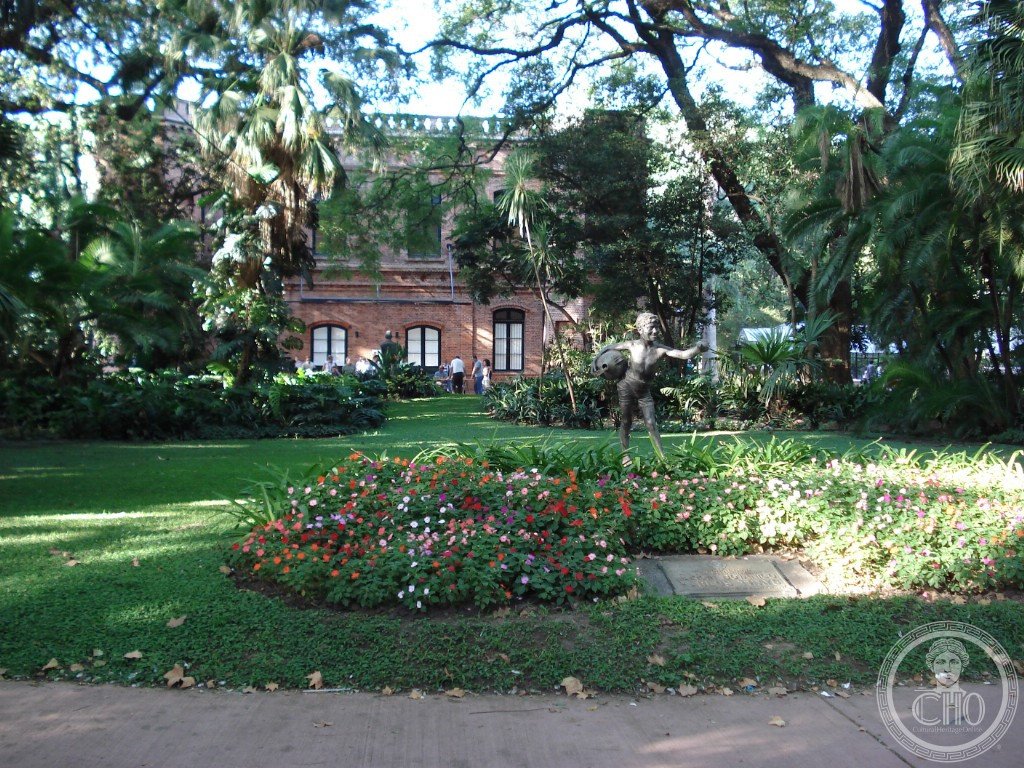
A triangular sanctuary in Palermo housing over 5,500 plant species, sculptures, and five greenhouses across nearly seven hectares of curated botanical excellence.
At a glance
The Jardín Botánico Carlos Thays de la Ciudad Autónoma de Buenos Aires occupies a distinctive triangular plot bounded by Santa Fe Avenue, Las Heras Avenue, and República Árabe Siria Street. Its 6.9772 hectares contain an extensive living collection alongside architectural and sculptural elements that reflect generations of horticultural stewardship.
History
The garden was formally recognized as a national monument in 1996, cementing its status as a cultural landmark. The official naming honors Carlos Thays, whose legacy shaped the institution’s botanical mission and vision.
What you see
Five greenhouses anchor the garden’s infrastructure, each sheltering specialized plant collections. Sculptures and monuments distributed throughout the grounds complement the living collections, creating a dialogue between art and nature. The triangular geometry creates distinct zones for different plant families and ecosystems.
Cultural significance
As a protected national monument, the garden serves Buenos Aires as both a scientific resource and public refuge. Its scale and diversity reflect Argentina’s botanical heritage while offering visitors access to horticultural knowledge and beauty in the heart of the city.
Key facts
- Location: Palermo neighborhood, Buenos Aires, Argentina
- Area: 6.9772 hectares (17.241 acres)
- Plant collection: Approximately 5,500 species
- Designated national monument: 1996
- Greenhouses: Five
- Coordinates: -34.58247, -58.4186
Practical information & getting there
The garden is accessible from three major avenues in the Palermo district. For current opening hours, admission fees, and detailed directions, consult local Buenos Aires tourism resources or the institution directly.
Sources & resources
Find it on the map
See this place and what’s around it →📷 Become a Cultural Heritage Online photographer
Share your photos of places: they stay published under your name as the author. The more they're seen, the more you get noticed — and soon a contest will reward the most appreciated photos.
Log in or sign up free to add a photoIs this page about you?
This page is read by travellers and heritage enthusiasts who find it on Google. Tell us how you are connected to this place and we will take it from there.