
Brasserie Excelsior
Few brasseries in France can match the Excelsior’s interior: a complete ensemble of Majorelle mahogany, Daum crystal, and Gruber glass, intact since the Lorraine carnival of 1911.
At a glance
Lucien Weissenburger (1860–1929) and Alexandre Mienville designed the Excelsior as a showcase brasserie for brewer Louis Moreau, drawing on Vienna Secession restraint for the exterior while unleashing the full vocabulary of the École de Nancy inside. The result is one of France’s most complete Art Nouveau interiors — glasswork by Jacques Gruber, luminaires by the Daum workshops, furniture from the Majorelle ateliers — all classified as a monument historique in 1976 and still operating as a restaurant today.
Key facts
- Built: 1910–1911 by Lucien Weissenburger and Alexandre Mienville
- Style: Art Nouveau — École de Nancy
- Status: Active brasserie and restaurant; former hotel rooms converted to private apartments
- Address: Corner of Rue Henri-Poincaré and Rue Mazagran, 54000 Nancy, France
- GPS: 48.6908, 6.1756 — Open in Google Maps
- Listed: Monument historique by decree, 22 June 1976 (Base Mérimée PA00106114)
History
The decision to build the Excelsior was taken on 12 February 1910 at a board meeting of Société Moreau et Cie, a brewery based in Vézelise. Louis Moreau wanted a grand-café presence in Nancy in the tradition of Parisian Belle Époque establishments, and commissioned Weissenburger and Mienville to deliver it. Construction cost 184,000 gold francs. The doors opened during Carnival 1911, amortising the debt within a decade.
The brasserie survived both World Wars and the urban renewal schemes of the 1960s that razed much of the railway-station district around it. In the 1970s a demolition threat materialised; the building was saved when auctioneer and Art Nouveau champion Maurice Rheims delivered a persuasive lecture to city officials. The monument historique designation followed on 22 June 1976, securing the façades, roofs, and ground-floor interiors.
The original fifty hotel rooms above the brasserie were subsequently converted into private residential apartments. The ground-floor restaurant has never closed and retains its 1911 decorative programme essentially unchanged, making it one of the best-preserved Belle Époque dining rooms in France.
What you see
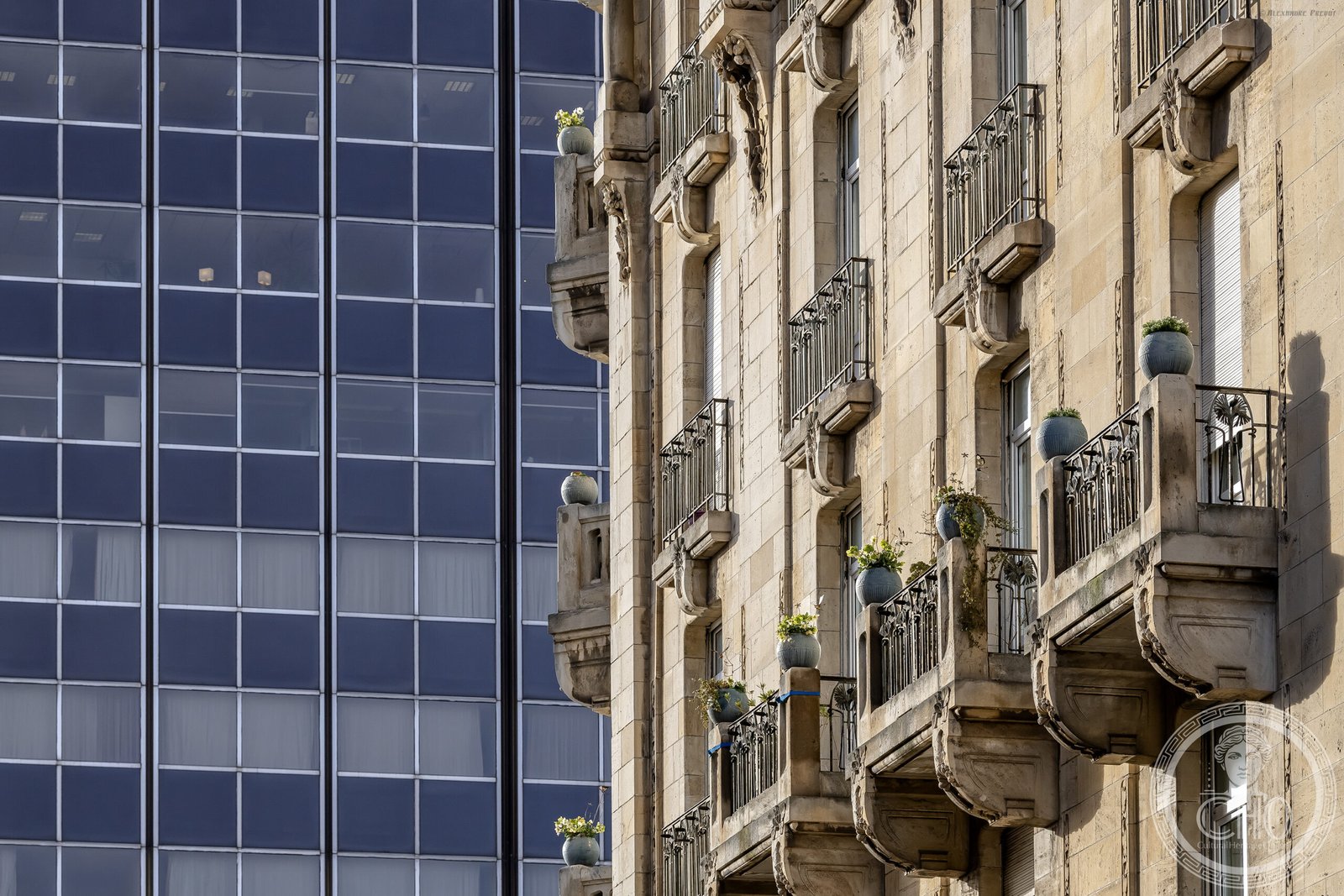
The exterior is deliberately sober — a Viennese-inflected stone frontage that gives little away. Inside, the register shifts entirely. Jacques Gruber’s ten stained-glass windows fill the room with amber and green light; the ceiling frescoes by sculptors Galetier and Burtin feature pine branches, ginkgo leaves, and fern fronds in high relief. Three hundred Daum crystal light fittings, including pendant chandeliers, cast a warm glow over the dining room after dark.
Furniture was made in Cuban mahogany by the Majorelle workshops, whose bentwood forms echo the botanical motifs overhead. Floor mosaics by Pèlerin complete the ensemble. The ironwork staircase, attributed to a young Jean Prouvé working in his father’s metalwork tradition, adds an elegant Art Deco note that dates from a slightly later phase.
Practical information
- Open to the public as a working brasserie; lunch and dinner service daily
- Best visited on a quiet weekday morning when the dining room is at its most serene
- Guided Art Nouveau tours of the interior available through Nancy Tourisme
- Estimated visit (with meal): 1.5–2 hours; interior visit only: 20–30 minutes
Getting there
The Excelsior is a three-minute walk from Nancy railway station (Gare de Nancy), which is served by direct TGV trains from Paris-Est (90 minutes). The brasserie stands at the corner of Rue Henri-Poincaré and Rue Mazagran, directly opposite the station forecourt. The nearest airport is Metz-Nancy-Lorraine, approximately 40 km south.
Nearby
- Villa Majorelle — Louis Majorelle’s own Art Nouveau home (1898–1902), designed with Henri Sauvage; a five-minute taxi ride from the Excelsior.
- Place Stanislas — the 18th-century rococo square at the heart of Nancy, a UNESCO World Heritage Site; ten minutes on foot.
- Musée de l’École de Nancy — the definitive collection of Nancy Art Nouveau furniture, glass, and ceramics; accessible by tram.
- Maison Bergeret — another Weissenburger masterwork (1903–04) on nearby Avenue Foch, now private residences.
Sources
Find it on the map
See this place and what’s around it →Events here — now on & upcoming
- Journées Européennes du Patrimoine — Nancy Art Nouveau Sites19 Sep 2026 — 20 Sep 2026See the event →
Historical events at this place (1)
📷 Diventa un fotografo di Cultural Heritage Online
Condividi le tue foto dei luoghi: restano pubblicate con la tua firma come autore. Più vengono viste, più ti fai conoscere — e presto un concorso premierà le foto più apprezzate.
Accedi o registrati gratis per aggiungere una foto