
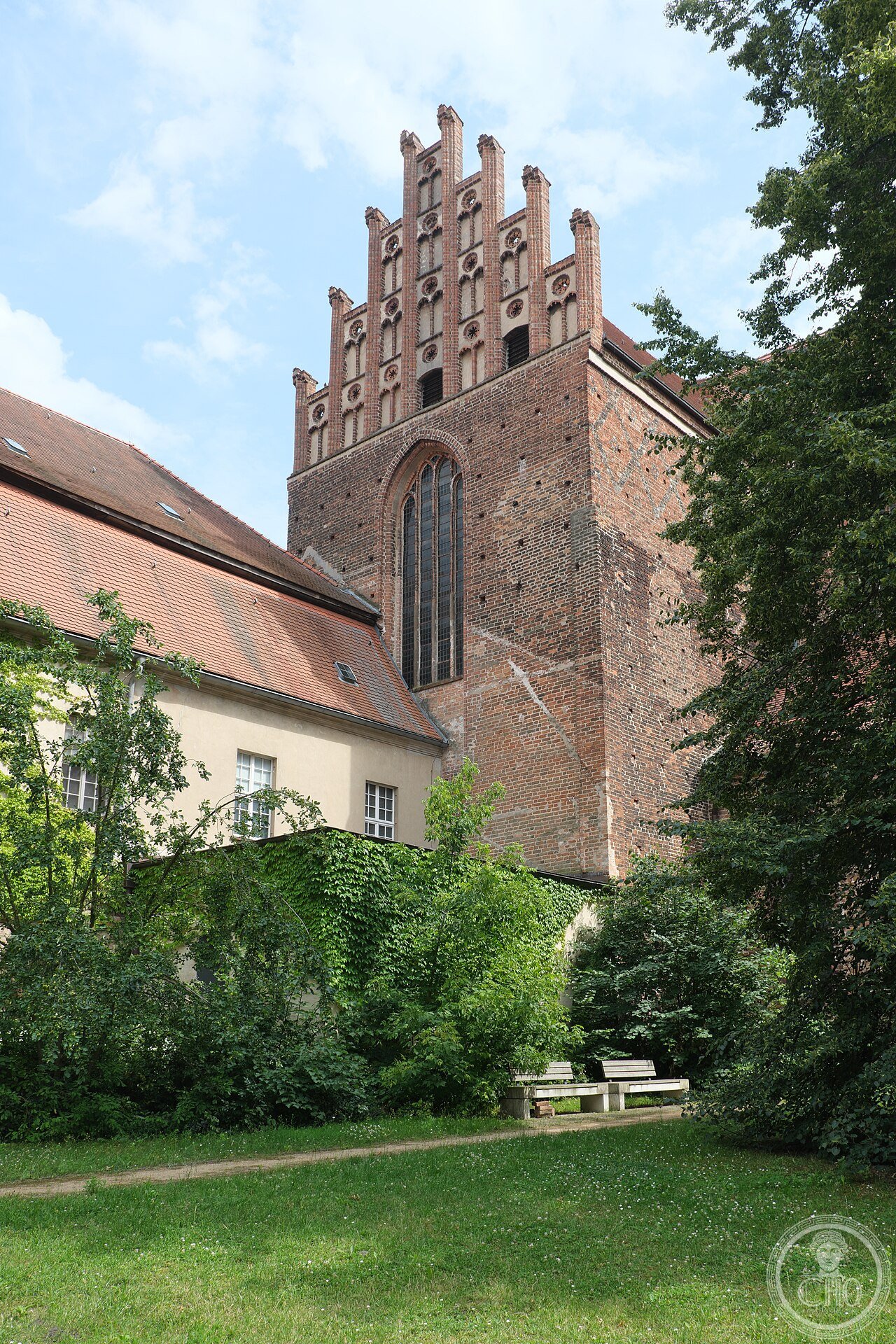
Founded by Otto I in 948 on an old Slavic fortress, the diocese of Brandenburg was swept away by the Slavic revolt of 983 and restored only in 1161. The foundation stone of the present Romanesque church, laid in 1165, makes it the oldest brick building in the region with a certain date of construction — hence the nickname “cradle of Brandenburg”.
About Brandenburg Cathedral
St. Peter and Paul Cathedral, the largest medieval church in Brandenburg an der Havel and the largest brick building in the Havelland region, traces its origins to the Diocese of Brandenburg founded by Emperor Otto I in 948 atop an older Slavic fortress. That original settlement was probably lost in the great Slavic revolt of 983, and the diocese was only restored in 1161 as part of the successful eastward expansion of the Holy Roman Empire, following Albert the Bear’s 1157 establishment of the Margraviate of Brandenburg. The foundation stone for the present Romanesque hall church was laid in 1165, making it the oldest pure brick building in the state of Brandenburg with a reliable construction date — earning it the nickname “the cradle of the Mark Brandenburg.” The building was progressively expanded into a three-aisled Brick Gothic basilica with twin west towers, an elevated choir, and an open crypt beneath it, the Gothic expansion substantially complete by the mid-15th century. On the cathedral’s north side, a three-wing cloister housed the cathedral canons, who lived as a monastic community under the rule of the Premonstratensian Order — the same order that founded monasteries at Jerichow in 1144, at Brandenburg itself in 1165, and at Gramzow around 1180.
Key facts
- Diocesan foundation: established by Emperor Otto I in 948, atop an older Slavic fortress
- 983 disruption: the original settlement likely lost in the great Slavic revolt; diocese restored 1161
- Foundation stone: laid 1165 for the present Romanesque church; oldest reliably dated brick building in the state of Brandenburg, nicknamed “the cradle of the Mark Brandenburg”
- Gothic expansion: three-aisled Brick Gothic basilica, twin west towers, elevated choir with open crypt beneath; substantially complete by the mid-15th century
- Premonstratensian cloister: three-wing cloister on the north side, home to a canons’ community under Premonstratensian rule
- Setting: on an island between the Beetzsee and the river Havel, together forming Brandenburg’s Dominsel (Cathedral Island)
History
Otto I’s 948 foundation of the Brandenburg diocese, built directly on a former Slavic fortress site, situates the cathedral within the same Ottonian-era eastward Christian expansion that produced comparable episcopal foundations at Meissen and elsewhere along the Elbe frontier — an expansion whose fragility is demonstrated precisely by the 983 Slavic revolt that apparently wiped out the original settlement, requiring the diocese’s formal restoration nearly two centuries later in 1161 once Albert the Bear had established more durable German territorial control through the newly created Margraviate of Brandenburg. This gap between initial foundation and lasting institutional stability — nearly 180 years, spanning outright loss of Christian control for a substantial period — makes Brandenburg’s early history a particularly clear illustration of how uneven and reversible German ecclesiastical expansion east of the Elbe could be during the 10th and 11th centuries.
The cathedral’s reliably dated 1165 foundation stone, giving it status as the oldest precisely dated brick building in the entire state, reflects the specific historiographical value of buildings whose construction start is documented in surviving records rather than merely estimated from stylistic analysis — a distinction that matters considerably for regional architectural history given how many comparable North German brick Gothic buildings lack equally precise foundational documentation. The cathedral’s Premonstratensian canonical community, following the same monastic rule that governed the order’s other regional foundations at Jerichow and Gramzow, situates Brandenburg within a coordinated network of Premonstratensian institutional expansion across the newly consolidated Margraviate during the same broad period.
What you see
The cathedral’s combination of surviving Romanesque core structure with its later Brick Gothic expansion — twin west towers, elevated choir, and open crypt — offers a legible three-century architectural record from 1165 through the mid-15th century. The three-wing Premonstratensian cloister on the north side extends the site’s monastic history beyond the cathedral church itself. The cathedral’s setting on its own island between the Beetzsee and the Havel, forming Brandenburg’s historic Dominsel district, gives the entire ensemble a distinctive, physically separated character within the wider city.
Practical information
- Opening hours: generally open daily, check current hours before visiting; cathedral museum has separate admission
- Address: Burghof 10, 14776 Brandenburg an der Havel
Getting there
Brandenburg an der Havel has direct rail connections from Berlin (approximately 45 minutes) and Potsdam (approximately 30 minutes). By car, Brandenburg sits on the A2 motorway network. The cathedral stands on the Dominsel (Cathedral Island). GPS: 52.4153° N, 12.5674° E.
Nearby
- Brandenburg Dominsel — the cathedral island itself, with cloister, curia buildings, and cathedral museum
- Brandenburg an der Havel old town — a well-preserved medieval town centre a short walk away
- Potsdam — approximately 30 minutes by train; UNESCO World Heritage Prussian palaces and gardens
Sources
- Wikipedia — “St. Peter and Paul Cathedral, Brandenburg” (en.wikipedia.org)
- Domstift Brandenburg — official cathedral portal, “The Cathedral” (dom-brandenburg.de)
- Brandenburg Tourism — “St. Peter and Paul Cathedral Brandenburg (Havel)” (brandenburg-tourism.com)
- Europäische Route der Backsteingotik — “Cathedral, Brandenburg/Havel” (eurob.org)
Find it on the map
See this place and what’s around it →📷 Become a Cultural Heritage Online photographer
Share your photos of places: they stay published under your name as the author. The more they're seen, the more you get noticed — and soon a contest will reward the most appreciated photos.
Log in or sign up free to add a photo