
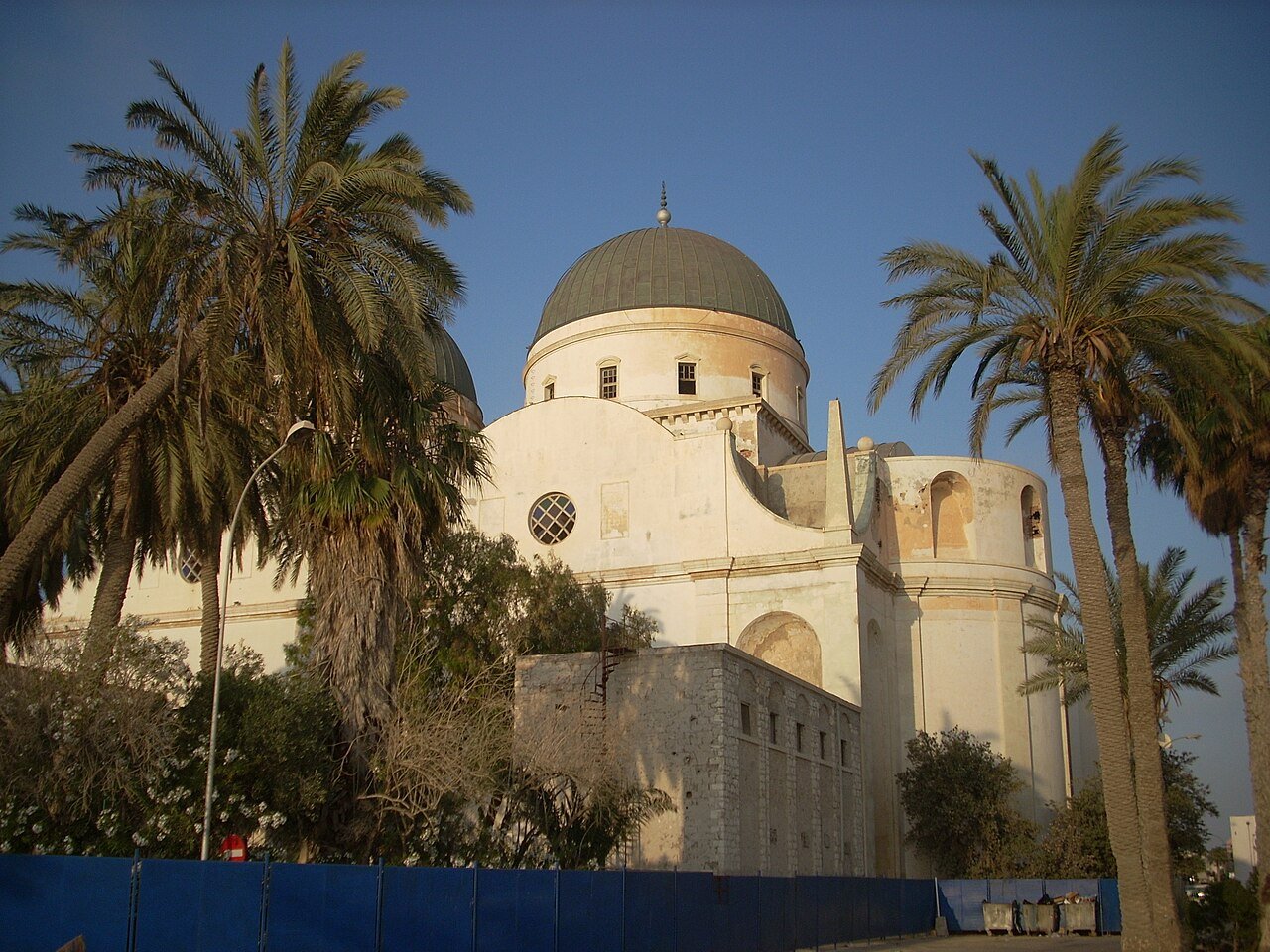
On the Gulf of Sidra, Libya’s second city carries the marble and concrete record of three decades of Italian rule, from its seafront promenade to a vast domed cathedral now standing disused.
At a glance
Benghazi is the largest city of Cyrenaica and the second-most-populous in Libya, with roughly 859,000 inhabitants as of 2023. Italian forces took the city in 1911 during the Italo-Turkish War, and it remained under Italian administration until Allied occupation in May 1943. During those decades Benghazi was rebuilt as a colonial port city: the Italians laid out the seafront Lungomare, raised public palaces and a lighthouse, and grew the town with a new airport, railway station, an enlarged harbour and a domed cathedral. Much of this fabric survived later conflicts only in part, and several landmarks today stand damaged or disused.
Key facts
- Country: Libya
- Region: Cyrenaica
- Key period: 1911–1943 (Italian rule)
- Essential sites: the Lungomare (sea-walk), Benghazi Cathedral (1929–1936), the Municipal Palace (1924), the Italian lighthouse (1922)
- Population: approx. 859,000 (2023)
History
Benghazi was invaded and conquered by Italy in 1911, in the opening campaign of the Italo-Turkish War that wrested Tripolitania and Cyrenaica from the Ottoman Empire. For more than two decades the two territories were administered separately; in 1934 they were unified into the single colony of Italian Libya, organised into provinces that included a Benghazi Province. On 9 January 1939 the coastal regions were formally incorporated into metropolitan Italy as the so-called “Fourth Shore.”
Under the governorship of Italo Balbo, who served as Governor-General from 1 January 1934 to 28 June 1940, the colony saw an aggressive programme of public works: by 1939 some 400 kilometres of new railway and 4,000 kilometres of new road had been built, including the Via Balbia coastal highway running from Tripoli toward Tobruk. Benghazi itself gained new ports and airports, hospitals and schools, and by 1939 Italians made up roughly a third of the city’s residents.
Italian rule ended with the Allied advance across North Africa, and the city passed to Allied occupation in May 1943. The Second World War left Benghazi heavily contested, and many of the colonial structures that survived the fighting have since suffered from neglect.
What you see
The clearest legacy of the Italian decades is the Lungomare, the seafront promenade the colonial administration laid out along the harbour, lined with arcaded buildings in the restrained Novecento manner. Nearby stand other set-pieces of the period: the Municipal Palace of 1924, which combines Moorish arches with Italianate motifs across its facade; an Italian lighthouse of 1922; and the Berenice Cinema, designed in 1928 by the architects Marcello Piacentini and Luigi Piccinato.
The dominant monument is Benghazi Cathedral, built between 1929 and 1936 to designs by Ottavio Cabiati, Alberto Alpago-Novello and Guido Ferrazza, with Arturo Danusso engineering its reinforced-concrete structure. Conceived as a basilica with a single broad nave and a pair of large copper-clad domes, it was opened for services in 1935 but not consecrated until 1939. Today the building is disused and in poor condition; visitors should treat it as a fragile ruin rather than an open monument, and verify on the ground what may safely be approached.
Practical information
- Travel advisories for Libya are serious and change frequently — check your government’s current guidance before any trip.
- Most landmarks here are exterior sights; the cathedral in particular is disused and structurally unsound, not a managed visitor site.
- The Lungomare and central squares give the best concentrated view of Italian-era fabric.
- There is no standard tourist infrastructure; local contacts and up-to-date security information are essential.
- Photography of public buildings can be sensitive; ask locally before photographing.
Getting there
Benghazi is served by Benina International Airport, east of the city, which handles the region’s air links. The city sits on the Gulf of Sidra in eastern Libya; all overland and air travel should be planned against current security advice.
Related in CHO
- Tripoli — Italian Colonial Architecture on the Mediterranean
- Asmara — Africa’s Modernist City and Italian Rationalism
- Rome — Liberty Romano, EUR and Italian Rationalism
Sources

Find it on the map
See this place and what’s around it →📷 Become a Cultural Heritage Online photographer
Share your photos of places: they stay published under your name as the author. The more they're seen, the more you get noticed — and soon a contest will reward the most appreciated photos.
Log in or sign up free to add a photo