
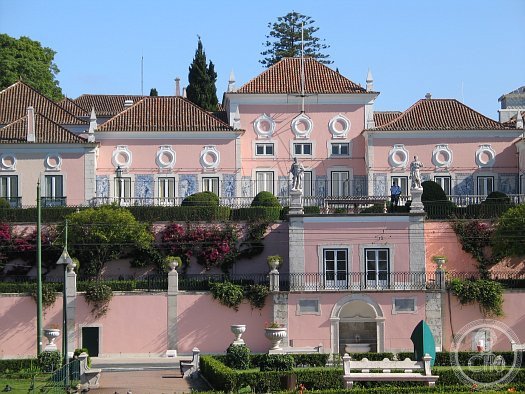
The official residence of Portugal’s president, this sprawling palace complex overlooks the Tagus River from Lisbon’s historic Belém district, embodying centuries of Portuguese state architecture.
At a glance
Belém Palace stands as the working home of Portugal’s head of state, positioned prominently on Afonso de Albuquerque Square facing the Tagus. The site commands views of one of Europe’s most significant waterways and remains deeply embedded in Portugal’s political and ceremonial life.
History
Originally built as a royal residence, the palace evolved over centuries to become the seat of presidential power in the modern Portuguese republic. Construction and renovation spanned from the 18th century through to the 21st century, reflecting successive eras of Portuguese architecture and statecraft.
What you see
The Belém Palace complex comprises multiple buildings, wings, courtyards, and gardens developed across more than two centuries. Its main façade, facing Afonso de Albuquerque Square, presents the most formal aspect of this composite ensemble. The variety of structures reflects changing architectural tastes and functional demands across generations.
Cultural significance
The palace represents the continuity of Portuguese governance from monarchy to republic. Its location in Belém, itself steeped in maritime history, reinforces the building’s role as a symbol of national identity and political authority on the international stage.
Key facts
- Country: Portugal
- City: Lisbon
- Coordinates: 38.69796944, −9.20068611
- Current use: Official residence of the President of Portugal
- Construction period: 18th to 21st centuries
Practical information & getting there
Belém Palace is located in the Belém freguesia (parish) of Lisbon, positioned on Afonso de Albuquerque Square with direct views of the Tagus River. As an active presidential residence, visiting is restricted; contact Portuguese state institutions for information regarding official events or tours.
Sources & resources
Find it on the map
See this place and what’s around it →📷 Become a Cultural Heritage Online photographer
Share your photos of places: they stay published under your name as the author. The more they're seen, the more you get noticed — and soon a contest will reward the most appreciated photos.
Log in or sign up free to add a photoDo you manage this place?
This page is read by travellers and heritage enthusiasts who find it on Google. Keep it accurate — and make it work for you. Free for non-profit heritage institutions.