

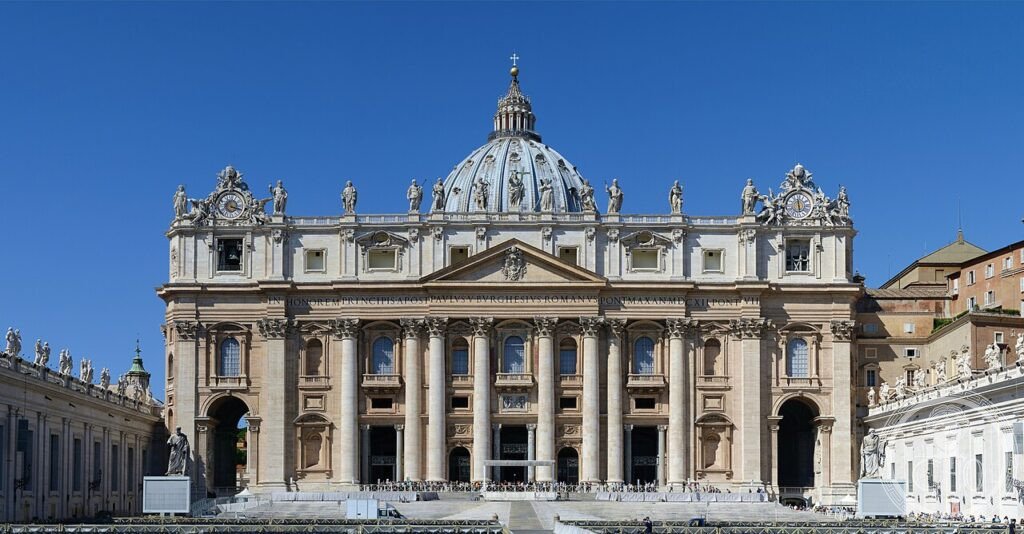
The largest Christian church in the world and the most visited building in Europe — built between 1506 and 1626 by Bramante, Michelangelo, Giacomo della Porta, Carlo Maderno, and Bernini on the site of Constantine’s fourth-century basilica over the tomb of St Peter — whose double-shelled dome (136 metres high) remained the tallest man-made structure in Rome for three centuries and whose interior volume (193 metres long, 45 metres high at the nave) still cannot be fully grasped on a first visit.
At a glance
The Basilica di San Pietro in Vaticano is the principal church of the Roman Catholic Church and the seat of the Pope. The current building was begun by Pope Julius II in 1506 on the orders of Bramante, who demolished the fourth-century Constantinian basilica that had stood on the site of St Peter’s martyrdom; the project was then successively modified by Raphael, Antonio da Sangallo the Younger, Michelangelo (who designed the dome), Giacomo della Porta (who completed the dome in 1590), Carlo Maderno (who lengthened the nave to its current proportions and built the facade, completed 1626), and Gianlorenzo Bernini (who designed the Piazza San Pietro and the bronze baldachin under the dome, 1623–1634).
St Peter’s Basilica is part of the UNESCO “Vatican City” inscription (1984, ref. 286), which covers the entire territory of the Holy See — the Vatican Gardens, the palaces, the Sistine Chapel, the Apostolic Library, and the basilica complex.
Key facts
- Length: 193 m (interior nave); 211 m total exterior length; the largest church in the world by interior area
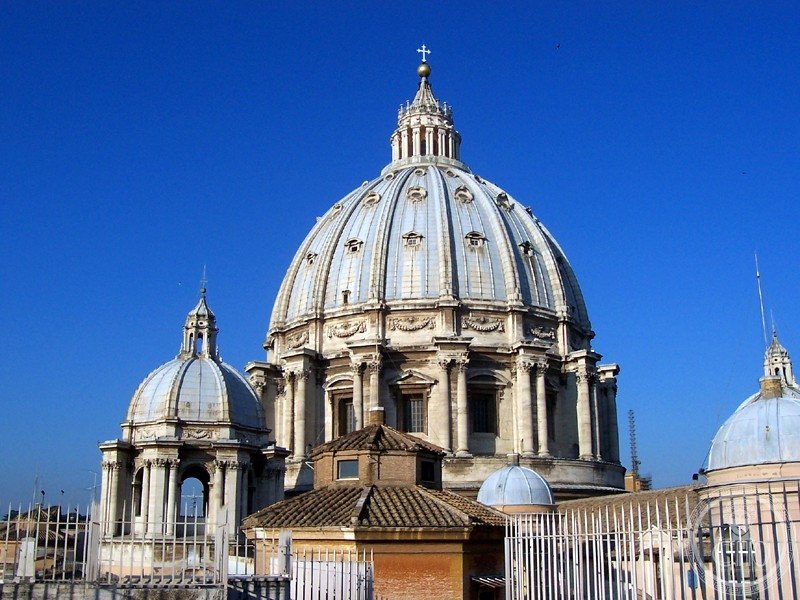
- Dome: 136 m to the tip of the lantern; 42 m interior diameter; double-shelled; designed by Michelangelo, completed by Giacomo della Porta (1590)
- Facade: Carlo Maderno (1608–1612); 114 m wide; 45 m high
- Piazza San Pietro: Gianlorenzo Bernini (1656–1667); double colonnade of 284 columns; 340 m wide
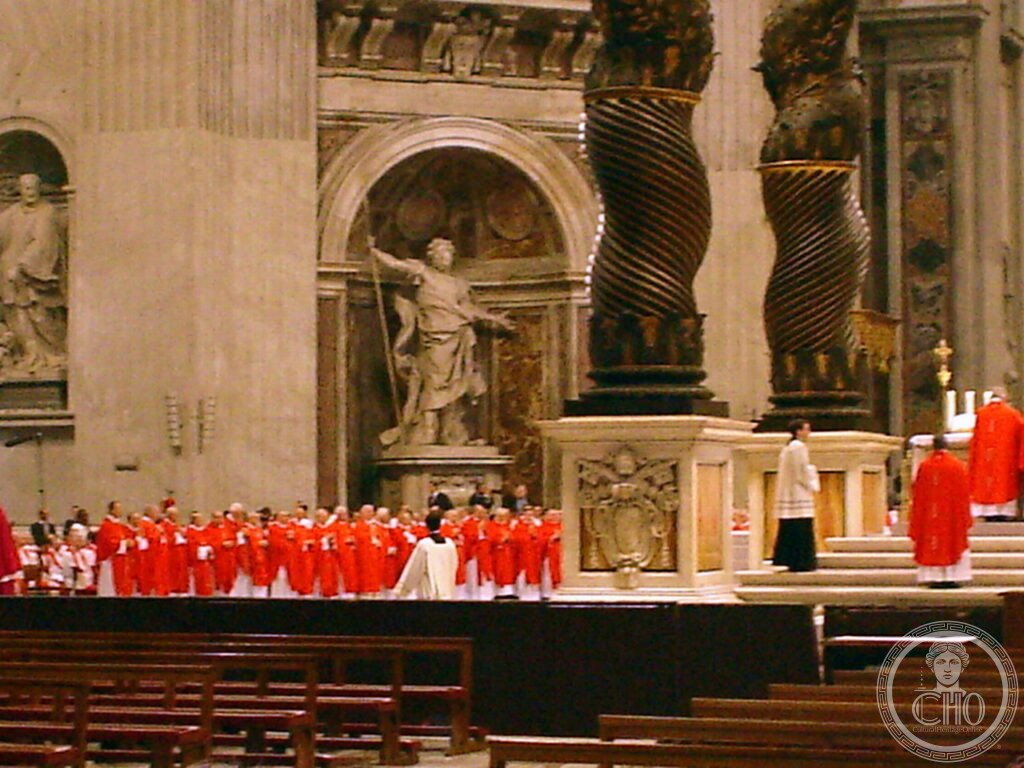
- Baldachin: Bernini (1623–1634); bronze, 29 m high; over the tomb of St Peter
- Capacity: 20,000 (interior); 300,000+ (piazza)
- UNESCO: 1984, ref. 286 — “Vatican City”
- GPS (dome): 41.9022, 12.4539 — Google Maps
History
The site of St Peter’s Basilica is identified by tradition as the place of Peter’s burial, which was located in the Roman necropolis on the Mons Vaticanus outside the city walls. The Emperor Constantine built the first basilica on the site in 318–320 CE — a five-aisled church 350 feet long that was the principal church of Rome for over a thousand years. By the fifteenth century, the Constantinian basilica was in danger of collapse; Pope Nicholas V commissioned Leon Battista Alberti to plan its replacement, but work did not begin in earnest until Julius II retained Bramante in 1506.
Bramante’s centralised plan — a Greek cross with four equal arms, surmounted by a dome modelled on the Pantheon — was only one of many proposals made over the course of the building’s 120-year construction. Raphael advocated a Latin cross; Michelangelo, who took over the project in 1546 at the age of 71, returned to Bramante’s centralised plan, simplifying and strengthening it, and designed the drum and double-shelled dome that is the building’s most recognisable feature. Maderno’s decision to lengthen the nave — converting the Greek cross plan to a Latin cross — was politically motivated: the Counter-Reformation required a large nave for congregational use, and Pope Paul V overruled the architect’s reluctance.
What you see
From the piazza, the scale of the building is hard to read because Bernini’s colonnade creates a visual frame that dwarfs the piazza itself. The approach helps: walking toward the basilica through the colonnade arms, the facade rises progressively to its full 45-metre height only when you cross the oval boundary. The atrium (narthex) inside the facade is 71 metres wide and contains Giotto’s “Navicella” mosaic (original 1305; heavily restored copy, 13th century) and Michelangelo’s Pietà (1498–1499) behind bullet-proof glass in the first chapel on the right.
The nave interior is 46 metres high; black marble lines on the floor mark the lengths of the world’s major churches (all shorter than San Pietro, as inscribed signs note). The baldachin by Bernini — 29 metres high, the height of the Palazzo Farnese — marks the tomb of St Peter at the crossing. The dome above it rises to 136 metres; looking up from directly below the baldachin, the distance to the lantern is approximately the same as the height of a 13-storey building. The views from the dome terrace (accessible by lift + stairs or stairs only; fee) over Rome, the Tiber, and the Vatican Gardens are among the finest urban panoramas in Europe.
Gallery
Practical information
- Basilica: Free; open daily 7:00–19:00 (18:00 in winter). Dress code strictly enforced (shoulders and knees covered).
- Dome: €6 by elevator to upper terrace + stairs to lantern; €4 stairs only. Open daily 8:00–18:00 (17:00 in winter). Best before 9:30 to avoid queues.
- Vatican Grottos (below the basilica): Free; papal tombs; entrance from inside the basilica.
- Papal Audiences: Wednesday mornings in the piazza (or Audience Hall in winter); free ticket required; book in advance via the Prefecture of the Papal Household.
- Security queues: 30–90 minutes depending on the day; arrive early or in the late afternoon.
Getting there
Piazza San Pietro, Città del Vaticano. Metro Line A: Ottaviano (10 minutes on foot, following the signs). Bus: 23, 34, 40, 62, 64 to Piazza Risorgimento. Tram 8 from Largo Argentina to Piazza Risorgimento. On foot from Castel Sant’Angelo: 10 minutes along Via della Conciliazione. On foot from Piazza del Popolo: 25 minutes. Taxis available at Largo Alberone (Prati neighbourhood, 5 minutes from the basilica). No car access to Piazza San Pietro; park in the Prati neighbourhood.
Nearby
- Musei Vaticani e Cappella Sistina — 15 minutes on foot from San Pietro around the Vatican walls (Via dei Musei); the world’s largest art collection open to the public; Raphael Rooms and Sistine Chapel require advance booking in peak season
- Castel Sant’Angelo (Mausoleo di Adriano) — 10 minutes east along the Tiber; the cylindrical mausoleum built for Hadrian (139 CE), converted into a papal fortress; connected to the Vatican by the Passetto (elevated corridor) and the famous Ponte Sant’Angelo with Bernini’s angel sculptures
- Borgo Pio — the medieval neighbourhood between the basilica and Castel Sant’Angelo; unchanged street plan from the fifteenth century
Sources
- UNESCO: whc.unesco.org/en/list/286
- Wikipedia EN: St. Peter’s Basilica
- Ackerman, James S.: The Architecture of Michelangelo, University of Chicago Press, 1961
- Hibbard, Howard: Bernini, Penguin Books, 1965
Find it on the map
See this place and what’s around it →
Events here — now on & upcoming
- All Saints' Day — November 101 Nov 2027See the event →
- Feast of Saints Peter and Paul — June 2929 Jun 2027See the event →
📷 Become a Cultural Heritage Online photographer
Share your photos of places: they stay published under your name as the author. The more they're seen, the more you get noticed — and soon a contest will reward the most appreciated photos.
Log in or sign up free to add a photoIs this page about you?
This page is read by travellers and heritage enthusiasts who find it on Google. Tell us how you are connected to this place and we will take it from there.