
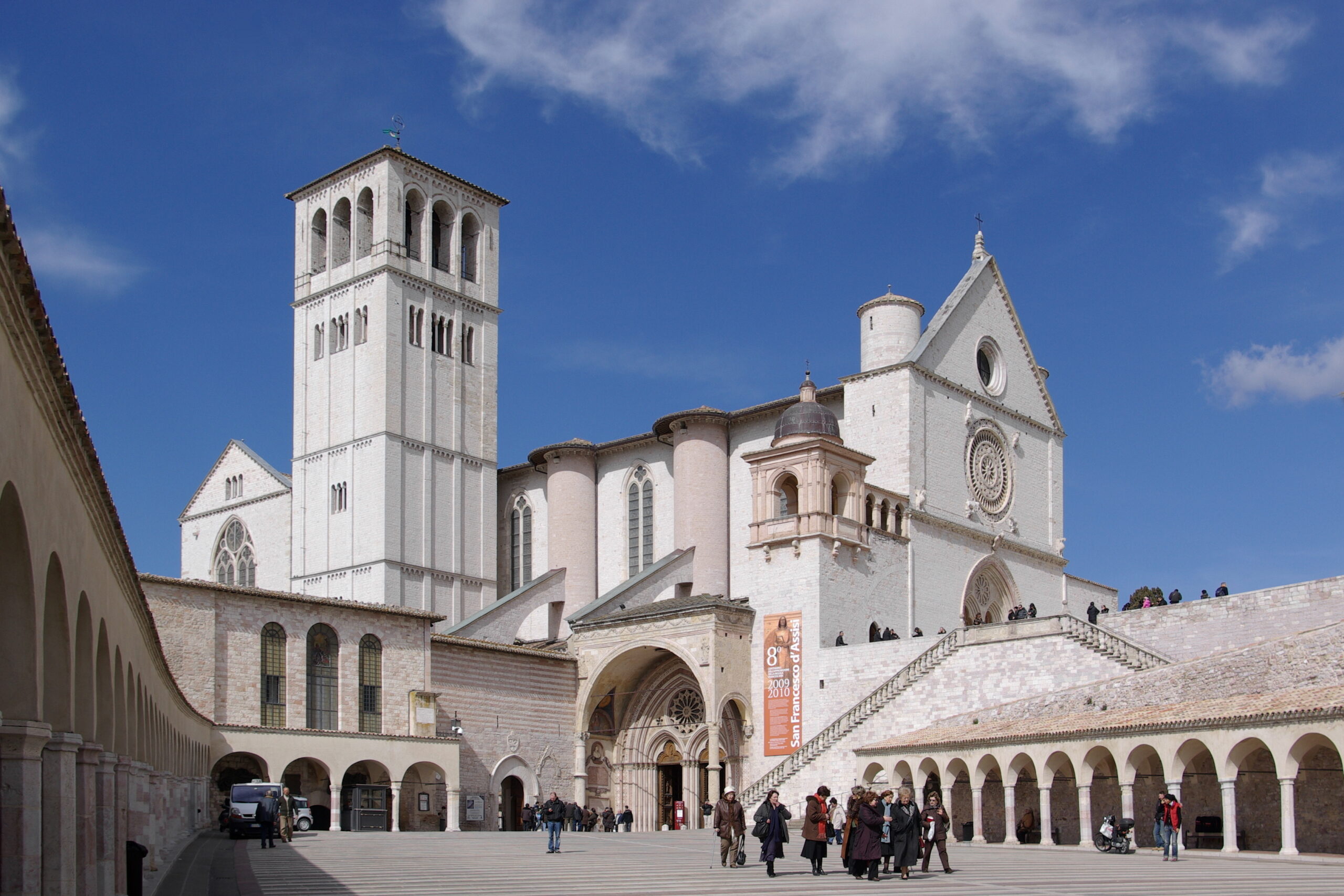
Basilica of Saint Francis of Assisi
Begun in 1228, two years after the death of Francis of Assisi, the Basilica of Saint Francis is a double sanctuary that pairs a Romanesque Lower Church with a Gothic Upper Church above. It houses the saint’s tomb and the medieval fresco cycle of the Vita di San Francesco traditionally attributed to Giotto, alongside major works by Cimabue, Pietro Lorenzetti and Simone Martini.
- Address
- Piazza Inferiore di San Francesco 2, 06081 Assisi PG
- Period
- 1228–1253 (Lower and Upper Basilica)
- Architect (attributed)
- Brother Elias of Cortona (supervision); design tradition cites Maestro Jacopo Tedesco
- Function
- Mother church of the Franciscan Order; burial site of Saint Francis (d. 1226)
- Current use
- Active basilica and Sacro Convento friary; UNESCO World Heritage Site since 2000
- Coordinates
- 43.0747° N, 12.6055° E
- Notes
- Fresco cycle attributed to Giotto (c. 1296–1304); Upper Church vaults damaged in the 1997 Umbria-Marche earthquake and restored by 1999
Gallery
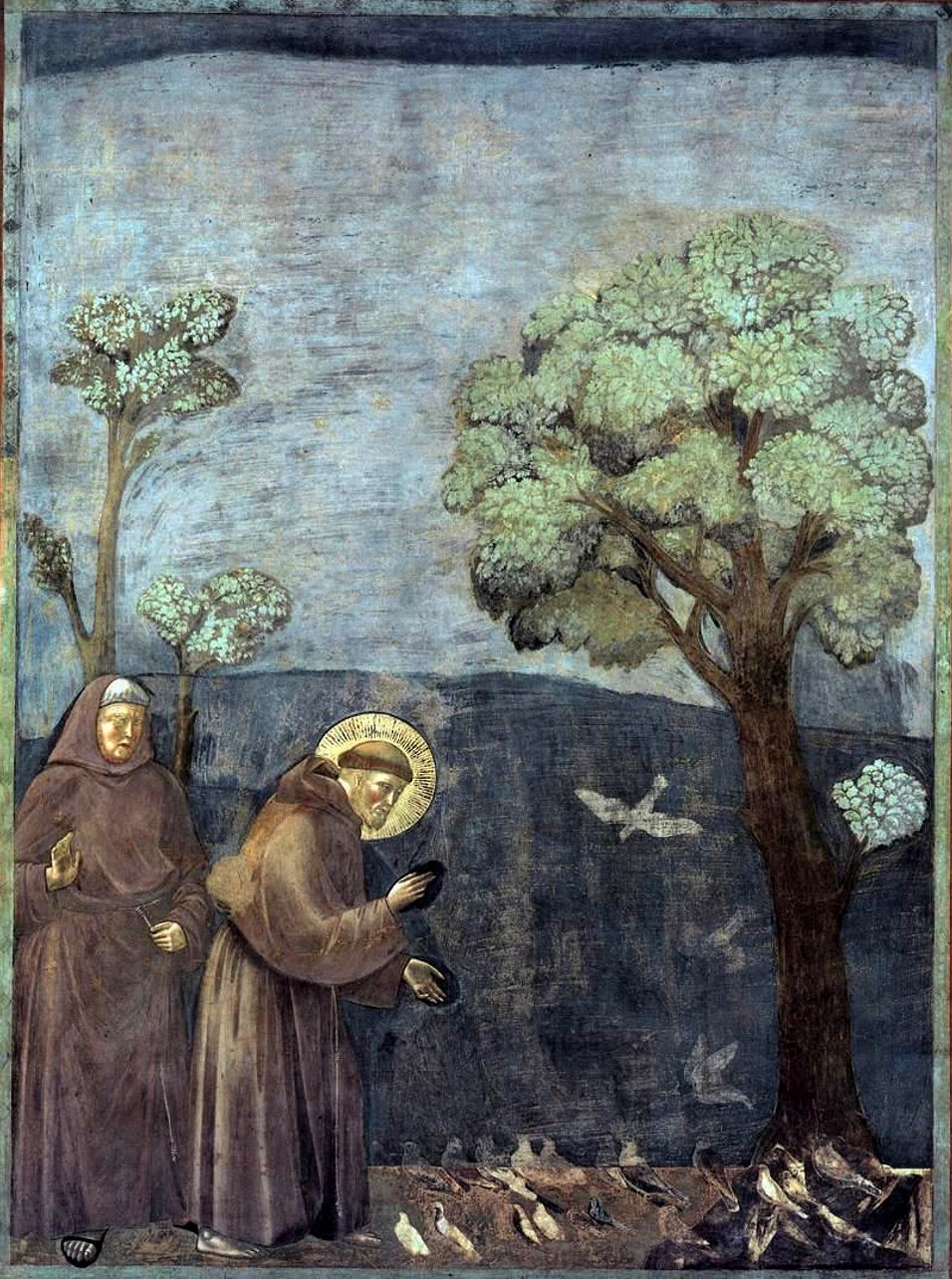
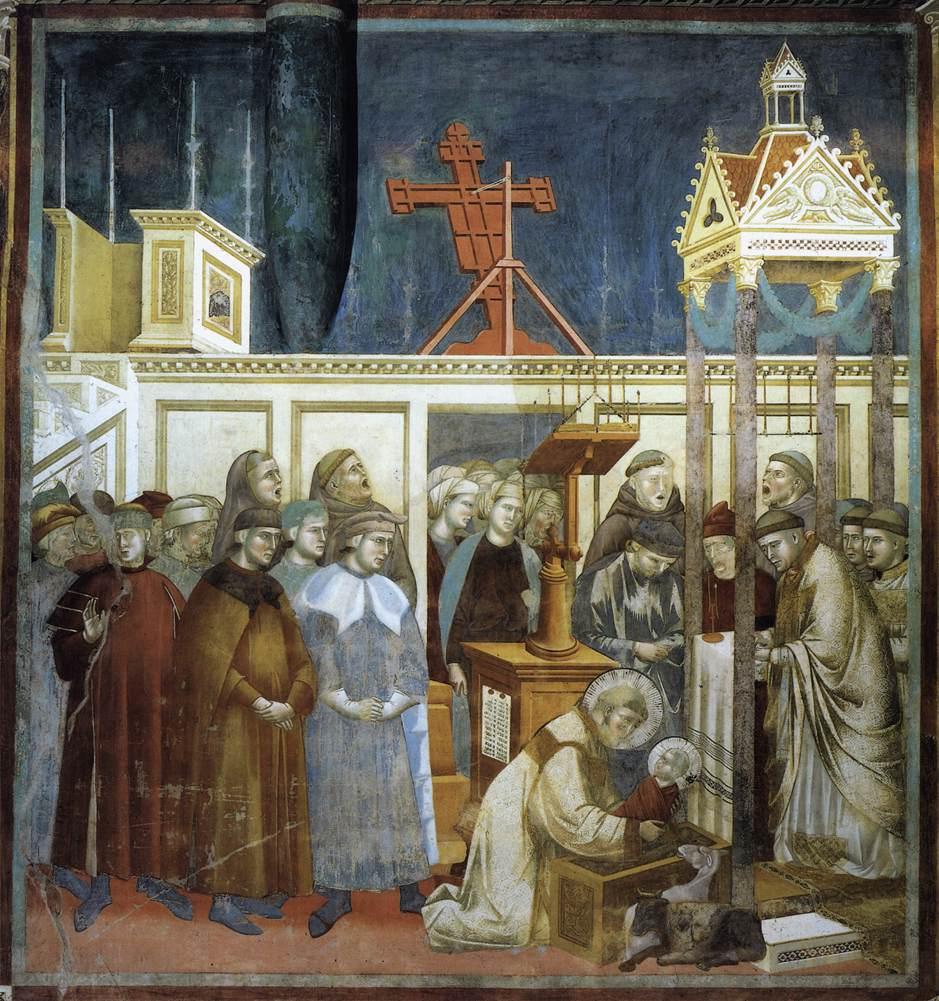
Two scenes from the twenty-eight-panel Legend of Saint Francis, the medieval narrative cycle that lines the nave of the Upper Basilica.
Visit on the map
Piazza Inferiore di San Francesco 2 · 43.0747° N, 12.6055° E
Download for your navigator
A single waypoint, ready for GPS apps, navigators, and contacts.
Construction of the basilica began on 17 July 1228, the day after Francis was canonised by Pope Gregory IX. Built into the western flank of the Assisi hillside on a site Francis himself had called the Colle dell’Inferno, the complex unfolds on two superimposed levels: a low, Romanesque Lower Church consecrated in 1230 to shelter the saint’s tomb, and a taller Gothic Upper Church begun after 1239 and completed in 1253. Both were consecrated that same year by Pope Innocent IV. Building works were supervised by Brother Elias of Cortona, one of Francis’s earliest companions and a controversial figure within the young Order; tradition also names Maestro Jacopo Tedesco as the architect. The double-church plan is unusual in medieval Italy and turned the basilica into both a pilgrimage shrine and the mother church of the Franciscans.
Across the late thirteenth and early fourteenth centuries the interior was decorated by what amounts to a roll-call of pre-Renaissance painting. The Upper Basilica nave carries the Legend of Saint Francis, a cycle of twenty-eight scenes from the saint’s life executed roughly between 1296 and 1304 and traditionally attributed to a young Giotto, though the attribution has been debated by scholars since the nineteenth century. Cimabue painted a Crucifixion in the transept of the Upper Church, while the Lower Basilica preserves frescoes by Pietro Lorenzetti in the left transept and a chapel cycle on the life of Saint Martin by Simone Martini. Together these programmes condense roughly a century of Italian wall painting into a single building.
On 26 September 1997 two earthquakes of magnitude 5.7 and 6.0 struck the Umbria-Marche border. An aftershock brought down two vaults of the Upper Basilica, killing four people inside the church and shattering frescoes by Cimabue and the so-called Maestro di San Francesco into thousands of fragments. A two-year campaign of structural consolidation and fresco recomposition allowed the basilica to reopen in late 1999. The following year the complex was inscribed on the UNESCO World Heritage List as part of Assisi, the Basilica of San Francesco and Other Franciscan Sites, together with the Eremo delle Carceri, the churches of Santa Chiara, San Damiano and San Rufino, and the Porziuncola at Santa Maria degli Angeli.
Resources & References
Editorial picks across Wikipedia, photo archives, and the official portal.
All photographs Wikimedia Commons (CC-BY / CC-BY-SA / Public Domain) unless otherwise stated. Editorial text Cultural Heritage Online, OASIS Tech LLC USA.
Find it on the map
See this place and what’s around it →📷 Diventa un fotografo di Cultural Heritage Online
Condividi le tue foto dei luoghi: restano pubblicate con la tua firma come autore. Più vengono viste, più ti fai conoscere — e presto un concorso premierà le foto più apprezzate.
Accedi o registrati gratis per aggiungere una foto