
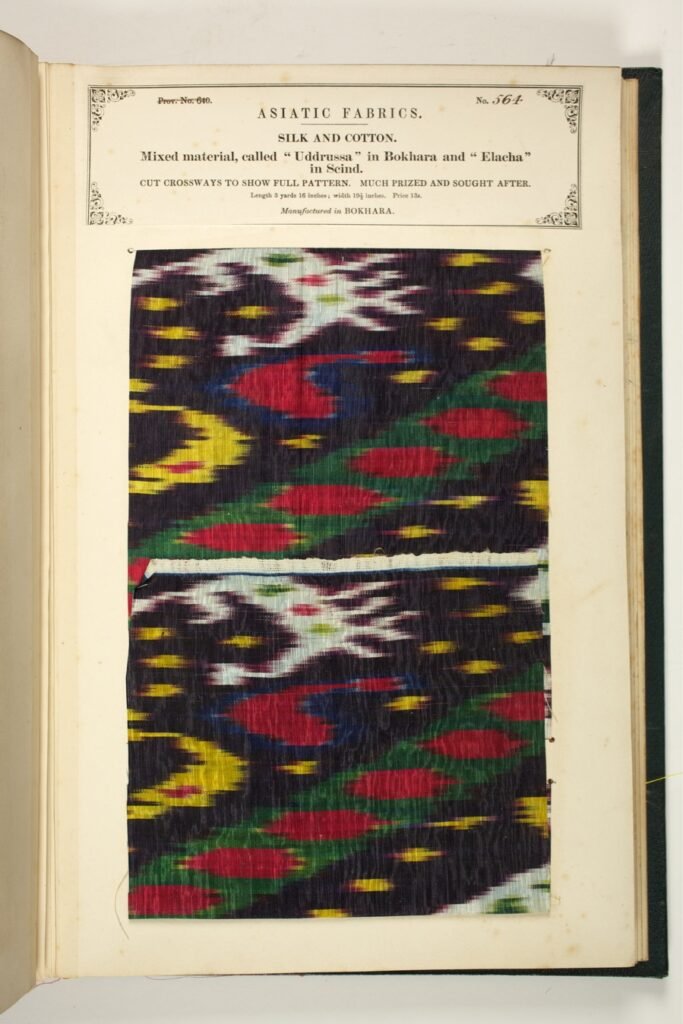
In the mountain valleys of Central Asia, master weavers create adras—a luminous silk-cotton blend prized for its strength, color saturation, and royal dignity. The fabric’s name itself, derived from words meaning “royal,” speaks to centuries of prestige.
At a glance
Adras is a natural handwoven fabric composed of equal parts silk and cotton fibers. Traditionally produced in Tajikistan and Uzbekistan, it is distinguished by its durability, vivid hues, and capacity to maintain its qualities across generations of wear. The weaving process remains labor-intensive and costly, reflecting the cloth’s historical association with rulers and the wealthy.
Origins & history
The weaving of adras belongs to a broader tradition of silk-cotton textile craftsmanship in the Ferghana Valley and surrounding regions. The fabric’s alternative names—pādshāhī and shāhī, both meaning “royal” in Tajik—underscore its long association with power and luxury. The practice of making atlas and adras in traditional ways was inscribed on the UNESCO List of Intangible Cultural Heritage of Humanity in 2017.
The practice
Weavers hand-spin silk fibers and cotton into yarn, then interlace them on traditional looms to create the characteristic dense weave. The resulting cloth displays rich, saturated colors that emerge from natural dyes. Each piece demands skilled hands, precise tension, and patience—the hallmarks of heritage craftsmanship. The fabric’s exceptional strength allows it to endure decades of use without degradation.
Cultural significance
Adras represents far more than functional cloth; it embodies the identity and pride of Tajik and Uzbek communities. The weaving knowledge passes from master to apprentice, anchoring family and regional identity. In a region where textiles have long carried diplomatic weight and cultural prestige, adras remains a living link to that heritage.
Key facts
- Composition: 50% silk fibers, 50% cotton
- Countries of origin: Tajikistan and Uzbekistan
- Anchor community: Khujand, Tajikistan
- UNESCO inscription: 2017 (Reference 01484)
- Characteristics: Notable strength, rich color, long-lasting durability
Where to experience it
Khujand, in northern Tajikistan, remains the heartland of adras weaving tradition. Visitors may encounter weavers and their work in local craft centers and markets. The practice continues in workshops where artisans maintain the historic techniques and pass knowledge to new generations.
Sources & resources
Find it on the map
See this place and what’s around it →📷 Become a Cultural Heritage Online photographer
Share your photos of places: they stay published under your name as the author. The more they're seen, the more you get noticed — and soon a contest will reward the most appreciated photos.
Log in or sign up free to add a photo