
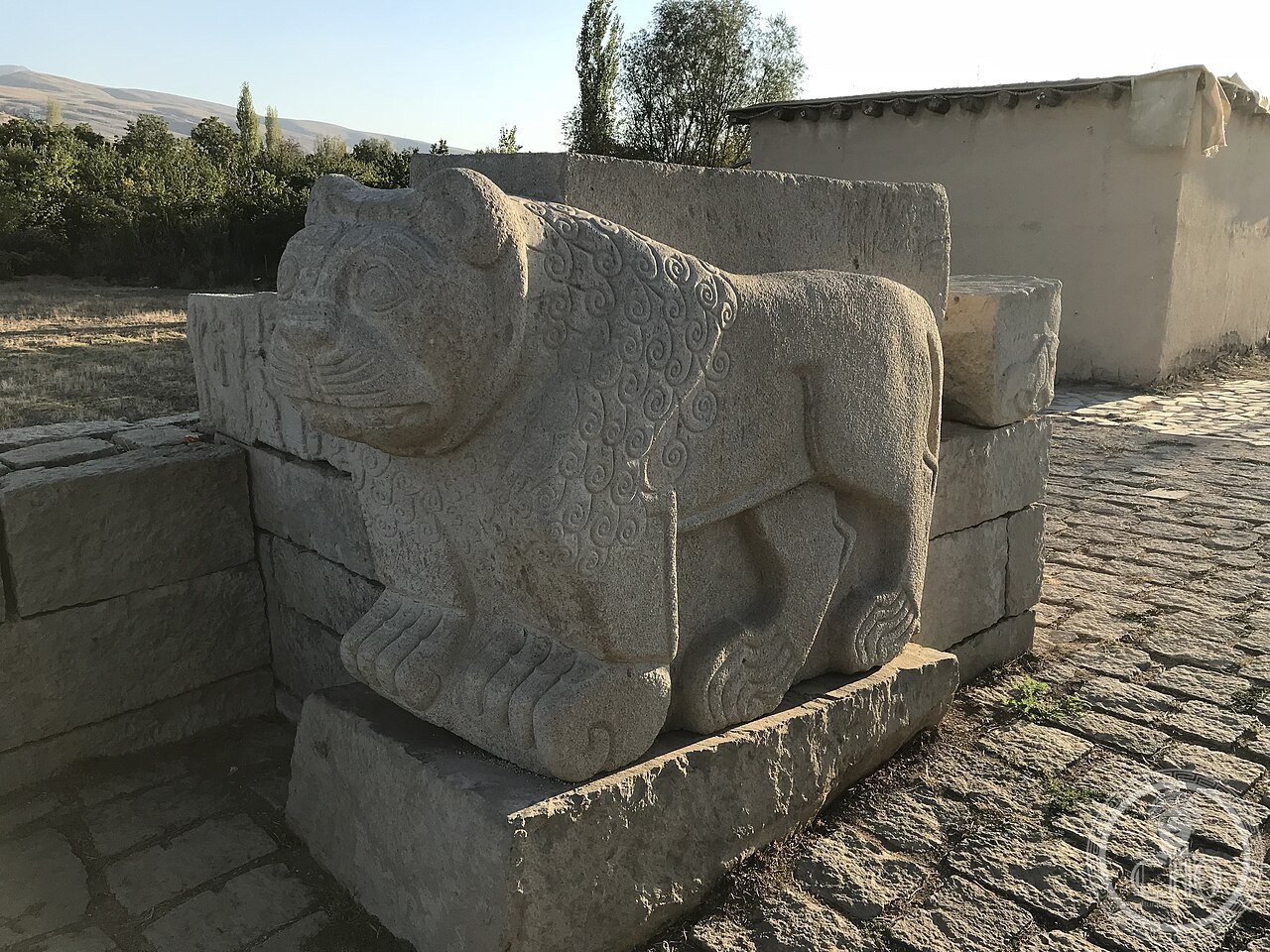
The hill where the state was invented – a 4th-millennium palace with the world’s oldest swords, UNESCO-listed 2021.
At a glance
- Type
- Tell settlement (UNESCO 2021)
- Period
- 5th millennium BC – Iron Age; apogee c. 3300 BC
- Style
- Mudbrick palace complex
- Location
- Malatya, eastern Turkey
- Coordinates
- 38.3811, 38.3608
- Finds
- Earliest known swords; mass administrative sealings
Overview
Arslantepe – Lion Hill, for the Hittite-era lions found atop it – banks five millennia over the Malatya plain, and at its 3300 BC layer the excavators’ fifty-year work exposed what UNESCO’s 2021 listing certifies: the earliest known palace – audience halls, storerooms, and thousands of clay sealings recording a bureaucracy before writing – with the world’s first swords, arsenical bronze, in its armoury. The state apparatus, born outside Mesopotamia’s cities.
History
Uruk’s network touched local chiefs who centralized storage, ritual, and force on the hill; a violent end burned the palace, sealing it for archaeology. Later levels run royal tombs, Hittite frontier city Melid’s gate lions, and Assyrian conquest – the mound as the Near East’s textbook in one section.
Architecture and Design
Mudbrick corridors and wall paintings survive under the protective roof – visitors walk the palace’s actual passages; reconstructed wall sections show the audience suite’s order. The museum displays the swords’ slim menace and sealing archive’s accounting.
Cultural significance
Arslantepe relocates state-formation’s laboratory to Anatolia – power’s architecture before kings had names history kept – foundational for archaeology’s origins debates.
Visiting today
The site and shelter open daily; Malatya’s museum holds the masterpieces. Apricot season sweetens the plain – the city is the world’s capital of the fruit.
Getting there
Malatya’s airport links Istanbul and Ankara; the mound sits in Orduzu suburb, 15 minutes from the center.
Sources and resources
Find it on the map
See this place and what’s around it →Record researched and written by Luigi De Marchi for Cultural Heritage Online, 2026.
📷 Become a Cultural Heritage Online photographer
Share your photos of places: they stay published under your name as the author. The more they're seen, the more you get noticed — and soon a contest will reward the most appreciated photos.
Log in or sign up free to add a photoIs this page about you?
This page is read by travellers and heritage enthusiasts who find it on Google. Tell us how you are connected to this place and we will take it from there.