

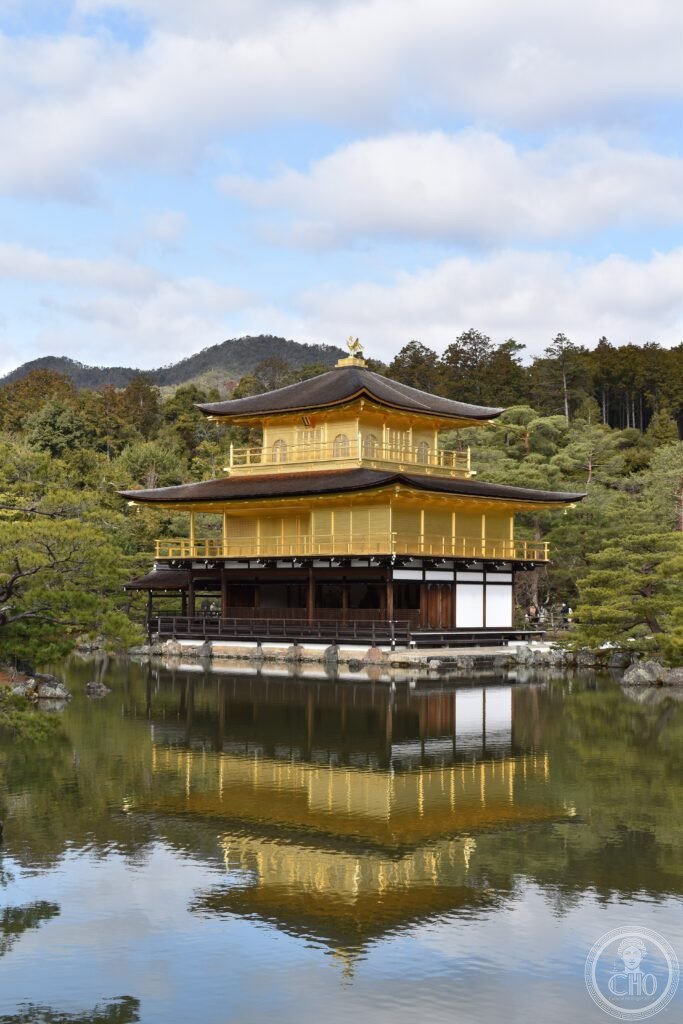
The imperial capital of Japan for more than a thousand years and the most concentrated collection of Buddhist and Shinto heritage in the world. Kyoto, capital of the Japanese emperors from 794 to 1869, contains 2,000 temples and shrines, 17 UNESCO World Heritage Sites, and the living traditions of Japanese culture. The tea ceremony, the geisha (geiko) culture of the Gion quarter, the kaiseki cuisine, the traditional crafts (Nishijin silk weaving, lacquerware, ceramics). That constitute the foundation of Japanese aesthetic civilisation.
At a glance
The Historic Monuments of Ancient Kyoto (Kyoto, Uji and Otsu Cities) (UNESCO WHS 1994; 17 sites across the Kyoto metropolitan area; population of the city of Kyoto approximately 1.46 million (the eighth-largest city in Japan)) served as the imperial capital of Japan from 794 CE (when Emperor Kanmu moved the capital from Nara to the newly founded city of Heiankyō — “Capital of Peace and Tranquillity” — on a flat valley surrounded by mountains to the north, east, and west) to 1869 (when Emperor Meiji transferred the court to Tokyo (then Edo) following the Meiji Restoration). Over 1,075 years as the imperial capital, Kyoto accumulated the densest concentration of heritage architecture in Japan. Approximately 2,000 Buddhist temples, 400 Shinto shrines, 17 UNESCO-inscribed individual sites, and numerous imperial villas. The city was not bombed during World War II (Kyoto was on the initial target list for the atomic bomb; Secretary of War Henry Stimson removed it from the list because he had honeymooned there in 1926 and recognised the unique value of the city’s cultural heritage; Nagasaki was substituted as the second target). This preservation decision made Kyoto the primary repository of traditional Japanese culture in the post-war world. Kyoto is the city where the traditional Japanese arts (the tea ceremony (sadō/chadō); ikebana (flower arranging); Noh theater; geisha (geiko) and maiko culture; kaiseki ryōri (the multi-course traditional Japanese cuisine); Nishijin-ori (silk weaving); Kyo-yaki ceramics) are practised at the highest level.
Key facts
- Kinkaku-ji (The Golden Pavilion): Japan’s most photographed building and its most famous act of arson. Kinkaku-ji is officially Rokuon-ji, the “Temple of the Deer Garden”; the familiar name, Temple of the Golden Pavilion, comes from the gold-leaf building that is its main attraction. It was founded as the country villa of Shogun Ashikaga Yoshimitsu (1358–1408), the third shogun of the Muromachi shogunate, who reunified Japan after the period of the Northern and Southern Courts and was the most powerful political figure in the country in the late 14th century. Yoshimitsu’s will specified that the villa should become a Zen temple after his death: the pavilion began as a private residence and pleasure house, not a religious building. It has three storeys, each in a different style. The ground floor is Shinden-zukuri, the Heian-period aristocratic manner, open to the garden, its white wood left ungilded. The first floor is Buke-zukuri, the samurai house style, its outer surface covered in gold leaf. The second is in the Chinese Zen temple style, gilded over every outer surface including the roof, with a gold phoenix at the very tip. Below lies the Mirror Lake, Kyōko-chi, and the reflection in it is the most photographed sight in Kyoto: on calm mornings it returns a perfect inverted image. The garden around it is one of the finest Muromachi-period gardens in Japan, designed by Musō Soseki (1275–1351), the most important landscape designer of his age. On 2 July 1950 the pavilion burned to the ground. Hayashi Yōken, a 21-year-old novice monk with an obsessive relationship to its beauty, set the fire; he was convicted of arson and sentenced to seven years, reduced to three for reasons of health, and died of tuberculosis in 1956. Yukio Mishima turned the episode into “The Temple of the Golden Pavilion” (1956), one of the major novels of 20th-century Japanese literature. The building standing today was reconstructed in 1955, and the restoration of 1987 increased the gilding to approximately 20 kg of pure gold leaf — the thinnest gold sheet industrially produced, applied with a lacquer adhesive. It is re-gilded approximately every 20 years.
- Fushimi Inari Taisha: 10,000 vermilion torii gates and the most important Shinto shrine in the Kansai region. Fushimi Inari Taisha is the most visited site in Kyoto, with approximately 3 million visitors a year, and the head shrine of the approximately 30,000 Inari shrines across Japan. Inari is the Shinto deity of rice, sake, agriculture, fertility and foxes: kitsune are the god’s messengers, and fox statues line the path up Inari-yama everywhere on the grounds. The shrine was founded in 711 CE. Its famous element is the torii: approximately 10,000 vermilion gates — the exact number shifts as new ones are donated and old ones taken down — line the 4-km path from the main shrine at the foot to the summit of Mount Inari, 233 m. Businesses and individuals pay for them, and each carries the donor’s name and the date of the gift on the back. The densest stretch, the “Senbon Torii” or Thousand Torii, just above the main buildings, is the most photographed. The full walk to the summit takes approximately 2–3h each way: the lower part, the Senbon Torii, 30 min, is extremely crowded in daylight, while above the Yotsutsuji intersection the path grows much quieter and opens onto views of the city.
- Kiyomizu-dera: the wooden stage and the leap of faith. Kiyomizu-dera, the “Pure Water Temple”, was founded about 778 CE, and the buildings standing now date from 1633, after a fire. Its most dramatic element is the main hall: a wooden stage raised on a hillside above the Otowa waterfall, extending 13 m over the valley and built, like the hall itself, entirely of wood without a single nail. From the stage comes the most famous view in Kyoto — the pagoda of the West Gate at Jishu Shrine below, the forested slope, the city in the distance. Beneath it the Otowa waterfall divides into three separate streams, each said to grant a different wish: long life, success in study, and fortunate love. The place gave Japanese a saying, “jumping off the stage at Kiyomizu” (清水の舞台から飛び降りる), which means to take the plunge, to commit decisively. It comes from a real practice: in the Edo period, 1603–1868, people believed that surviving the jump from the 13-m stage would grant their wish. Approximately 234 people jumped between 1694 and 1864, 85% survived, and the practice was banned in 1872.
- Heritage: UNESCO World Heritage Site, Historic Monuments of Ancient Kyoto (Kyoto, Uji and Otsu Cities), inscribed 1994.
- GPS: 35.0116° N, 135.7681° E.
History
Heian-kyō (794–1185; the founding of the capital by Emperor Kanmu; the import of Chinese Tang Dynasty court culture; the development of kana syllabary (the Japanese writing system); the Heian period literature (The Tale of Genji by Murasaki Shikibu, c.1010 CE; the first psychological novel in world literature; the most important work in Japanese literature; the world described in Genji is the world of the Heian court in Kyoto)). The medieval period (1185–1600; the Kamakura and Muromachi shogunates; Kyoto nominally capital but power held by the samurai class; the Onin War (1467–1477; a decade-long civil war fought largely within Kyoto that destroyed much of the city; most of the surviving medieval buildings in Kyoto postdate the Onin War); the Muromachi period golden age (the construction of the Kinkaku-ji and Ginkaku-ji (Silver Pavilion) by the Ashikaga shoguns; the development of Noh theater, the tea ceremony, ink painting, Zen garden design)). The Edo period (1603–1868; the Tokugawa shogunate; Kyoto as cultural capital, Edo (Tokyo) as political capital; the great rebuilding of many temples and shrines; the development of the traditional arts to their classical forms). The Meiji period (1868–1912; the Emperor moved to Tokyo; Kyoto’s anxiety about decline (the city invested heavily in modernisation to compensate for the loss of the court); the industrialisation of the traditional crafts). WWII sparing (1945; Stimson’s intervention; the city survived intact). UNESCO WHS 1994 (17 sites).
What you see
The recommended itinerary by district: Eastern Kyoto (Higashiyama; the most walkable heritage district; from Kiyomizu-dera north along Sannenzaka and Ninenzaka (cobbled pedestrian lanes; the finest preserved Meiji-era machiya townhouse streetscape in Kyoto) to Yasaka Shrine and Maruyama Park (the sakura park); the Gion district (the geiko/maiko quarter; the most atmospheric lane is Hanamikoji Street); Nishiki Market (the “Kyoto’s Kitchen” covered market)). Northern Kyoto (Kinkaku-ji; the Ryōan-ji rock garden (the most famous karesansui (dry landscape garden) in Japan; 15 rocks arranged in raked white gravel; the arrangement is such that from any ground-level viewpoint within the garden, at least one of the 15 rocks is hidden; the arrangement was designed intentionally; the designer is unknown)). Southern Kyoto (Fushimi Inari Taisha — best at dawn or dusk; the Tōfuku-ji (the finest Zen temple complex in Kyoto; the maple-leaf viewing in November is the most spectacular foliage in the city)).
Practical information
- Getting there: Kyoto sits on Japan’s Shinkansen network, with Kyoto Station as the hub. The Tōkaidō line reaches Tokyo in 2h 15 min by Nozomi super-express for approximately JPY 13,910, EUR 85, the fastest service between the two cities; Osaka, at Shin-Ōsaka, is 15 min away for approximately JPY 1,420, and Hiroshima 1h by the same Nozomi. From Kansai International Airport (KIX) the Haruka limited express runs to Kyoto Station in 75 min for JPY 3,600, approximately 1h door to door. In the city, the Kyoto City bus and subway system is the most efficient way to move between heritage sites, and the Kyoto One-Day Pass gives unlimited bus travel for approximately JPY 700, on sale at the major stops and at the station. Taxis cost substantially more but reach the sites the buses serve badly. For everything else, a reloadable IC card — Suica or ICOCA — is the most convenient way to pay for transport, convenience stores and many vending machines across Japan.
- The tea ceremony experience: the most concentrated tea ceremony culture in Japan. Sadō, or chadō, the Way of Tea, is the most important traditional art form in Kyoto. Its philosophy is wabi-cha, the aesthetic of imperfection, incompleteness and impermanence — the most important concept in Japanese aesthetics since the 16th century, and the thing that underlies not only the ceremony but the gardens of the city, its kaiseki cuisine and its crafts. Several tea rooms offer the ceremony to visitors: En in Higashiyama, the Camellia Tea Experience in Gion, and the Ura Senke, one of the three main schools, whose headquarters are here and which is the most important training institution for tea in Japan, with approximately 3 million registered students worldwide. The experience worth seeking is a ceremony in a traditional Kyoto machiya townhouse with a tatami room and a garden: 45 min to 1h, approximately JPY 2,500–5,000, EUR 15–30.
- Nara. The deer and the Great Buddha: 45 minutes from Kyoto and the former imperial capital. Nara was the capital of Japan before Kyoto, from 710 to 784 CE, and holds the most important collection of 8th-century Buddhist heritage in the country; UNESCO WHS 1998. The Great Buddha Hall of Tōdai-ji is the largest wooden building in the world at 57 m tall and 50 m wide — and it stands at approximately 70% of its original 8th-century size, so the first one was larger still. Inside sits the Daibutsu, a bronze Buddha approximately 15 m high, the largest in Japan, cast in 752 CE. At the base of one of the columns a hole reproduces the width of the Buddha’s nostril, approximately 37 × 37 cm, and passing through it is said to guarantee enlightenment in the next life: adults manage with effort, children with joy. Outside, approximately 1,400 Sika deer, Cervus nippon, roam Nara Park, the largest urban herd in Japan. They are sacred, as messengers of the gods in Shinto tradition, and protected — and also entirely habituated to people, and will pursue anyone holding a deer cracker with determination.
Getting there
Kyoto Station on the Shinkansen (2h15min from Tokyo, 15min from Osaka). Kansai Airport (KIX) 75min by Haruka express. GPS: 35.0116, 135.7681.
Nearby
- Osaka. 15 min from Kyoto by Shinkansen or 30 min by regular express. Japan’s most gastronomically celebrated city. Osaka (Naniwa; the largest city in the Kansai region; population approximately 2.7 million; Japan’s self-declared “food capital” (the concept of kuidaore — “ruin yourself by eating” — is Osaka’s civic philosophy)). The Dotonbori district (the most vibrant entertainment district in Osaka; the canal; the Glico Running Man neon sign (the most famous neon advertisement in Japan; installed 1935; the image of a runner with arms raised; one of the most recognised brand images in Japan); the Kani Doraku crab restaurant with its mechanical crab model on the facade; the takoyaki (octopus ball) stalls along the canal). Osaka Castle (the original castle built by Toyotomi Hideyoshi in 1583; the current five-storey donjon (1931; a concrete reconstruction of the third iteration of the castle; the castle that stands today is the fourth version of the structure); Osaka’s Universal Studios Japan (the most visited theme park in western Japan)).
- Hiroshima and Miyajima (UNESCO WHS). 1h from Kyoto by Shinkansen (Nozomi). The atomic bomb memorial and the most sacred Shinto island in Japan. Hiroshima was destroyed by the first atomic bomb on 6 August 1945. Its Peace Memorial Museum is the most visited in the city and the most important document in existence of what nuclear weapons do to people. The Genbaku Dome, the Hiroshima Peace Memorial, was the only building left standing near the hypocenter and is preserved as a ruin; UNESCO WHS 1996. Miyajima Island, Itsukushima, also UNESCO WHS 1996, is 10 min by ferry from Miyajimaguchi, reached from Hiroshima by tram and JR train. The Itsukushima Shrine of 1168 was built out over the sea so that at high tide the whole complex seems to float, and before it stands the “floating torii”, the great Shinto gate in the water: the most photographed image of Shinto Japan, currently under restoration, with completion expected in 2026.
- Hakone and Mount Fuji. 2h from Kyoto (Shinkansen to Odawara, then Hakone Tozan railway). The finest mountain resort in Japan and the view of the iconic volcano. Hakone is the hot spring, onsen, resort town on the eastern flank of the Hakone caldera, and the most popular within reach of both Tokyo and Kyoto. Its Open Air Museum is the most important sculpture park in Japan, with the Henry Moore collection and the Picasso Pavilion. From here comes the view of Mount Fuji, Fuji-san, 3,776 m, UNESCO WHS 2013, the highest and most iconic mountain in the country: the best vantage point is Owakudani, the active volcanic area at the top of the ropeway, 1,044 m, where the sulphur vents in the foreground and Fuji behind make the most dramatic sight in the region. On the mountain itself, the official climbing season runs from July to early September, the most popular route is the Yoshida Trail from Kawaguchiko, and the ascent to the summit at 3,776 m takes approximately 6–8h. What climbers go for is Goraiko, the “honourable sunrise” seen from the top.
Sources
- Wikipedia, Historic Monuments of Ancient Kyoto. Kinkaku-ji. Fushimi Inari-taisha. Kiyomizu-dera, accessed June 2026.
- UNESCO, Historic Monuments of Ancient Kyoto (Kyoto, Uji and Otsu Cities), WHS reference 688, inscribed 1994.
- Donald Richie, A Tractate on Japanese Aesthetics, Stone Bridge Press, 2007.
Find it on the map
See this place and what’s around it →📷 Become a Cultural Heritage Online photographer
Share your photos of places: they stay published under your name as the author. The more they're seen, the more you get noticed — and soon a contest will reward the most appreciated photos.
Log in or sign up free to add a photo