

A vast expanse of mountains and desert hosting Africa’s second-largest nature reserve, where migratory birds traverse ancient landscapes threatened by mining and civil unrest.
At a glance
Spanning 77,360 square kilometres across Niger’s eastern Aïr Mountains and western Ténéré desert, this composite reserve comprises a National Nature Reserve and the Addax Sanctuary. It represents one of the world’s four largest protected areas, designated by UNESCO for its ecological and geological significance.
History
The reserve was formally established on 1 January 1988, with two complementary designations: the National Nature Reserve (64,560 km²) and the Addax Sanctuary (12,800 km²). UNESCO recognized the site as a World Heritage property in 1991, designating it a site in danger the following year. Since 2023, the reserve has faced mounting pressures from illegal mining, particularly gold panning, and civil unrest that threaten its ecological integrity and wildlife populations.
What you see
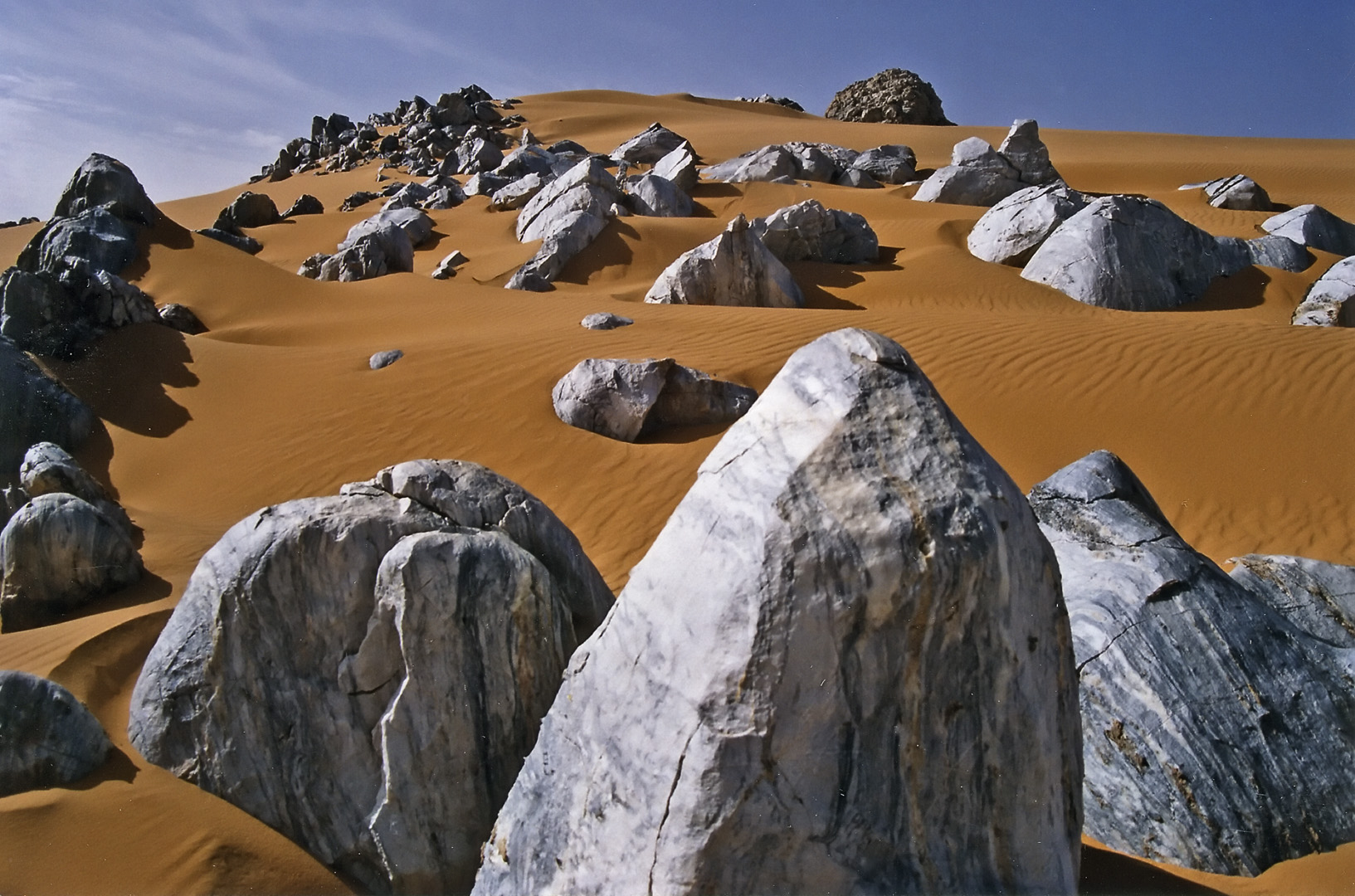
The landscape encompasses dramatic mountain terrain and vast desert expanses. The Aïr Mountains rise above surrounding plains, creating distinct ecological zones. The Ténéré desert extends westward, its dunes and rock formations shaped by wind and time. Vegetation ranges from sparse grasslands to isolated trees adapted to arid conditions.
Cultural significance
BirdLife International identifies the reserve as an Important Bird Area, hosting crucial stopover and breeding grounds for afrotropical and palaearctic migratory species. The mountains support specialist bird populations found nowhere else. However, biodiversity has declined sharply: while 165 bird species were recorded at UNESCO designation, only 50 species were confirmed in recent ecological missions. Nubian bustard populations showed particular decline.
Large mammals including Dama and Dorcas gazelles and Barbary sheep remain present, though the addax—the reserve’s flagship species—has not been sighted in twenty years. Local conservation involvement has helped limit illegal activity and slow further deterioration.
Key facts
- Country: Niger
- Area: 77,360 square kilometres (29,870 sq mi)
- Established: 1 January 1988
- UNESCO World Heritage Site: yes, 1991 (World Heritage in Danger)
- Designation criteria: vii, ix, x
- Second-largest nature reserve in Africa
- Fourth-largest nature reserve in world
Practical information & getting there
Access to the reserve is challenging given Niger’s remote terrain and current security concerns. Visitors should seek current travel advisories and coordinate with Niger’s national parks authority. The site remains under significant threat, and independent exploration is not recommended without professional guidance and local authorization.
Sources & resources
Find it on the map
See this place and what’s around it →📷 Become a Cultural Heritage Online photographer
Share your photos of places: they stay published under your name as the author. The more they're seen, the more you get noticed — and soon a contest will reward the most appreciated photos.
Log in or sign up free to add a photo