
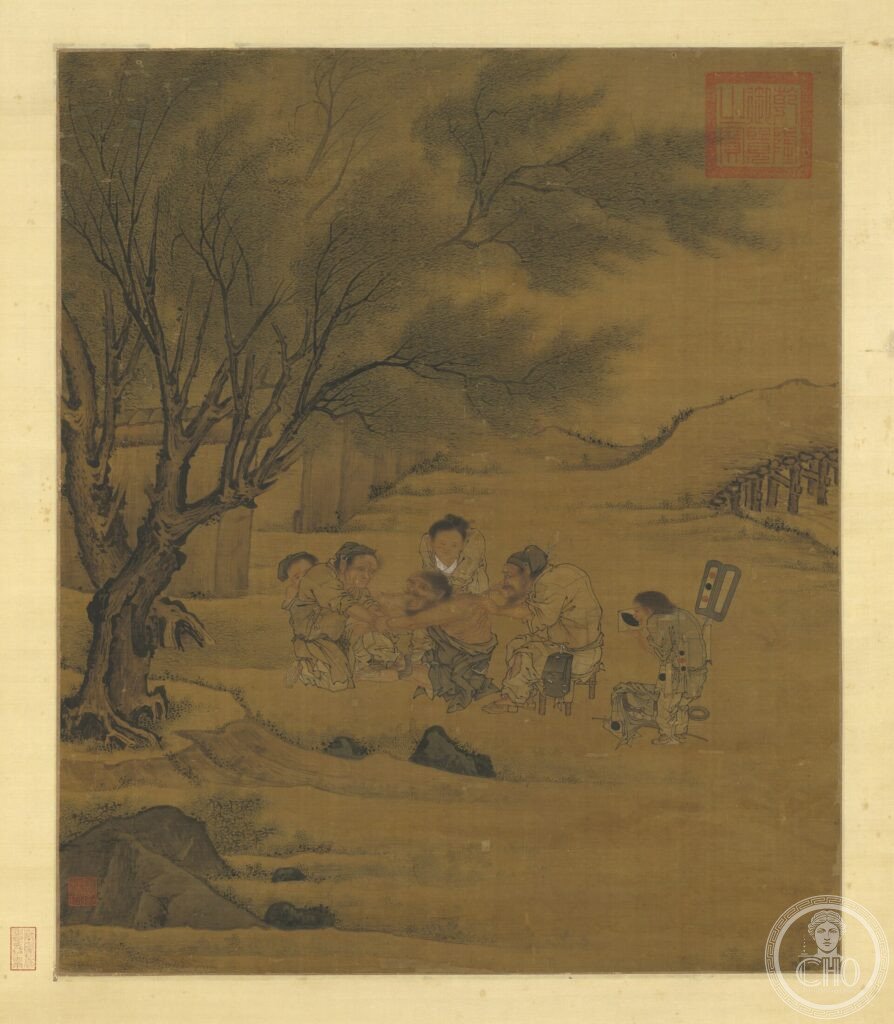
A healing practice spanning millennia, moxibustion harnesses the warmth of burned mugwort to restore balance in the body according to principles of traditional Chinese medicine.
At a glance
Moxibustion is a therapy in which practitioners burn dried and processed mugwort—known as moxa—on or near specific points of the body. The practice forms part of a broader healing system that also encompasses acupuncture, herbalism, and other modalities. It has been central to medical practice in China, Japan, Korea, Vietnam, and Mongolia for centuries.
Origins & history
Moxibustion developed within the framework of traditional Chinese medicine, a comprehensive system of diagnosis and treatment refined over generations. The practice is thought to complement acupuncture and herbal remedies as part of an integrated approach to health and wellness rooted in concepts of qi (vital energy) and balance.
The practice
Practitioners begin by sourcing dried mugwort, which they age and grind into a fine, fluffy material. This moxa can be shaped into cigar-like sticks, applied directly to the skin, or integrated with acupuncture needles to combine heat with needle insertion.
The sensory experience centers on warmth. As the moxa smolders, it releases gentle heat and a distinctive herbal aroma. Practitioners position the burning material at carefully mapped acupoints—locations believed to correspond to organs and systems within the body. Some methods apply heat indirectly, holding the stick or compressed moxa above the skin; others allow the material to touch the body directly. The ritual unfolds slowly, often as part of a longer treatment session.
Cultural significance
Moxibustion embodies a worldview in which health arises from harmony between body, seasons, and environment. Its persistence across East Asia reflects shared medical philosophy and cross-cultural exchange. The practice represents continuity with ancestral knowledge and remains woven into daily wellness practices for millions of people.
Key facts
- UNESCO Intangible Cultural Heritage inscription: 2010 (reference 00425)
- Anchor region: Beijing, China
- Geographic spread: China, Japan, Korea, Vietnam, Mongolia
- Core material: dried and aged mugwort (moxa), often processed into sticks
- Primary contexts: therapeutic treatment, preventive health care
Where to experience it
Beijing and throughout China remain the heartland of moxibustion practice. The therapy is offered in traditional Chinese medicine clinics, hospitals, and wellness centers. Visitors seeking to observe or receive treatment should consult established medical practitioners trained in these techniques.
Sources & resources
Find it on the map
See this place and what’s around it →📷 Become a Cultural Heritage Online photographer
Share your photos of places: they stay published under your name as the author. The more they're seen, the more you get noticed — and soon a contest will reward the most appreciated photos.
Log in or sign up free to add a photo