
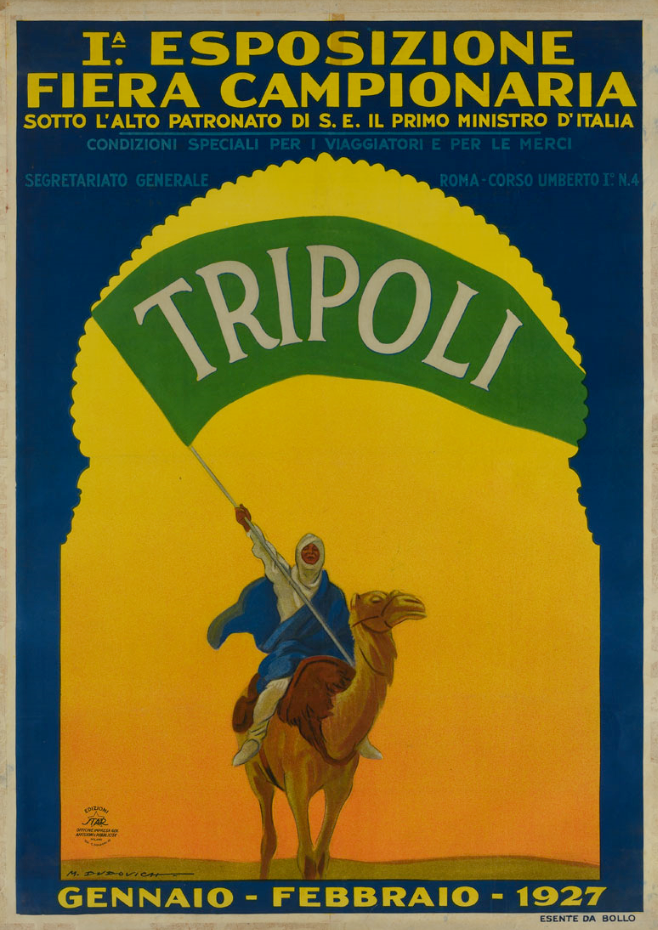
This manifesto dates to 1927 and was created by Marcello Dudovich, the Italian painter, illustrator, and poster designer who ranks among the progenitors of modern Italian poster design.
Dudovich worked across lithography, advertising art, and commercial design throughout a career that began in his native Trieste and expanded significantly after his relocation to Milan in 1897. His practice exemplified the commercial and artistic convergence that defined early twentieth-century poster design in Italy, a field in which he collaborated with and influenced other major figures of the period.
About Marcello Dudovich
Born in Trieste in 1878, Dudovich trained at the Royal School before apprenticing as a lithographer and illustrator. After moving to Milan, he worked for the music publisher Ricordi in advertisement design, establishing himself as a leading practitioner of poster design during a formative period for the medium in Italy.
Details
- Creator: Marcello Dudovich
- Year: 1927
- Medium: Poster
- Movement: Italian poster design
Frequently asked questions
Who was Marcello Dudovich?
Marcello Dudovich (1878–1962) was an Italian painter, illustrator, and poster designer considered one of the progenitors of Italian poster design, working alongside figures such as Leonetto Cappiello and Leopoldo Metlicovitz.
Where did Dudovich work?
Dudovich was born in Trieste and relocated to Milan in 1897, where he worked for the music publisher Ricordi in advertisement design and established his career as a major poster designer.
What was Dudovich’s role in poster design?
Dudovich is recognized as one of the founding figures of modern Italian poster design, helping to establish the medium as a significant form of commercial and artistic expression in early twentieth-century Italy.
