Cultural Heritage Online
The editorial desk

Cultural Heritage Online

Contributions: 835 articles · 15,435 heritage places · 167 events · 50 itineraries · 4 road-books · 16,137 photographs

Author name: Cultural Heritage Online

UNESCO World Heritage Sites Near Timgad: The African Pompeii, Trajan’s Perfect Roman Grid and the Only Surviving Municipal Library Building in the Roman World

UNESCO World Heritage Sites Near Timgad: The African Pompeii, Trajan’s Perfect Roman Grid and the Only Surviving Municipal Library Building in the Roman World

Timgad (UNESCO 1982) — Colonia Marciana Traiana Thamugadi, founded by Emperor Trajan in 100 CE for veterans of the Third Augustan Legion — is the finest surviving example of Roman orthogonal urban planning, preserved by Saharan sand burial from the 7th century until French excavations from 1881. The site on the Algerian steppe at 1,050m includes a triumphal arch, a 3,500-seat theatre, 14 bath complexes, a public library, and complete street grid legible in both plan and pavement.
UNESCO World Heritage Sites Near Timbuktu: Three Great Mosques, 400,000 Islamic Manuscripts and the Saharan Scholarly City UNESCO Listed as In Danger

UNESCO World Heritage Sites Near Timbuktu: Three Great Mosques, 400,000 Islamic Manuscripts and the Saharan Scholarly City UNESCO Listed as In Danger

Timbuktu (UNESCO 1988, In Danger 2012–present) reached its height under the Songhai Empire as one of the great centres of Islamic learning, with 25,000 students, 150–180 Quranic schools, and the three great mosques of Djinguereber (1327 CE), Sankore, and Sidi Yahia. The city holds an estimated 400,000+ private manuscripts and suffered deliberate destruction of 14 of its 16 sacred mausoleums during the 2012 Islamist occupation — an act prosecuted by the ICC as a war crime.

UNESCO World Heritage Sites Near Chan Chan: South America’s Largest Pre-Columbian City, 9 Royal Adobe Ciudadelas and the Chimu Sea-Creature Friezes

UNESCO World Heritage Sites Near Chan Chan: South America’s Largest Pre-Columbian City, 9 Royal Adobe Ciudadelas and the Chimu Sea-Creature Friezes

Chan Chan in northern Peru — 5 km from Trujillo — is the largest pre-Columbian city in South America and the largest adobe city in the world, covering 20 sq km. Capital of the Chimu Empire from c. 900 CE until the Inca conquest of the 1470s, its nine royal compounds with 9–12 m adobe walls and maritime-themed friezes remain on the UNESCO In Danger list due to El Niño erosion.

UNESCO World Heritage Sites Near Tiwanaku: The Gate of the Sun at 3,850 Metres, the Akapana Pyramid and the Pre-Inca Civilisation That Shaped the Andes

UNESCO World Heritage Sites Near Tiwanaku: The Gate of the Sun at 3,850 Metres, the Akapana Pyramid and the Pre-Inca Civilisation That Shaped the Andes

Tiwanaku, on Bolivia’s altiplano at 3,850 metres and 72 km from La Paz, was the spiritual and political capital of the pre-Inca Andes from roughly 500 to 1000 CE. Its Gate of the Sun — a 10-tonne carved andesite doorway bearing the relief of the creator deity Viracocha — and its Akapana pyramid are among the most important monuments of South American civilisation.

UNESCO World Heritage Sites Near Konark: The 13th-Century Stone Chariot of the Sun God, 24 Carved Wheels and the Black Pagoda of Odisha

UNESCO World Heritage Sites Near Konark: The 13th-Century Stone Chariot of the Sun God, 24 Carved Wheels and the Black Pagoda of Odisha

The Konark Sun Temple in Odisha, built around 1250 CE under King Narasimhadeva I, is designed as a colossal stone chariot of the sun god Surya, with 24 carved wheels (each 3 metres in diameter) and a surviving audience hall 39 metres tall. UNESCO-inscribed in 1984, it sits 64 km from Bhubaneswar and 35 km from Puri as part of Odisha’s Golden Triangle.

UNESCO World Heritage Sites Near Sanchi: India’s Oldest Stone Structures, the Great Stupa of Ashoka (3rd c. BCE) and the Four Carved Gateways

UNESCO World Heritage Sites Near Sanchi: India’s Oldest Stone Structures, the Great Stupa of Ashoka (3rd c. BCE) and the Four Carved Gateways

The Buddhist Monuments at Sanchi (UNESCO 1989) stand on a sandstone hill 46 km from Bhopal in Madhya Pradesh — the oldest stone structures in India and the most complete early Buddhist ensemble anywhere. The Great Stupa, originally built by Emperor Ashoka in the 3rd century BCE, is surrounded by four elaborately carved stone gateways (toranas) from the 1st century BCE depicting 547 Jataka tales. The site is notable for its aniconic representation of the Buddha, indicated by symbols rather than a human image.

UNESCO World Heritage Sites Near Volubilis: Morocco’s Best-Preserved Roman City, 40 In-Situ Mosaics and the 300 Olive Presses of Mauretania Tingitana

UNESCO World Heritage Sites Near Volubilis: Morocco’s Best-Preserved Roman City, 40 In-Situ Mosaics and the 300 Olive Presses of Mauretania Tingitana

Volubilis (UNESCO 1997) is the best-preserved Roman provincial city in the Maghreb, on the Zerhoun plain 33 km from Meknès in Morocco. Its 40-plus in-situ floor mosaics — the largest such collection in northwest Africa — survive in the rooms of the houses where they were originally laid. The city was capital of the Roman client kingdom under Juba II (married to Cleopatra Selene II) and later the first seat of the Idrisid dynasty, founders of the Moroccan royal line.

UNESCO World Heritage Sites Near Khiva’s Itchan Kala: The Complete Silk Road City, the Truncated Kalta Minor and the Last Central Asian Slave Market

UNESCO World Heritage Sites Near Khiva’s Itchan Kala: The Complete Silk Road City, the Truncated Kalta Minor and the Last Central Asian Slave Market

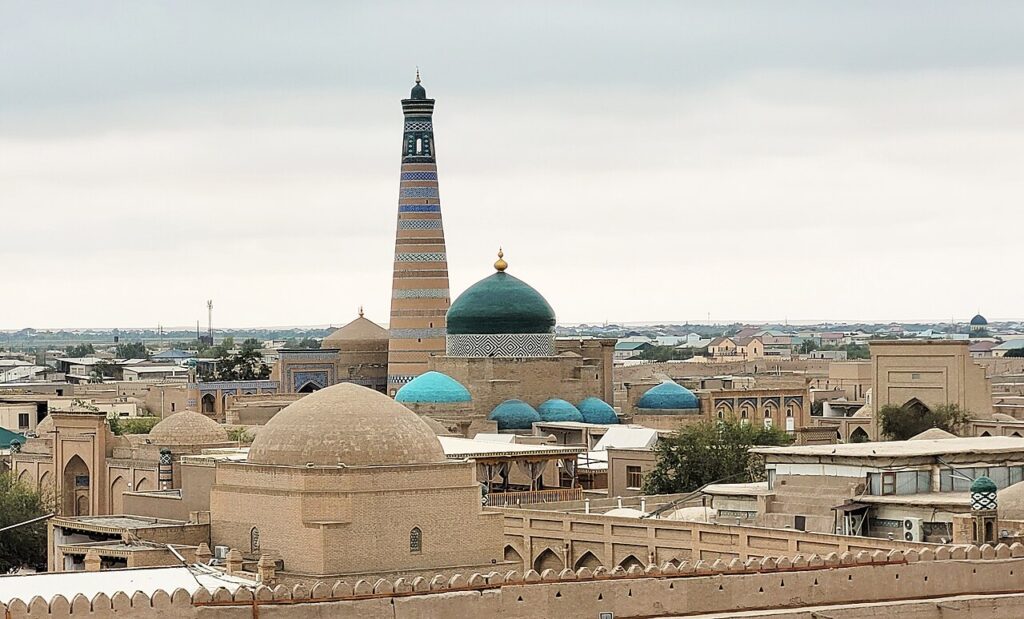
Itchan Kala, the walled inner city of Khiva (UNESCO 1990), is the most completely preserved medieval Central Asian city in existence — 10 hectares of mud-brick architecture including the unfinished Kalta Minor, the 213-column Juma Mosque and the 163-room Tosh-Hovli Palace. Unlike Samarkand and Bukhara, Khiva’s medieval urban fabric survives intact, including its street pattern and residential quarters. The city served as the Silk Road’s last active slave market until Russian conquest in 1873.

UNESCO World Heritage Sites Near Göbekli Tepe: The 11,600-Year-Old Temple That Predates Agriculture, the T-Pillars and the Zero Point of Human Civilisation

UNESCO World Heritage Sites Near Göbekli Tepe: The 11,600-Year-Old Temple That Predates Agriculture, the T-Pillars and the Zero Point of Human Civilisation

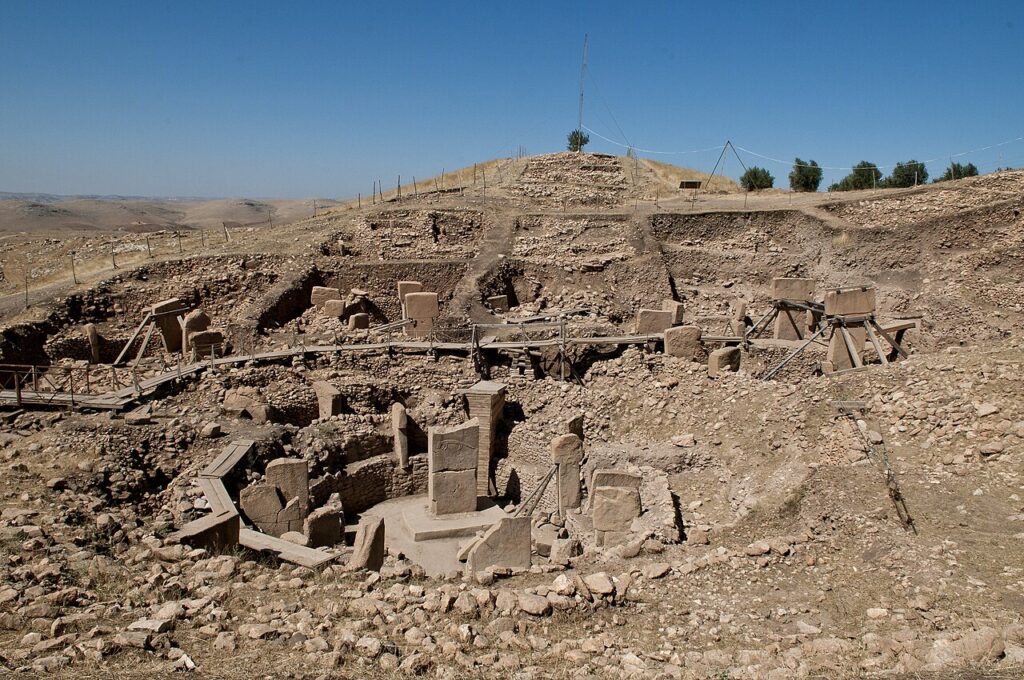
Göbekli Tepe, a UNESCO World Heritage Site since 2018, is a 11,600-year-old ritual complex built by Neolithic hunter-gatherers on a limestone hilltop in southeastern Turkey. Its T-shaped limestone pillars — up to 5.5 metres tall and 20 tonnes each, decorated with bas-reliefs of foxes, vultures and snakes — predate Stonehenge by 6,000 years. The site overturned the established view that monumental architecture follows agriculture, suggesting instead that communal ritual may have driven the agricultural revolution itself.

Stone palace complex with square tower rising above jungle canopy at Palenque Mexico

UNESCO World Heritage Sites Near Palenque: King Pakal’s Temple of Inscriptions, the Only Maya Tower and 620 Hieroglyphs in the Chiapas Jungle

The Pre-Hispanic City and National Park of Palenque, UNESCO-inscribed in 1987, reached its artistic peak under Pakal the Great (r. 615–683 CE) and K’inich Kan Balam II (r. 684–702 CE); the Temple of the Inscriptions (7 platforms, 23 m tall) covers the royal crypt discovered in 1952 by Alberto Ruz Lhuillier, with its 620-glyph inscription panels — the longest Maya stone text known.

Scroll to Top