
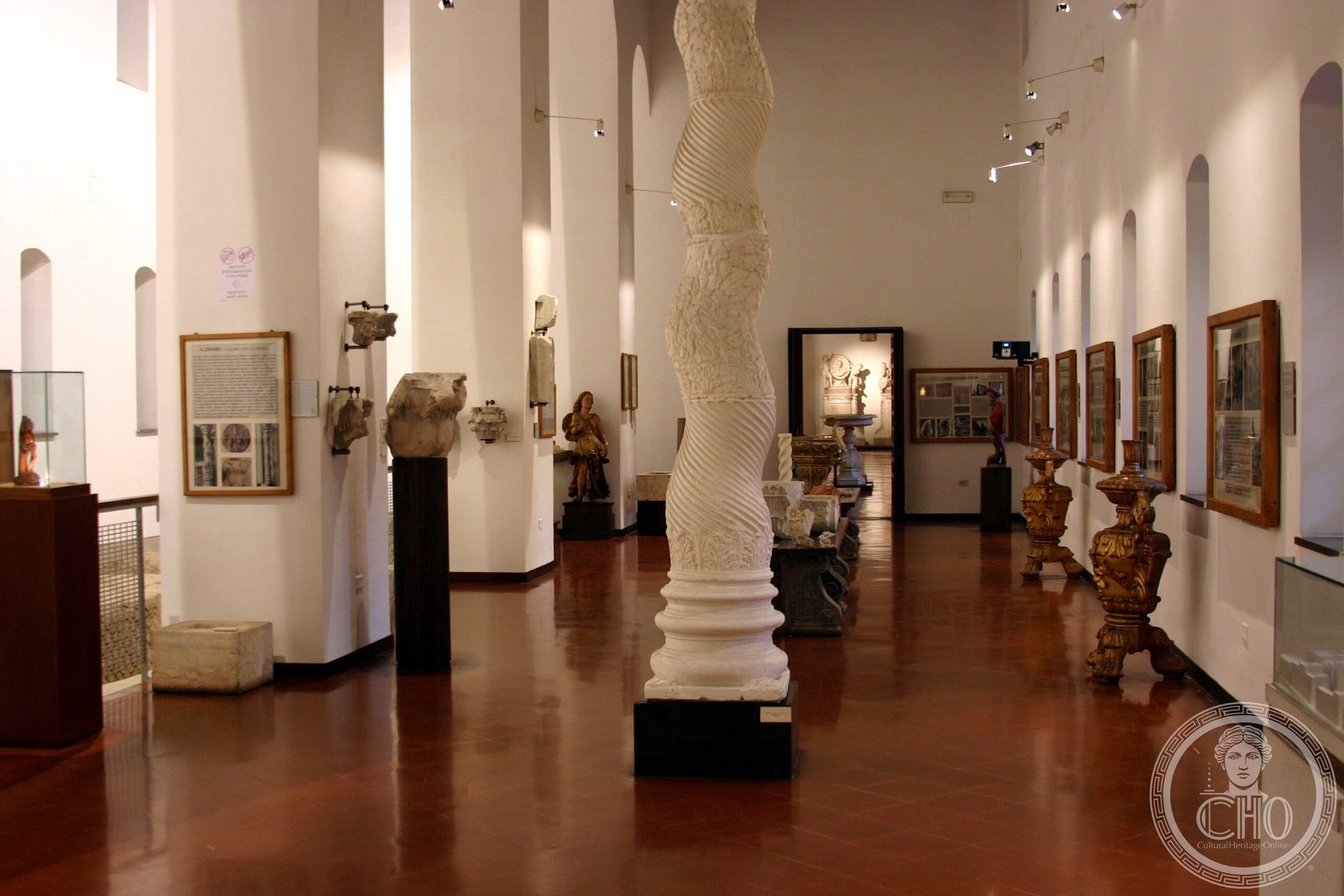
The Museum of Santa Chiara is a civic museum housed in the former Franciscan Clarist (Poor Clares) convent of Santa Chiara in Gorizia, in the Friuli Venezia Giulia region of northeastern Italy. The convent, founded in the 17th century and suppressed under Napoleonic and later Austrian rule, was subsequently adapted for secular use and today contains collections relating to the history, art, and religious heritage of Gorizia and the surrounding border region. The museum offers visitors a layered encounter with the architectural fabric of a Baroque convent and the complex multi-ethnic history of a city that has been Austrian, Italian, and now sits alongside Slovenian Nova Gorica in the 2025 European Capital of Culture.
- Address
- Gorizia, Friuli Venezia Giulia, Italy
- Period
- Convent founded 17th century; museum use: 20th century to present
- Style
- Baroque conventual architecture
- Original patron
- Poor Clares (Order of Saint Clare), Franciscan female branch
- Function
- Civic museum: art, history, and religious heritage collections
- Coordinates
- 45.9473° N, 13.6246° E
- Notes
- Gorizia/Nova Gorica designated European Capital of Culture 2025 (GO!2025); border city with unique Austro-Hungarian, Italian, and Slovenian heritage layers
At a glance
- Type
- Civic museum in former Baroque convent (Poor Clares)
- Period
- 17th century (convent); museum: 20th century to present
- Style
- Baroque conventual architecture
- Location
- Gorizia, Friuli Venezia Giulia, northeastern Italy
- Context
- Part of Gorizia/Nova Gorica, European Capital of Culture 2025
Overview
Gorizia is one of Italy’s most historically layered border cities: a Habsburg provincial capital that passed to Italy in 1920, suffered profound damage and division during the Second World War, and today shares a joint cultural identity with Slovenian Nova Gorica through the innovative GO!2025 European Capital of Culture project. The Museum of Santa Chiara sits within this complex heritage environment, presenting art and historical artefacts that reflect centuries of Central European influence on the region’s culture, religion, and society. The Clarist convent that houses it adds an architectural dimension that is rare in the region.
History
The Poor Clares — the female branch of the Franciscan order founded by Saint Clare of Assisi in the 13th century — established their Gorizia convent in the 17th century, during the period of Habsburg Baroque expansion in the region. The convent functioned as a centre of female religious life in the city until the suppression of religious orders under Napoleon in the early 19th century. Under Austrian rule, the buildings were repurposed; following the transfer of Gorizia to Italy after the First World War, the complex eventually came under civic ownership and was adapted as a museum space.
The museum’s collections reflect Gorizia’s position as a meeting point of Italian, Slovenian, German-speaking, and Jewish communities under the Habsburg Empire, making it an unusually rich documentary resource for the history of Mitteleuropa.
What you see
The museum occupies the former convent buildings, retaining architectural features typical of Baroque conventual construction: vaulted corridors, a cloister garden, and plastered halls that once served as the sisters’ communal spaces. The collections include devotional art from the convent’s own heritage, historical artefacts relating to Gorizia’s civic and religious life, and materials documenting the border region’s complex 20th-century history. The broader Gorizia civic museum network also includes the Museo della Grande Guerra (First World War) and the Museo di Storia e Arte, all contributing to an unusually rich museum offer for a mid-sized city.
Cultural significance
The Museum of Santa Chiara contributes to Gorizia’s status as a city of exceptional heritage density and cross-border European identity. In the context of GO!2025 — the joint European Capital of Culture project shared with Slovenian Nova Gorica, the first cross-border Capital of Culture in European history — the convent museum is part of a wider effort to interpret and celebrate the region’s multilingual heritage. Cultural Heritage Online documents this site as part of Friuli Venezia Giulia’s heritage portfolio of Franciscan foundations and border-region civic culture.
Practical information
Address: Gorizia, Friuli Venezia Giulia, Italy.
Opening hours: Check the Musei Provinciali di Gorizia website for current hours and admission fees; opening times may vary by season and during GO!2025 cultural programme events.
Website: musei.regione.fvg.it
Getting there
Gorizia is served by train from Trieste (approximately 40 minutes on regional services) and from Udine (approximately 50 minutes). The city centre is compact and walkable from Gorizia Centrale station. By car, Gorizia is reached via the A4 motorway (Trieste–Venice) and then the A34 toward Gorizia, exit Gorizia Ovest. The Italian and Slovenian sides of the city are now freely accessible within the Schengen area.
Sources & resources
See the place
Find it on the map
See this place and what’s around it →Historical events at this place (1)
📷 Become a Cultural Heritage Online photographer
Share your photos of places: they stay published under your name as the author. The more they're seen, the more you get noticed — and soon a contest will reward the most appreciated photos.
Log in or sign up free to add a photoIs this page about you?
This page is read by travellers and heritage enthusiasts who find it on Google. Tell us how you are connected to this place and we will take it from there.