
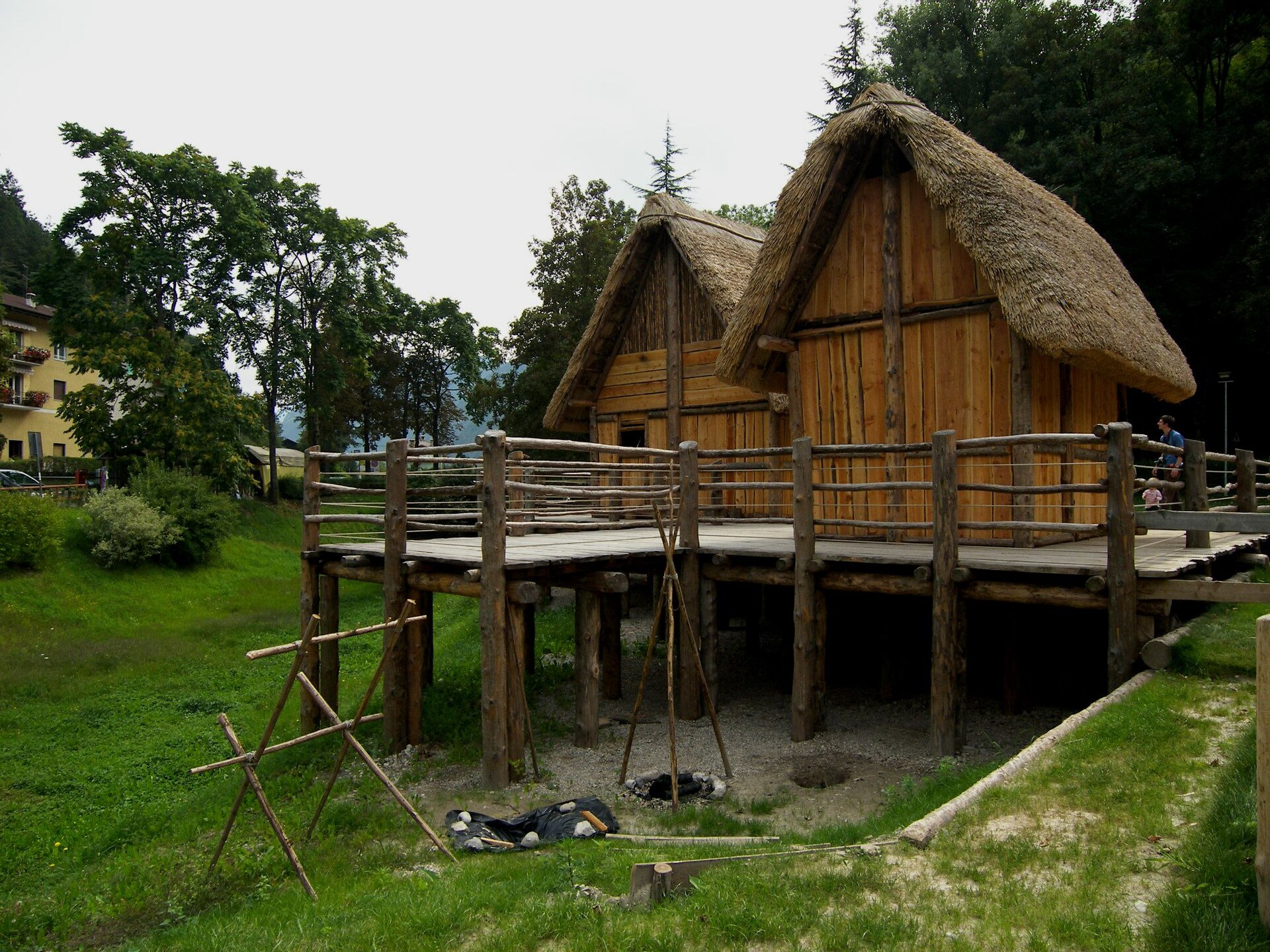
The Lake Ledro Stilt House Museum (Museo delle Palafitte del Lago di Ledro) is an archaeological museum on the southern shore of Lake Ledro in western Trentino, dedicated to one of the best-preserved Bronze Age pile-dwelling settlements in the Alpine region. The site forms part of the UNESCO World Heritage property “Prehistoric Pile Dwellings around the Alps” (inscribed 2011), and displays thousands of artefacts recovered from the lake bed since the discovery of the submerged village in 1929.
- Type
- Archaeological museum; UNESCO World Heritage site component
- Period
- Bronze Age settlement (c. 2000–1000 BC); museum founded 1969
- Style
- Lakeside museum with reconstructed pile-dwelling structures outdoors
- Location
- Molina di Ledro, Lake Ledro, Trentino
- Coordinates
- 45.8740° N, 10.7654° E
At a glance
- Type
- Archaeological museum and open-air archaeological park
- Period
- Bronze Age (c. 2000–1000 BC); excavations from 1929; museum opened 1969
- UNESCO status
- Component site of “Prehistoric Pile Dwellings around the Alps” (2011)
- Location
- Via Lungolago 1, Molina di Ledro, 38067 Ledro (TN)
- Coordinates
- 45.8740° N, 10.7654° E
Overview
Lake Ledro, set at 655 metres above sea level in a glacially carved valley of western Trentino, conceals one of the most significant Bronze Age pile-dwelling villages in the Alps. The museum on its shore brings together thousands of objects retrieved from the lake bottom, offering a vivid portrait of daily life in an Alpine community more than three thousand years ago. Reconstructed pile huts beside the museum allow visitors to experience the spatial reality of this ancient village form.
History
The pile-dwelling village of Lake Ledro was discovered in 1929, when a lowering of the lake level for hydroelectric works exposed timber piles and artefacts on the lake bed. Systematic excavations in the 1930s and subsequent campaigns recovered an extraordinary assemblage of Bronze Age materials, including ceramics, bronze weapons, tools, ornaments, and organic remains. The finds established Ledro as one of the richest Bronze Age lakeside settlements in Italy. The museum was opened in 1969 to house and display the collections, and in 2011 the site was inscribed as part of the transnational UNESCO World Heritage property recognising 111 pile-dwelling sites across six Alpine countries.
What you see
Inside the museum, the permanent exhibition presents the Ledro Bronze Age finds in thematic sections covering domestic life, craft production, exchange networks, and funerary practices. Highlights include intact ceramic vessels, a remarkable collection of bronze axes and daggers, amber and glass-paste beads, and wooden objects preserved by the anaerobic lake environment. Outside, three full-scale reconstructed pile huts stand at the water’s edge, furnished with replicas of period objects; in summer, living history demonstrations of Bronze Age crafts take place on site. The lake itself, ringed by wooded mountains, provides a visually spectacular setting.
Cultural significance
The Lake Ledro pile-dwelling site is among the finest examples of Bronze Age lacustrine settlement in the Alpine world, and its UNESCO designation places it within a network of exceptional prehistoric heritage spanning Switzerland, Austria, Germany, France, Slovenia, and Italy. The museum represents a model of community-based archaeological heritage management in Trentino.
Practical information
Address: Via Lungolago 1, Molina di Ledro, 38067 Ledro (TN). The museum is open seasonally; hours and admission fees vary. Check the official website of the Ledro Valley Museums (Musei della Valle di Ledro) for current information. Guided visits for schools and groups can be booked in advance.
Getting there
Lake Ledro is approximately 50 kilometres west of Trento. By car, take the SS45bis from Riva del Garda northward, then follow signs for Lago di Ledro. From Riva del Garda, local buses serve the Ledro valley; check Trentino Trasporti schedules. Riva del Garda is reachable by bus from Trento and from Rovereto railway station.
Sources & resources
See the place
Find it on the map
See this place and what’s around it →📷 Become a Cultural Heritage Online photographer
Share your photos of places: they stay published under your name as the author. The more they're seen, the more you get noticed — and soon a contest will reward the most appreciated photos.
Log in or sign up free to add a photoIs this page about you?
This page is read by travellers and heritage enthusiasts who find it on Google. Tell us how you are connected to this place and we will take it from there.