
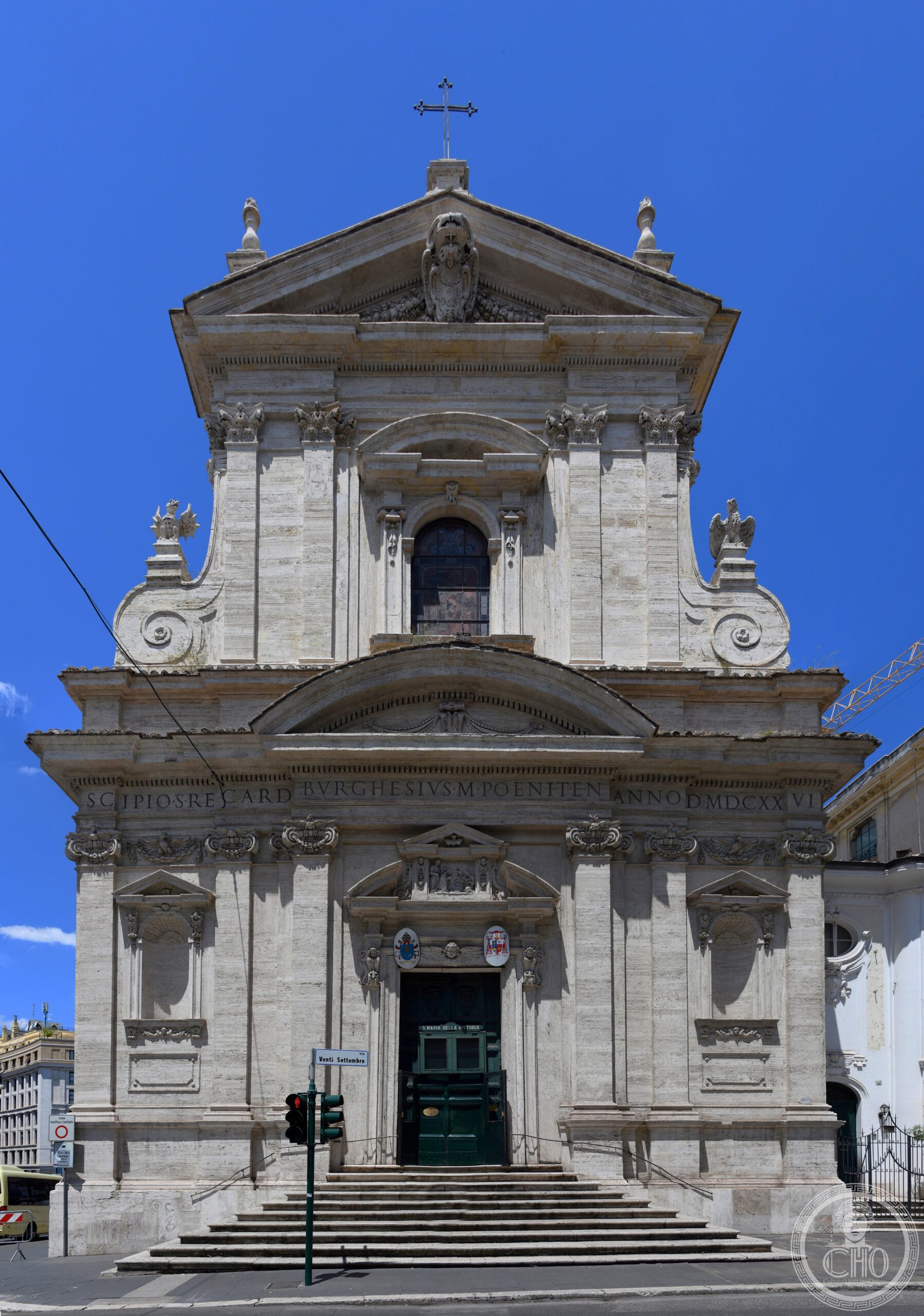
Santa Maria della Vittoria is a Catholic titular minor basilica and Discalced Carmelite conventual church in Rome, dedicated to Our Lady of Victories. Built in the early seventeenth century on Via XX Settembre, the church is world-famous as the home of Gian Lorenzo Bernini’s sculptural masterpiece The Ecstasy of Saint Teresa (1647–1652), one of the defining works of Baroque art, housed in the Cornaro Chapel.
- Address
- Via XX Settembre 17, 00187 Roma RM
- Period
- Built 1608–1620; Cornaro Chapel 1647–1652
- Style
- Roman Baroque
- Architect
- Carlo Maderno (church); Gian Lorenzo Bernini (Cornaro Chapel)
- Function
- Titular minor basilica; Discalced Carmelite conventual church
- Coordinates
- 41.9047° N, 12.4942° E
At a glance
- Type
- Catholic titular minor basilica
- Period
- 1608–1620 (church); 1647–1652 (Cornaro Chapel)
- Style
- Roman Baroque
- Architects
- Carlo Maderno; Gian Lorenzo Bernini
- Location
- Via XX Settembre, Rione Sallustiano, Rome
Overview
Santa Maria della Vittoria stands on Via XX Settembre in Rome’s Rione Sallustiano, adjacent to the Fountain of Moses and facing the Church of Santa Susanna across the wide Largo Santa Susanna. It is a Discalced Carmelite church that serves simultaneously as a cardinal’s titular see, maintaining its active liturgical and conventual life while welcoming a continuous stream of visitors drawn by its extraordinary artistic contents. The church is located about two blocks northwest of the Piazza della Repubblica, making it one of the most visited Baroque churches in the city.
History
Construction of the church began in 1608 under the patronage of Cardinal Scipione Borghese and was completed in 1620 to a design by Carlo Maderno, one of the leading architects of the Roman Baroque. The dedication to Our Lady of Victories commemorated the Catholic triumph at the Battle of White Mountain (1620), a decisive engagement of the Thirty Years’ War. The church’s fame was transformed in the 1640s when the Venetian Cardinal Federico Cornaro commissioned Bernini to design the left transept chapel, resulting in the Ecstasy of Saint Teresa, completed in 1652. The façade was designed by Giovanni Battista Soria and completed in 1626.
What you see
The interior is a single nave of exceptional Baroque richness, with side chapels and a gilded coffered ceiling typical of Roman seventeenth-century ecclesiastical decoration. The Cornaro Chapel in the left transept is the undisputed centrepiece: Bernini designed it as a theatrical ensemble in which sculptured marble figures of Cardinal Cornaro and his family occupy theatre-box reliefs on either side, gazing at the central altarpiece — the white marble group of Saint Teresa of Ávila in ecstasy, pierced by an angel’s arrow, suffused by gilded rays of light from an unseen source above. The sculptural group is widely considered one of the supreme achievements of Western art. Other chapels contain important paintings by Domenichino and Giovanni Lanfranco.
Cultural significance
The Ecstasy of Saint Teresa occupies a central place in the history of European art, representing the full synthesis of architecture, sculpture, painting, and theatrical lighting that defines the Roman Baroque at its height. The church as a whole demonstrates how Counter-Reformation spirituality used sensory experience and dramatic visual rhetoric to engage the faithful, a model that influenced Catholic church design across Europe and Latin America. Cultural Heritage Online considers Santa Maria della Vittoria one of Rome’s essential heritage sites for understanding the seventeenth-century city.
Practical information
Address: Via XX Settembre 17, 00187 Roma RM
Opening hours: Generally open daily (mornings and late afternoons); check the Carmelite parish website for current hours, as they vary around liturgical services.
Admission: Free entry; a small contribution is customary.
Getting there
The church is a short walk from Metro Line A Repubblica station (approximately 5 minutes along Via XX Settembre). Several bus lines serve Via XX Settembre and the nearby Piazza della Repubblica. The Fountain of Moses (Acqua Felice) is directly beside the church, marking the endpoint of the ancient Acqua Felice aqueduct.
Sources & resources
See the place
Find it on the map
See this place and what’s around it →Historical events at this place (2)
📷 Become a Cultural Heritage Online photographer
Share your photos of places: they stay published under your name as the author. The more they're seen, the more you get noticed — and soon a contest will reward the most appreciated photos.
Log in or sign up free to add a photoIs this page about you?
This page is read by travellers and heritage enthusiasts who find it on Google. Tell us how you are connected to this place and we will take it from there.