
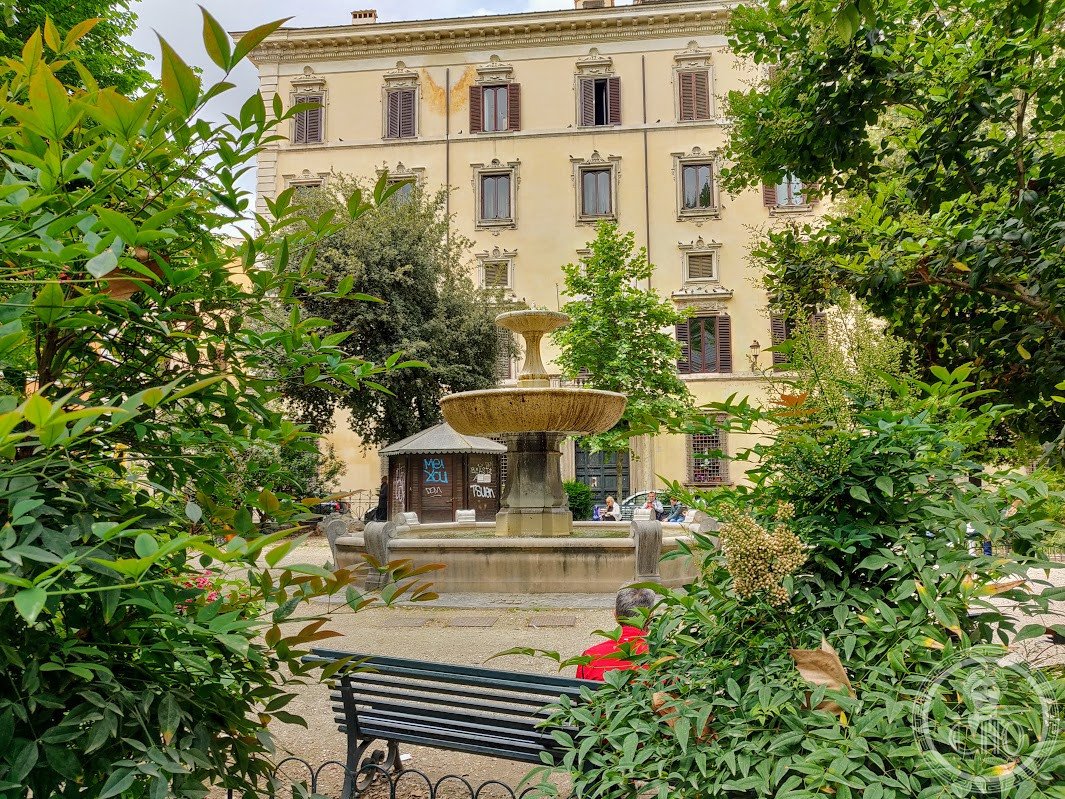
The Roman Houses in Via San Paolo alla Regola are the buried remains of a multi-period residential complex discovered beneath the medieval and Renaissance fabric of Rome’s historic centre, at 41.8932° N, 12.4731° E. Excavated in the 20th century, the site preserves stratified layers of Roman domus architecture spanning the 1st to 4th centuries AD, including mosaic floors, painted wall plaster, and masonry structures that document the evolving urban character of the ancient Trastevere-side bank of the Tiber. The complex offers a rare subterranean window into the private residential world of imperial Rome in a neighbourhood that has been continuously inhabited for two millennia.
At a glance
- Type
- Archaeological site — Roman domus remains
- Period
- 1st–4th century AD (Imperial Roman)
- Style
- Roman domestic architecture
- Location
- Via San Paolo alla Regola, Rome, Lazio · 41.8932° N, 12.4731° E
Overview
Via San Paolo alla Regola runs through the ancient Rione Regola, one of Rome’s oldest continuously inhabited districts lying just south of the Campo de’ Fiori. Beneath the street level, excavations revealed a complex of Roman houses that developed across multiple phases during the Imperial period. The site stands as material evidence of the dense residential fabric that once lined the left bank of the Tiber in this part of ancient Rome.
History
The area around modern Via San Paolo alla Regola was occupied during the Roman Republic and grew substantially under the Empire as Rome’s population expanded toward the river. The houses discovered here were built, modified, and rebuilt across successive centuries, reflecting changing ownership and social conditions from the 1st century AD through late antiquity. After Rome’s decline and the contraction of its population, the structures were gradually buried under the rising ground level of the medieval city. Archaeological investigations in the 20th century brought them back to light, revealing the layered history of private life in ancient Rome.
What you see
The underground remains include sections of opus reticulatum and opus latericium masonry — the characteristic Roman building techniques of diamond-pattern stonework and fired brick — along with fragments of mosaic pavements and traces of painted fresco decoration on interior walls. The spatial arrangement visible in the excavation reflects the typical organisation of a Roman domus, with rooms grouped around a central atrium or courtyard. Exposed sections of ancient drainage channels illustrate the sophisticated hydraulic infrastructure that served these private residences.
Cultural significance
The site contributes to understanding how Rome’s central residential neighbourhoods were organised during the Imperial era, complementing better-known monuments such as the Forum and Palatine Hill with evidence from everyday domestic contexts. Together with similar discoveries in the Rione Regola, it reinforces the exceptional archaeological density of Rome’s historic centre, recognised as a UNESCO World Heritage Site.
Practical information
- Address
- Via San Paolo alla Regola, 00186 Roma RM
Getting there
The site is in Rome’s historic centre (Rione Regola), within walking distance of Campo de’ Fiori and Piazza Farnese. The nearest bus stops are served by multiple ATAC routes along Corso Vittorio Emanuele II. There is no convenient Metro access; the area is best reached on foot from Largo di Torre Argentina (approximately 10 minutes) or by bus.
Sources & resources
See the place
Find it on the map
See this place and what’s around it →Historical events at this place (1)
📷 Become a Cultural Heritage Online photographer
Share your photos of places: they stay published under your name as the author. The more they're seen, the more you get noticed — and soon a contest will reward the most appreciated photos.
Log in or sign up free to add a photoIs this page about you?
This page is read by travellers and heritage enthusiasts who find it on Google. Tell us how you are connected to this place and we will take it from there.