
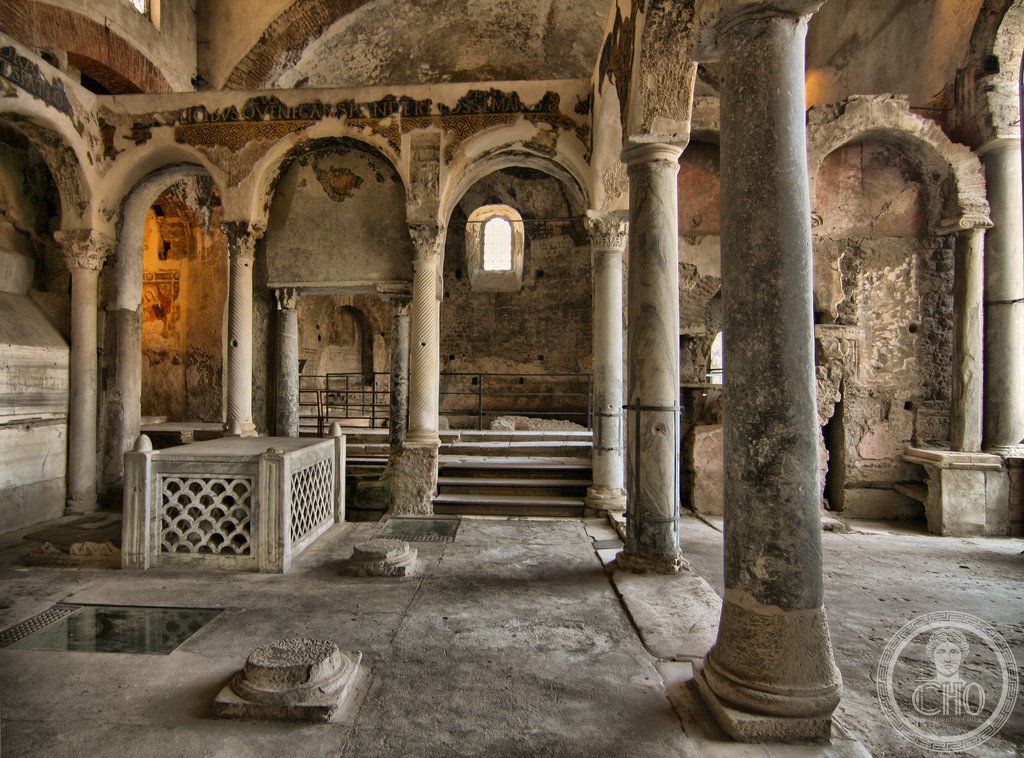
The Early Christian Basilicas Complex of Cimitile is a UNESCO-listed group of late-antique and early medieval churches and martyria in the town of Cimitile, approximately 25 km northeast of Naples. Originating as the coemeterium nolanum — the ancient necropolis of nearby Nola — the site became a major centre of Christian pilgrimage after Paulinus of Nola established a monastic community here in 395 AD, erecting a basilica over the tomb of the local martyr Felix of Nola. The surviving structures span five centuries of construction and represent one of the most significant concentrations of early Christian architecture in southern Italy.
At a glance
- Type
- Early Christian basilicas and martyria complex
- Period
- 4th–9th century AD; origins as pagan necropolis earlier
- Style
- Paleo-Christian; early medieval
- Location
- Cimitile, Metropolitan City of Naples, Campania, Italy
- Coordinates
- 40.9407° N, 14.5244° E
Overview
Cimitile takes its name from the Latin coemeterium, reflecting its origins as the burial ground for the Roman town of Nola. In the late 4th century the site was transformed into a Christian pilgrimage destination when Paulinus of Nola — poet, bishop, and church father — built a double basilica complex over the grave of the martyr Felix. Today the site encompasses multiple overlapping structures from different centuries, with standing ruins, mosaics, and inscriptions that document the evolution of Christian worship in Campania.
History
The land around Cimitile served as the necropolis of Nola from at least the Roman period. After his conversion and return to Campania, Paulinus of Nola (c. 354–431) settled here around 395 AD and constructed the Basilica Nova alongside the existing Basilica Vetus, dedicating both to St Felix of Nola whose martyrium lay at the heart of the complex. Paulinus documented the building campaign in his Natalicia poems, making Cimitile one of the best-recorded early Christian construction projects in the West. Subsequent centuries added further chapels and funerary structures, with the complex reaching its greatest extent by the 9th century before gradual decline during the medieval period.
What you see
Visitors walk through a compact archaeological zone where the walls of multiple overlapping basilicas rise to varying heights, creating a layered architectural landscape. Surviving fragments of mosaic decoration — some attributed to Paulinus himself — appear on interior surfaces, while early Christian epigraphs and loculi line the walls. The martyrium of St Felix anchors the centre of the complex. A small antiquarium on site displays architectural fragments, votive objects, and ceramics recovered during excavations.
Cultural significance
Cimitile is inscribed on the UNESCO World Heritage tentative list as part of the broader early Christian heritage of Campania, reflecting its exceptional completeness and documentary value. The site preserves direct physical evidence of how a pagan necropolis was Christianised in the post-Constantinian period, and the letters and poems of Paulinus of Nola provide an unusually rich textual companion to what can be read in the standing architecture.
Practical information
Address: Piazza Basiliche Paleocristiane, 80030 Cimitile NA, Italy. Check the official website or local tourism office for current opening hours and admission fees, as seasonal schedules apply.
Getting there
Cimitile is approximately 25 km northeast of Naples. By car, take the A30 motorway towards Nola and exit at Nola; Cimitile is a short drive from the centre of Nola. Local bus services connect Nola railway station (Circumvesuviana line) to Cimitile. Taxis are available from Nola station.
Sources & resources
See the place
Find it on the map
See this place and what’s around it →Historical events at this place (1)
📷 Become a Cultural Heritage Online photographer
Share your photos of places: they stay published under your name as the author. The more they're seen, the more you get noticed — and soon a contest will reward the most appreciated photos.
Log in or sign up free to add a photoIs this page about you?
This page is read by travellers and heritage enthusiasts who find it on Google. Tell us how you are connected to this place and we will take it from there.