
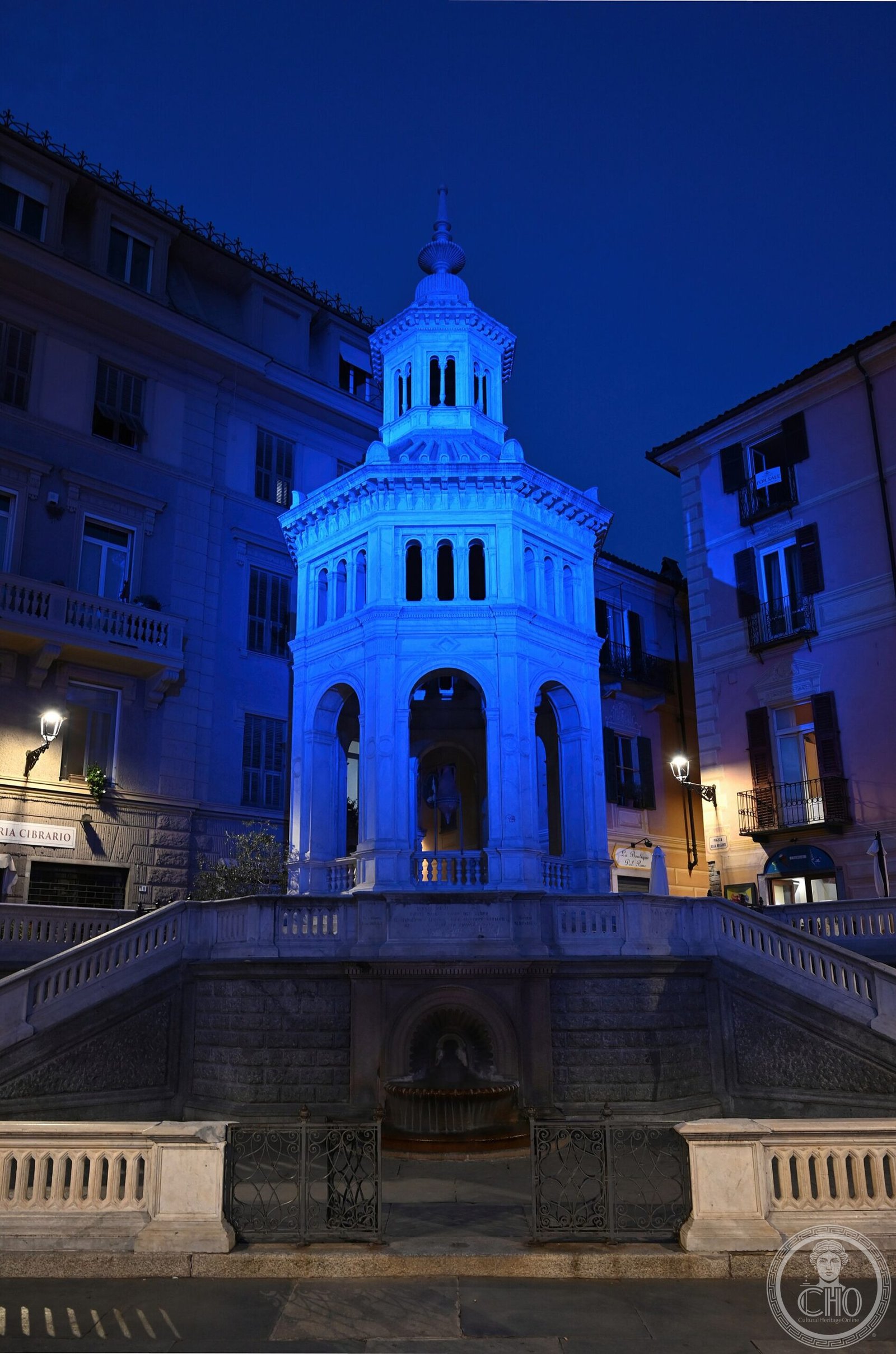
The Boiling (La Bollente) is a natural thermal spring in the historic centre of Acqui Terme, a spa city in the province of Alessandria in Piedmont, northern Italy. A circular neoclassical pavilion built in 1879 shelters the spring, from which sulphurous water erupts at approximately 75 °C (167 °F) and 50 litres per second, making it one of the most spectacular thermal phenomena in Italy. The spring has been exploited since Roman times and remains the symbolic heart of Acqui Terme’s identity as a leading European spa destination.
At a glance
- Type
- Natural thermal spring with 19th-century pavilion
- Period
- Roman origins; current pavilion built 1879
- Style
- Neoclassical (pavilion)
- Location
- Piazza della Bollente, Acqui Terme, Province of Alessandria, Piedmont, Italy
Overview
Acqui Terme is a city in the province of Alessandria, Piedmont, about 35 kilometres south-southwest of Alessandria, celebrated since antiquity for its curative thermal waters. The Bollente spring sits in the town’s central piazza, where scalding sulphurous water bubbles visibly at the surface, a natural spectacle that has drawn visitors for over two thousand years. It is one of the principal winemaking communes of the DOCG Brachetto d’Acqui zone, combining thermal and enological tourism in a single historic destination.
History
The Romans knew Acqui as Aquae Statiellae and developed an extensive thermal infrastructure around the spring, traces of which survive in nearby archaeological remains. During the medieval and early modern periods the thermal baths declined but never disappeared; local interest revived strongly in the 19th century as European spa culture flourished. The current neoclassical kiosk pavilion was erected over the spring in 1879, formalising the site as the scenic centrepiece of Acqui Terme’s renewed spa tourism economy.
What you see
Visitors encounter a small circular stone pavilion in an open piazza, beneath which the thermal spring visibly boils at around 75 °C, releasing a gentle sulphurous steam. The surrounding square is paved in traditional Piedmontese style, with benches and café terraces framing the spectacle. Interpretive panels nearby explain the geological origins of the water, which rises from a deep aquifer heated by residual volcanic activity beneath the Apennines.
Cultural significance
La Bollente is the emblem of Acqui Terme and appears on the town’s civic coat of arms; its image has been reproduced on ceramics, prints, and tourist memorabilia for over a century. As one of Italy’s most accessible and visually dramatic natural thermal phenomena in an urban setting, it anchors a broader thermal heritage district that includes Roman baths, the Thermal Palace, and the civic archaeological museum.
Practical information
- Address
- Piazza della Bollente, 15011 Acqui Terme AL, Italy
- Hours
- The spring is outdoors and visible at all times; the surrounding piazza is freely accessible
- Admission
- Free (exterior spring and piazza)
- Coordinates
- 44.6756° N, 8.4705° E
Getting there
Acqui Terme has a railway station on the Alessandria–Savona line, with regular connections from Alessandria (approximately 40 minutes) and Genoa (approximately 1 hour 20 minutes). By car, take the A26 motorway (Genoa–Gravellona Toce) to the Ovada exit and continue on the SP456 (about 20 km). The Bollente spring is a short walk from the railway station, in the historic town centre.
Sources & resources
See the place
Find it on the map
See this place and what’s around it →📷 Become a Cultural Heritage Online photographer
Share your photos of places: they stay published under your name as the author. The more they're seen, the more you get noticed — and soon a contest will reward the most appreciated photos.
Log in or sign up free to add a photoIs this page about you?
This page is read by travellers and heritage enthusiasts who find it on Google. Tell us how you are connected to this place and we will take it from there.