
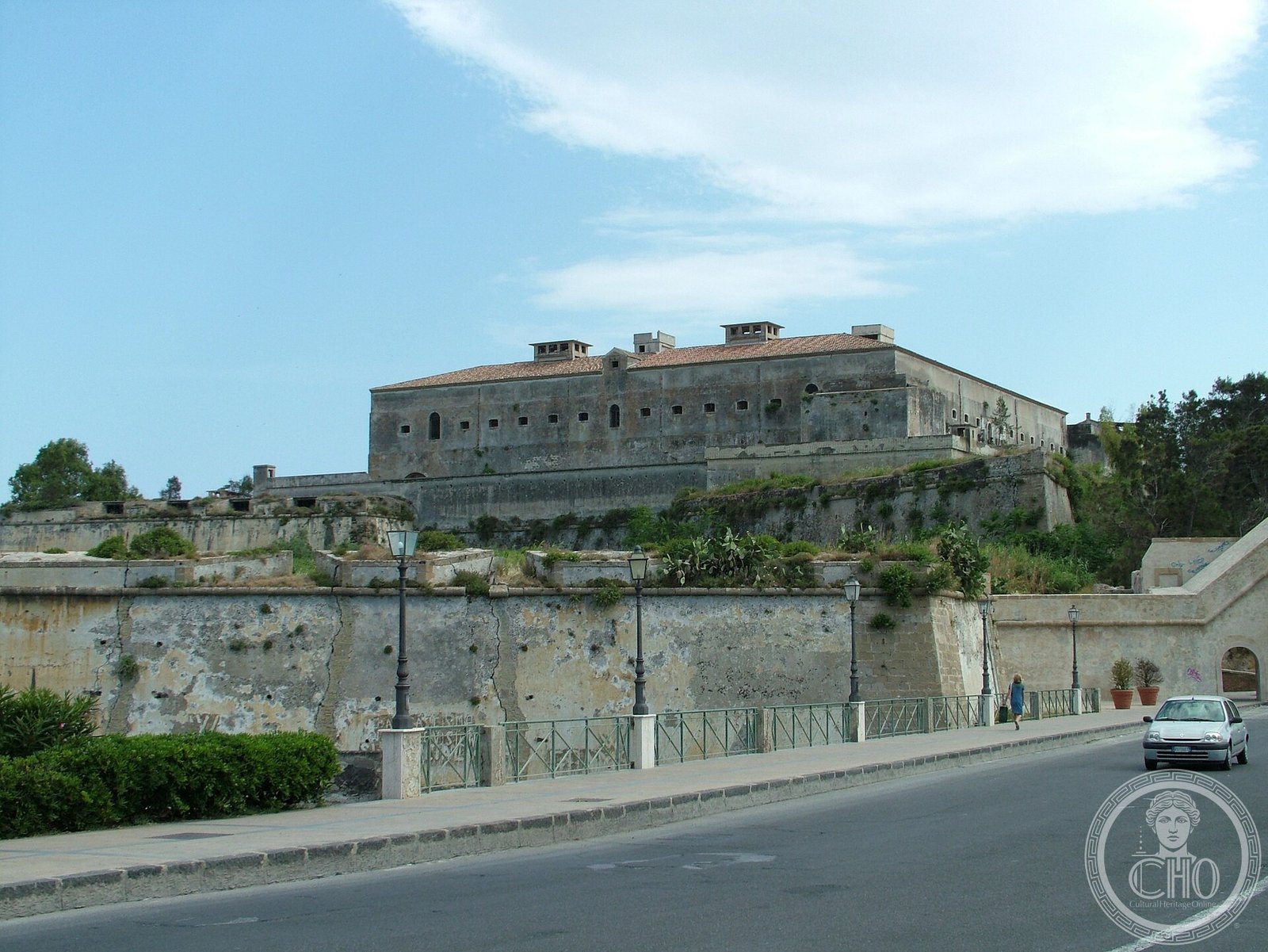
The Swabian Castle of Augusta (Castello Svevo di Augusta) is a 13th-century royal fortress built by the Holy Roman Emperor Frederick II on the island-peninsula of Augusta on the eastern Sicilian coast, approximately 40 kilometres north of Syracuse. One of the best-preserved examples of Frederick’s ambitious programme of castle-building in Sicily, it stands as an emblem of Norman-Swabian political power in the medieval Mediterranean and continues to serve a civic function today as a heritage monument and cultural venue.
At a glance
- Type
- Medieval royal castle
- Period
- Founded 1232 by Frederick II, Holy Roman Emperor
- Style
- Swabian / Frederician military architecture
- Location
- Piazza Federico II, 96011 Augusta, Province of Syracuse, Sicily
- Coordinates
- 37.2345° N, 15.2205° E
Overview
The castle at Augusta is one of a network of fortified structures that Frederick II (1194–1250) erected across his Italian and Sicilian territories, including the renowned Castel del Monte in Apulia. Augusta itself was founded as a new royal city (Augusta = “city of Augustus”) in 1232 on an island spur between the sea and the harbour, specifically to serve as a fortified base and administrative centre for the eastern Sicilian coast. The castle and the city were conceived together as instruments of imperial governance in a region that had been contested between Norman, Arab, and Byzantine forces for two centuries.
History
Frederick II ordered the construction of the castle and the new city of Augusta in 1232, part of the same building campaign that produced Castel del Monte and other Frederician castles. The strategic location — a natural isthmus commanding a deep harbour that rivalled Syracuse — was exploited by successive rulers: the Aragonese, the Spanish crown, and eventually the Kingdom of the Two Sicilies all maintained and modified the fortifications. The castle survived the catastrophic earthquake of 1693 that devastated much of south-eastern Sicily, though damage required later reinforcement. In the modern period the structure passed through military and civil uses.
What you see
The castle presents a compact rectangular plan with cylindrical towers at the corners, a layout typical of Frederician military architecture which emphasised geometric clarity and practical defence over the irregular accretion found in older Norman fortresses. The main entrance is through a pointed-arch gateway in the Swabian style. The interior courtyard retains its medieval proportions, and the walls display masonry of multiple periods reflecting successive interventions. From the ramparts there are panoramic views over the natural harbour of Augusta and the industrial coastline stretching toward Syracuse.
Cultural significance
The Castle of Augusta is a key monument in the network of Frederician architecture in southern Italy, a corpus that UNESCO has repeatedly considered for serial World Heritage nomination. Together with the nearby archaeological site of Megara Hyblaea, it contributes to making the Augusta area one of the richest zones for cultural heritage on Sicily’s eastern coast, spanning two and a half millennia of human settlement.
Practical information
The castle is owned by the municipality of Augusta and hosts cultural events and temporary exhibitions. Opening hours and admission arrangements vary; check the Comune di Augusta official website for current visitor information before your visit.
Getting there
Augusta is served by rail from Syracuse (approximately 25 minutes) and Catania (approximately 50 minutes) on the Messina–Syracuse main line. The castle is a 10-minute walk from Augusta railway station, situated at the northern end of the old town peninsula. By car, take the SS114 from Syracuse northward; parking is available near the castle entrance.
Sources & resources
Find it on the map
See this place and what’s around it →📷 Become a Cultural Heritage Online photographer
Share your photos of places: they stay published under your name as the author. The more they're seen, the more you get noticed — and soon a contest will reward the most appreciated photos.
Log in or sign up free to add a photoIs this page about you?
This page is read by travellers and heritage enthusiasts who find it on Google. Tell us how you are connected to this place and we will take it from there.