
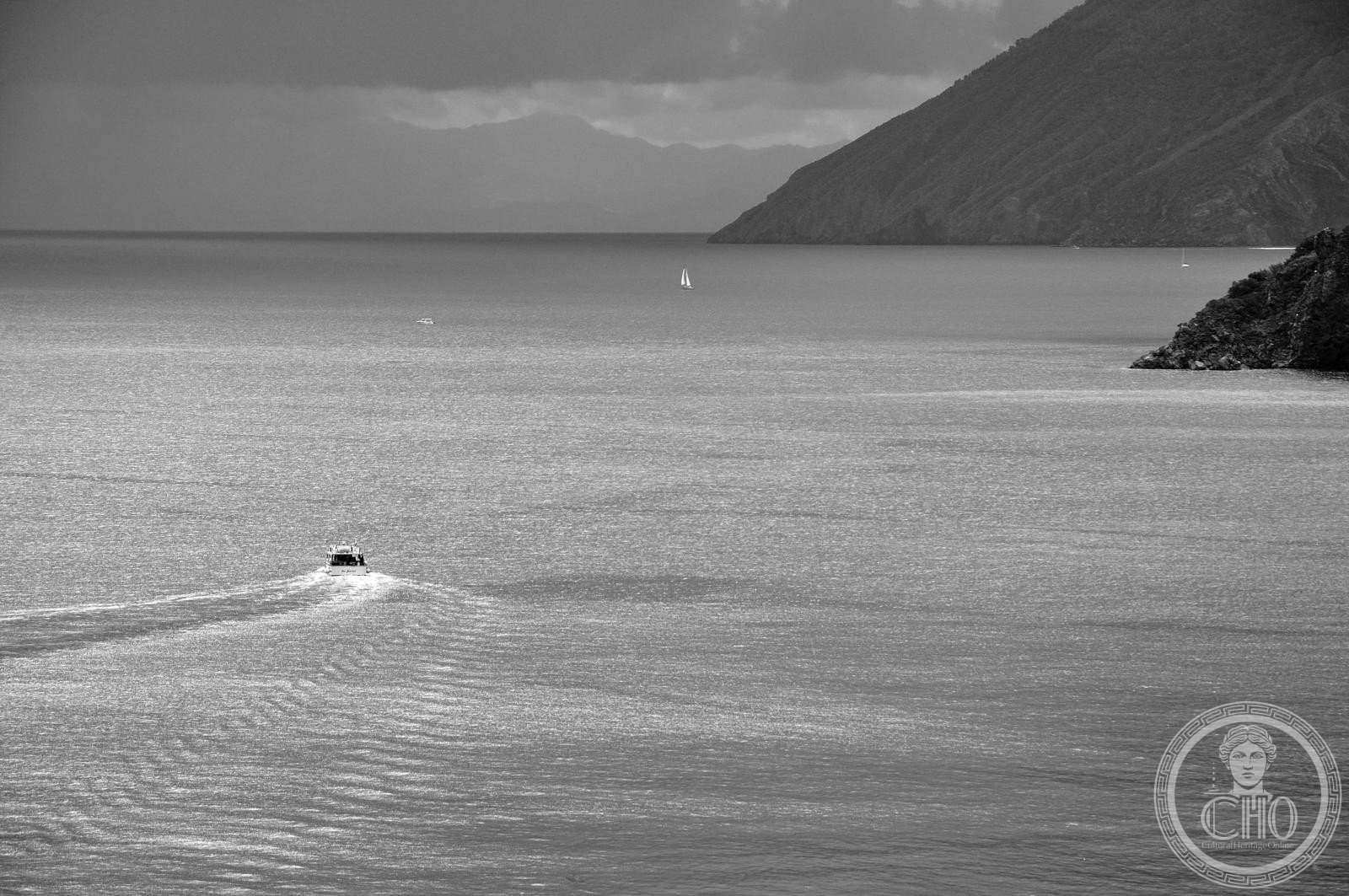
The Archaeological Park of the Aeolian Islands encompasses the prehistoric and protohistoric sites distributed across the seven volcanic islands of the Aeolian archipelago north of Sicily, a UNESCO World Heritage landscape inscribed in 2000 for its outstanding natural and cultural values. The park documents over five thousand years of continuous human settlement — from Neolithic farmer-sailors who colonised the islands around 4000 BC through Bronze Age cultures and Greek and Roman occupation — making the Aeolian sequence one of the reference chronologies for Mediterranean prehistory.
At a glance
- Type
- Archaeological park / UNESCO World Heritage Site
- Period
- Neolithic (c. 4000 BC) through Bronze Age, Greek, and Roman occupation
- Style
- Open-air prehistoric and protohistoric sites; village remains, necropolis areas, obsidian production sites
- Location
- Aeolian Islands (Lipari, Salina, Vulcano, Stromboli, Filicudi, Alicudi, Panarea), Metropolitan City of Messina, Sicily
- Coordinates
- 38.4667° N, 14.9500° E
Overview
The Aeolian Islands form a volcanic archipelago in the Tyrrhenian Sea north of Sicily, named in antiquity after Aeolus, the mythical keeper of the winds. The islands attracted permanent settlement from the Neolithic period onward, and their obsidian — a naturally occurring volcanic glass ideal for cutting tools — was traded across the western Mediterranean thousands of years before written history. The archaeological park brings together the key prehistoric sites on all seven islands, with the main interpretive centre and museum collection concentrated at Lipari Castle.
History
Human occupation of the Aeolian Islands can be traced back to the late Neolithic, when farming communities from the Italian mainland and Sicily established permanent villages on Lipari and other islands, exploiting obsidian as a major trade commodity. The Bronze Age saw the emergence of the Capo Graziano, Milazzese, and Ausonian cultures, each leaving distinctive architectural and ceramic evidence visible at excavated sites across the archipelago. Greek colonists from Cnidus and Rhodes founded the city of Lipara on Lipari around 580 BC, beginning a new urban phase before the islands passed under Roman control in 252 BC.
What you see
On Lipari, the main archaeological sites lie within and around the castle acropolis, where multiple occupation layers from the Bronze Age through the Greek and Roman periods are visible in profile. The Villaggio Preistorico on the castle hill preserves Bronze Age hut platforms, while the Contrada Diana necropolis below yielded thousands of Greek-period burials. On Panarea, the Milazzese site on Punta Milazzese preserves a complete Bronze Age village plan of oval huts on a dramatic coastal promontory. The Bernabò Brea Regional Museum at Lipari Castle provides the essential interpretive context for all site visits.
Cultural significance
The Aeolian Islands were inscribed as a UNESCO World Heritage Site in 2000, recognised jointly for their exceptional volcanic geology and for the archaeological sequence that underpins the standard chronology of Mediterranean prehistory. The islands’ stratigraphic record, systematically excavated from the 1950s by Luigi Bernabò Brea and Madeleine Cavalier, defined the Bronze Age cultural phases used by archaeologists across the central and western Mediterranean. They remain a reference point for prehistoric studies of unprecedented importance.
Practical information
- Address
- Aeolian Islands, Metropolitan City of Messina, Sicily (main hub: Lipari town)
- Admission
- Outdoor sites: free. Bernabò Brea Museum: check official website for current admission fees
- Opening hours
- Outdoor sites accessible year-round; museum hours vary seasonally — check official website
Getting there
The Aeolian Islands are reached by hydrofoil (aliscafo) or car ferry from Milazzo (the main gateway, 45 minutes to Lipari by hydrofoil), as well as seasonal services from Messina, Naples, Palermo, and Reggio Calabria. Milazzo is connected by rail and motorway to Messina. Within the islands, local water taxis and ferries link the seven islands. There are no car hire services on the smaller islands; Lipari has scooter and bicycle rental.
Sources & resources
- Aeolian Islands – Wikipedia
- UNESCO World Heritage – Aeolian Islands
- Cultural Heritage Online – Italy guides
Find it on the map
See this place and what’s around it →📷 Become a Cultural Heritage Online photographer
Share your photos of places: they stay published under your name as the author. The more they're seen, the more you get noticed — and soon a contest will reward the most appreciated photos.
Log in or sign up free to add a photoIs this page about you?
This page is read by travellers and heritage enthusiasts who find it on Google. Tell us how you are connected to this place and we will take it from there.