
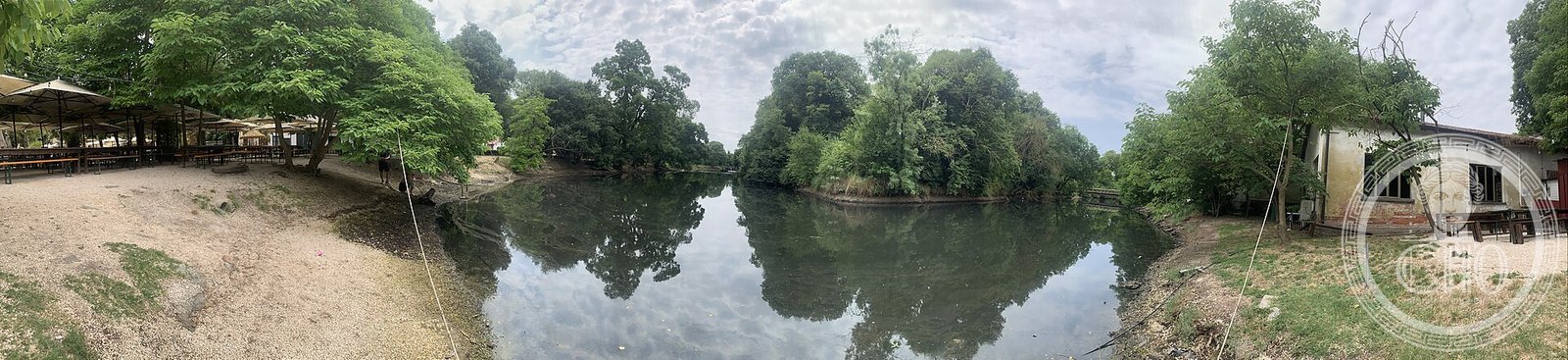
The Museum of Traditional Boats at Forte Marghera preserves the historic watercraft of the Venetian lagoon and the surrounding rivers and coast, housed within the walls of a Napoleonic-era fortress on the mainland opposite Venice. The museum documents the extraordinary variety of working boats — from the flat-bottomed bragozzo to the slender gondola’s utilitarian cousins — that sustained the economy and culture of the lagoon for centuries before motorisation transformed daily life on the water.
At a glance
- Type
- Nautical / ethnographic museum
- Period
- Fortress: early 19th century (Napoleonic); museum: late 20th–21st century
- Style
- Military fortification repurposed as cultural park
- Location
- Forte Marghera, Mestre (Venice), Veneto, Italy · 45.4758° N, 12.2643° E
Overview
Forte Marghera is a large 19th-century fortification on the mainland side of the Venice lagoon, built by Napoleon’s forces and later expanded under Austrian administration. Today the fort and its parkland serve as a cultural hub for the borough of Mestre, hosting museums, events, and green space for the mainland community. The Museum of Traditional Boats occupies part of the complex, celebrating the boat-building traditions that underpinned Venetian civilisation across a millennium of lagoon life. The collection spans fishing boats, cargo vessels, and ceremonial craft, each type shaped by the specific demands of shallow lagoon waters and the open Adriatic.
History
The fortress at Marghera was constructed under Napoleonic rule in the early 1800s and served as a strategic military installation through the 19th and early 20th centuries. After demilitarisation, the site fell into partial disuse before a major regeneration initiative transformed it into a public park and cultural centre. The museum of traditional boats was established to safeguard an endangered heritage: as fibreglass and motor craft replaced wooden working boats throughout the 20th century, the traditional types risked disappearing entirely from living memory. Local associations and the municipality of Venice collaborated to collect, restore, and document surviving examples before the craft knowledge was lost.
What you see
Visitors encounter a range of traditional Venetian and Adriatic watercraft in various states of preservation and restoration. The wooden hulls — from the broad fishing bragozzi to the narrow sandoli used for lagoon navigation — demonstrate the ingenuity of boat-builders who designed entirely without nails in some traditions, using interlocking wooden joints adapted to the specific stresses of each vessel type. The fortress buildings themselves, with their thick brick walls and vaulted chambers, provide an atmospheric setting for the collection, and the surrounding parkland offers context for the site’s military past. Interpretive materials explain how each boat type was used, built, and maintained.
Cultural significance
The Museum of Traditional Boats at Forte Marghera is among the few institutions in northern Italy dedicated systematically to the material culture of lagoon and coastal seafaring. Its collection documents a way of life that shaped Venice’s economy, social structure, and aesthetic sensibility over hundreds of years, and that risks being eclipsed by the city’s dominant image as a tourist destination. The museum’s presence within a repurposed military fortress also illustrates a wider European pattern of adaptive heritage reuse.
Practical information
- Address
- Forte Marghera, Via Forte Marghera, Mestre (Venice), Veneto
- Hours
- Check official website for current opening hours; the park is generally open daily
Getting there
Forte Marghera is located in Mestre, the mainland borough of Venice, approximately 3 km from Venezia Mestre railway station. It is accessible by city bus from Mestre town centre. Visitors arriving by car from the A4 motorway can exit at Venezia Mestre. The site is also reachable by bicycle via paths along the Brenta Riviera. From Venice’s historic centre, take any train or bus to Mestre and then connect by local bus or taxi.
Sources & resources
See the place
Find it on the map
See this place and what’s around it →📷 Become a Cultural Heritage Online photographer
Share your photos of places: they stay published under your name as the author. The more they're seen, the more you get noticed — and soon a contest will reward the most appreciated photos.
Log in or sign up free to add a photoIs this page about you?
This page is read by travellers and heritage enthusiasts who find it on Google. Tell us how you are connected to this place and we will take it from there.