
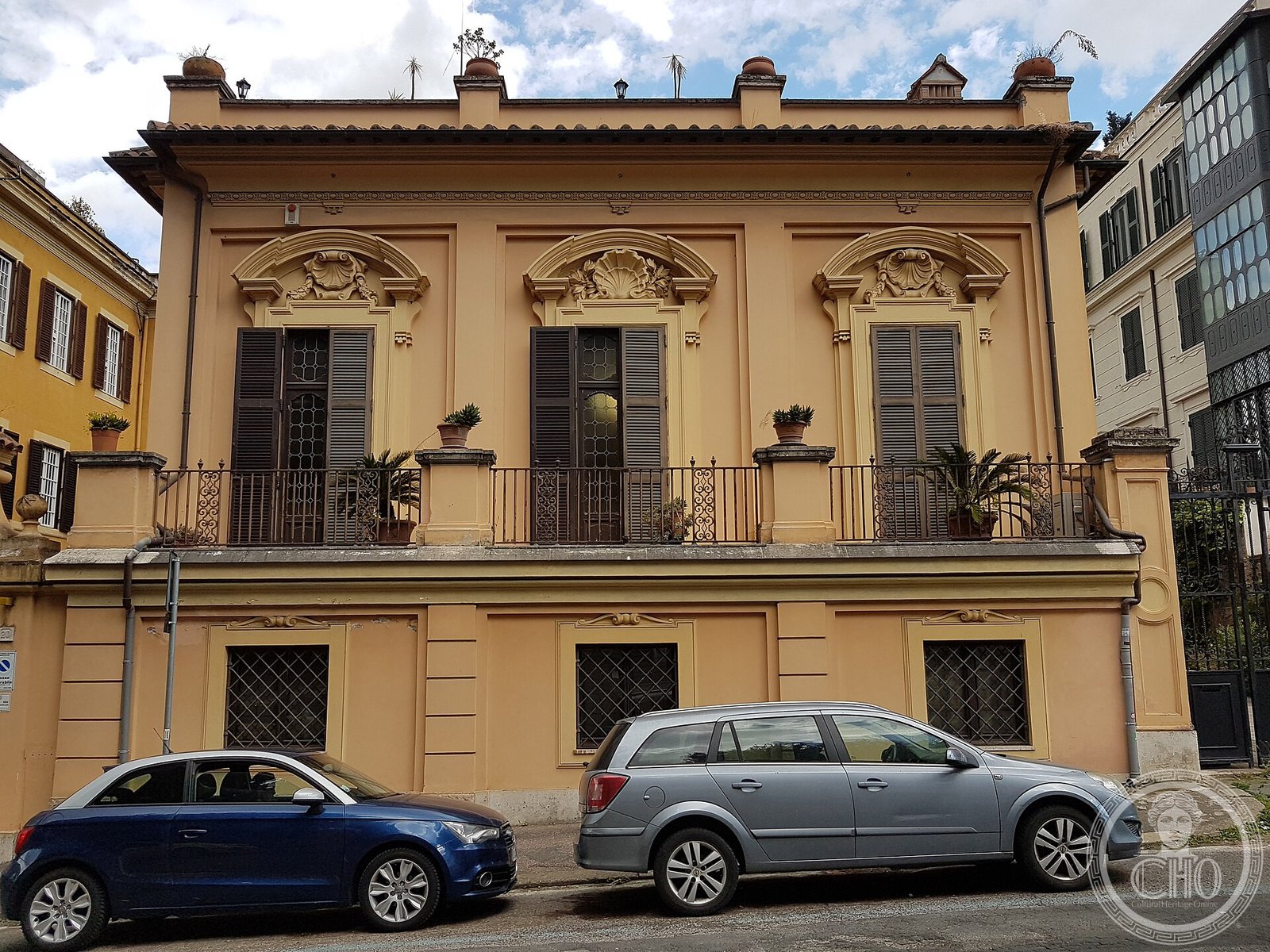
The Ximenes Cottage is a historic residential structure in the Parioli district of Rome, associated with the broader landscape of 19th and early 20th-century villas and garden estates that characterise this quarter north of the Villa Borghese park. The building reflects the eclectic architectural taste of Rome’s upper-middle classes during the decades of the unified Italian state, when Parioli was developed as an elegant residential extension of the capital.
At a glance
- Type
- Historic villa / residential cottage
- Period
- Late 19th – early 20th century
- Style
- Eclectic / Liberty inflections; garden cottage typology
- Location
- Parioli, Rome, Italy · 41.9116° N, 12.5093° E
Overview
Parioli is the second quartiere of Rome, developed from the late 19th century as the capital expanded northward following Italian unification. The district is known for its tree-lined streets, detached villas, and proximity to Villa Borghese — Rome’s largest central park. The Ximenes Cottage is part of this architectural fabric, a modest but characterful building that reflects the garden-cottage tradition common in European capital cities at the turn of the 20th century. Its name links it to the Ximenes or Jiménez family tradition of Iberian origin, a surname that entered the Italian aristocratic and professional world through centuries of Spanish political influence over the Italian peninsula.
History
The urbanisation of Parioli began in earnest after 1870, when Rome became the capital of unified Italy and a major building programme transformed the city’s northern periphery. Garden villas and cottages were constructed for the professional and diplomatic classes, blending Italian and northern European architectural influences. The Ximenes name recalls the long history of Spanish-Italian cultural exchange, particularly visible in Rome through centuries of Habsburg rule over much of the peninsula. The cottage represents a private domestic strand of this history, surviving as a reminder of Rome’s layered residential heritage beyond its monumental centre.
What you see
The structure presents the compact, asymmetrical massing typical of the late-19th-century cottage in Italy — steeply pitched roof elements, decorative brickwork, and a relationship to garden space that distinguishes it from the grander villa typology. The surrounding Parioli streetscape provides context: the neighbourhood retains much of its early-20th-century character, with mature trees overhanging residential roads and villas set back behind walls and gates. The proximity to Villa Borghese means that the green backdrop of Rome’s great park is a constant presence in the experience of the area.
Cultural significance
The Ximenes Cottage is a representative example of Rome’s lesser-known residential heritage — the domestic architecture of the late liberal and early 20th-century city that has received far less scholarly attention than the ancient monuments and Baroque churches that dominate the city’s global image. Preserving and documenting buildings of this type is essential for understanding how Romans actually lived and organised space during the critical decades of national unification and urban expansion.
Practical information
- Location
- Parioli, Rome · 41.9116° N, 12.5093° E
- Access
- Exterior viewable from public street; interior access check official sources
Getting there
The Parioli district is served by tram line 2 (connecting Piazzale Flaminio to the north) and by several bus routes from the city centre. The nearest metro station is Flaminio (Line A), from which the area is a short walk or tram ride north. By car, access is via Viale Parioli from Piazzale Ungheria. Villa Borghese itself is walkable and provides a scenic approach on foot through the park.
Sources & resources
Find it on the map
See this place and what’s around it →Historical events at this place (1)
📷 Become a Cultural Heritage Online photographer
Share your photos of places: they stay published under your name as the author. The more they're seen, the more you get noticed — and soon a contest will reward the most appreciated photos.
Log in or sign up free to add a photoIs this page about you?
This page is read by travellers and heritage enthusiasts who find it on Google. Tell us how you are connected to this place and we will take it from there.