
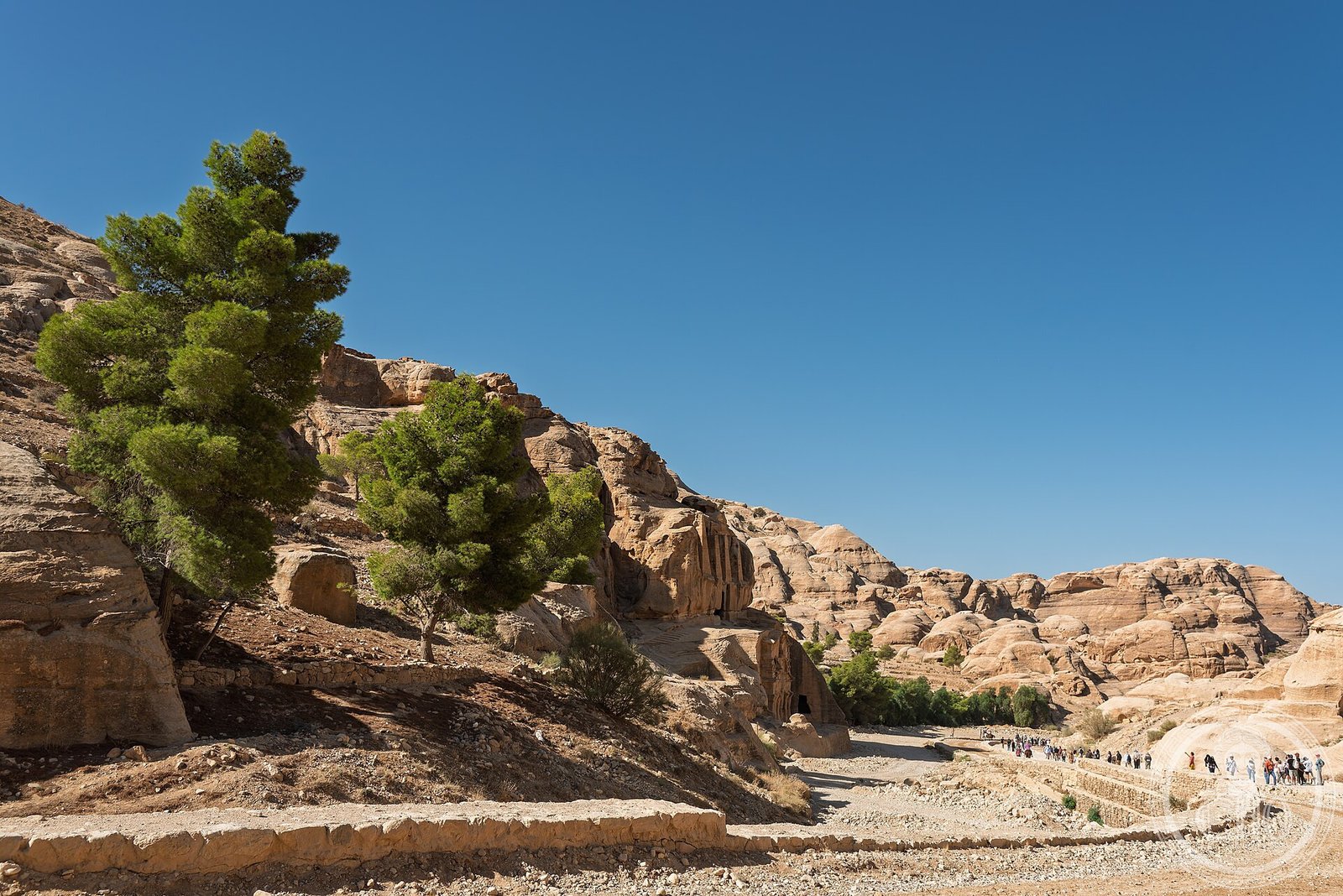
Petra is an ancient city and UNESCO World Heritage Site in southern Jordan, carved into rose-red sandstone cliffs by the Nabataean civilisation from around the 4th century BC. Originally known as Raqmu, the city served as the thriving capital of the Nabataean Kingdom and a pivotal node on the ancient incense and spice trade routes connecting Arabia, Egypt, and the Mediterranean. Its extraordinary rock-cut architecture — including the iconic Treasury (Al-Khazneh) — and sophisticated water management systems make Petra one of the most celebrated archaeological sites on Earth.
At a glance
- Type
- Archaeological site and UNESCO World Heritage Site; one of the New Seven Wonders of the World
- Period
- Established 4th century BC; Nabataean capital to 1st century AD; Roman province from 106 AD
- Style
- Nabataean rock-cut architecture; Hellenistic and Roman influences
- Location
- Ma’an Governorate, southern Jordan
Overview
Petra, the “Rose City”, is named for the warm pink of the sandstone from which its monuments are hewn — the colour behind the line every guidebook quotes, “a rose-red city half as old as time”, from a prize-winning sonnet written in 1845 by the English poet John William Burgon, who had never been there. One of the New Seven Wonders of the World and a UNESCO World Heritage Site, Petra attracts over a million visitors annually who enter through the narrow Siq gorge to emerge before the monumental Treasury facade. The site extends over 264 square kilometres and encompasses hundreds of tombs, temples, colonnaded streets, and an elaborate hydraulic network.
History
The Nabataeans, an Arab people who controlled caravan routes across the ancient Near East, established Petra as their capital no later than the 4th century BC; the city flourished as a centre of trade in incense, spices, and luxury goods. The Nabataeans were expert hydraulic engineers: terracotta pipes, cisterns and dams carried water from springs several kilometres away into a city built in a desert canyon, and it was that system, more than the carving, that made Petra possible. Nabataean kings oversaw the carving of elaborate funerary monuments and temples directly into the sandstone cliffs, blending local tradition with Hellenistic and later Roman artistic influences. In 106 AD the Roman emperor Trajan annexed the Nabataean Kingdom as the province of Arabia Petraea, and Petra became a provincial capital with a colonnaded street and monumental baths. Gradual decline following a major earthquake in 363 AD and shifting trade routes led to abandonment by the early medieval period; the city remained largely unknown to the Western world until the Swiss explorer Johann Ludwig Burckhardt rediscovered it in 1812.
What you see
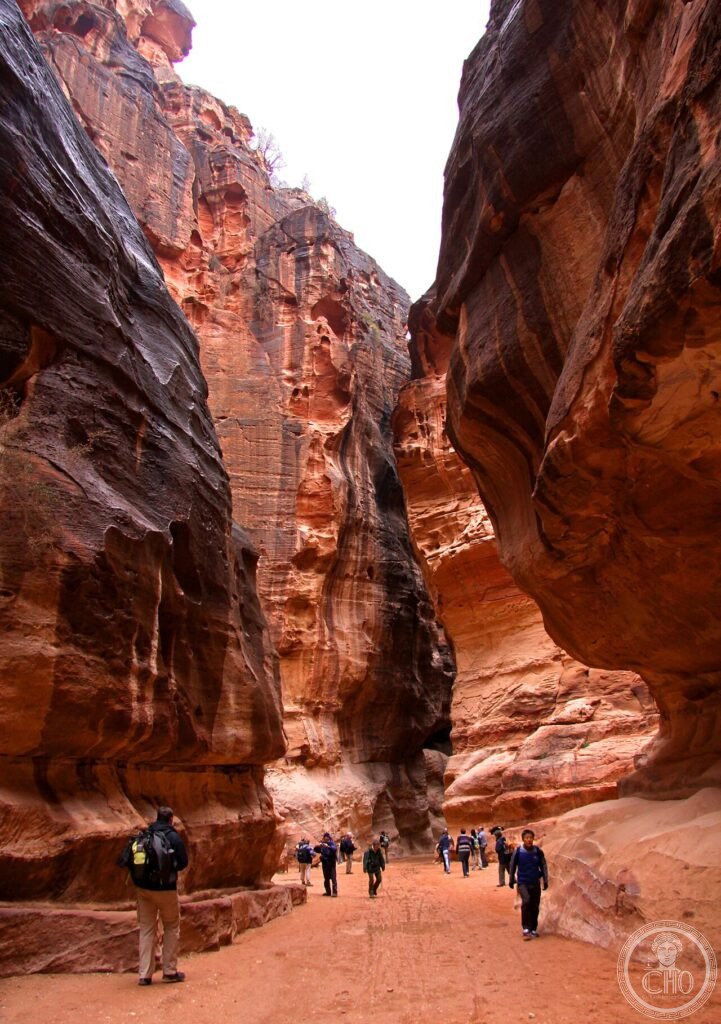
Visitors approach through the Siq, a narrow 1.2-kilometre natural gorge whose walls rise up to 80 metres, before encountering the Treasury (Al-Khazneh), a 40-metre-high Hellenistic facade cut from a single sandstone cliff. Beyond lies the broader city, with the Street of Facades, the Roman colonnaded Cardo, the Great Temple, the Urn Tomb, and hundreds of lesser rock-cut tombs covering the valley walls. The Monastery (Ad Deir), reached by 850 rock-cut steps, is even larger than the Treasury and rewards those willing to climb. The site’s extraordinary interplay of carved stone, desert light, and dramatic topography is unlike any other ancient city.
Cultural significance
Petra is one of the most important archaeological sites in the Middle East and a symbol of the ancient Arab civilisation that shaped Levantine history. Its designation as a UNESCO World Heritage Site in 1985 and its inclusion among the New Seven Wonders in 2007 reflect global recognition of its outstanding universal value. For Jordan, Petra is the country’s most visited attraction and a vital emblem of national identity and cultural heritage.
Practical information
- Address
- Petra Archaeological Park, Wadi Musa, Ma’an Governorate, Jordan
- Opening hours
- Open daily; check official website for current hours and admission prices
- Admission
- Entrance fee applies, with one, two and three-day tickets; the Jordan Pass, bought before arrival, bundles the tourist visa with entry to Petra and to most other sites in the country, and is usually the cheaper route for foreign visitors — check the official site for current prices
- Coordinates
- 30.3285° N, 35.4444° E (the archaeological park; the village of Wadi Musa lies about 3 km east)
Getting there
The nearest town is Wadi Musa, approximately 3 kilometres from the Petra visitor centre. The closest airport is King Hussein International Airport in Aqaba (about 130 km south); Queen Alia International Airport in Amman is approximately 230 km north. Regular bus services and minibuses connect Aqaba and Amman to Wadi Musa. Many visitors combine Petra with a stop at the Wadi Rum desert reserve, 60 km to the southeast. Little Petra (Siq al-Barid), 8 km north, is a smaller Nabataean site entered through its own narrow gorge, and holds one of the few surviving Nabataean painted interiors.
Sources & resources
See the place
Find it on the map
See this place and what’s around it →Historical events at this place (1)
📷 Become a Cultural Heritage Online photographer
Share your photos of places: they stay published under your name as the author. The more they're seen, the more you get noticed — and soon a contest will reward the most appreciated photos.
Log in or sign up free to add a photo