
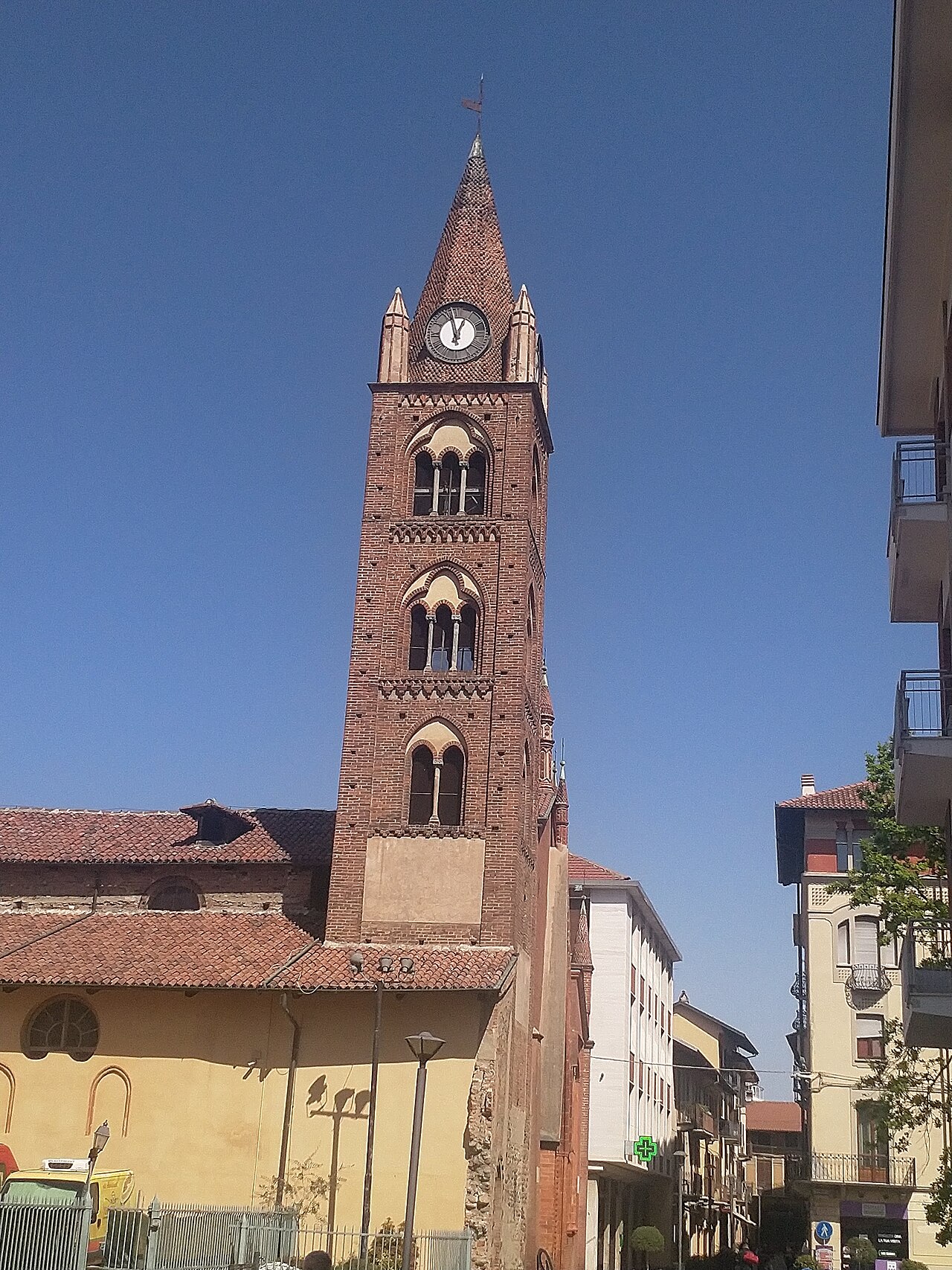
Cirie is a small historic town in the Metropolitan City of Turin, located approximately 20 kilometres northwest of the Piedmontese capital in the foothills of the Alps. With origins reaching back to a Roman military camp established around 143 BC, the town retains a medieval street pattern, a cluster of significant religious buildings and a Baroque palace that once hosted the House of Savoy on their hunting expeditions.
At a glance
- Type
- Historic town with Roman, medieval and Baroque heritage
- Period
- Roman foundation c. 143 BC; medieval growth 10th–14th century; Baroque development 17th century
- Style
- Piedmontese Gothic (churches); Baroque (civic palace); Romanesque (oldest church)
- Location
- Cirie, Metropolitan City of Turin, Piedmont
- Coordinates
- 45.2340° N, 7.6020° E
Overview
Cirie sits at the edge of the Alpine foothills where the Lanzo valleys open onto the Po Plain, a position that gave the settlement strategic and commercial value from Roman times onward. Today a town of about 18,000 inhabitants, it preserves a compact historic centre with three churches of distinct architectural periods, a 17th-century noble palace and a Friday market dating to a 1306 grant by Marguerite of Savoy — one of the oldest continuously running markets in Piedmont. The surrounding landscape of vineyards, chestnut woods and alpine panoramas makes it a gateway for walking and cycling routes into the Valli di Lanzo.
History
The Romans established Castra Cerreti on the site around 143 BC, naming it after the Turkey oak woods that covered the hills. After the decline of Roman authority the settlement passed through Lombard and Frankish control before emerging in the medieval period as a fief within the orbit of the Counts of Savoy. In 1306 Marguerite of Savoy took residence in the local castle, reduced taxation and instituted a weekly market, decisively boosting the town’s commercial fortunes. Cirie was formally recognised as a city by royal decree in 1905.
What you see
The Church of San Giovanni Battista, dating to the 14th century, is the town’s architectural centrepiece: a Piedmontese Gothic building whose interior houses a Byzantine crucifix and a triptych attributed to Giuseppe Giovenone da Vercelli. The older Chiesa di San Martino, likely founded in the early 10th century, displays Romanesque stonework and retains original frescoes alongside a collection of Roman tombstones found in the vicinity. The Palazzo dei Marchesi D’Oria, a 17th-century Baroque palace on the central piazza, served as the seat of civic government and kept a royal apartment for Savoy hunting visits.
Cultural significance
Cirie’s layered history — Roman camp, medieval market town, Savoy hunting base — makes it a compact case study in the territorial development of Piedmont, a region whose heritage is often eclipsed by the grandeur of Turin. The continuous Friday market, nearly 720 years old, is itself an intangible heritage element attesting to the town’s unbroken civic life.
Practical information
The churches of San Giovanni Battista and San Martino are generally open for visits during daylight hours; confirm with the local parish for current schedules. The Palazzo D’Oria houses municipal offices and has limited public access. The Friday market operates in the town centre from morning to early afternoon.
Getting there
Cirie is served by the GTT regional rail line from Turin Porta Susa (approximately 30 minutes). By car, take the A55 Tangenziale Nord from Turin and exit at Borgaro Torinese, then follow the SP1 toward Cirie. Local bus services connect the town with Ceres and the Lanzo valleys.
Sources & resources
See the place
Find it on the map
See this place and what’s around it →📷 Become a Cultural Heritage Online photographer
Share your photos of places: they stay published under your name as the author. The more they're seen, the more you get noticed — and soon a contest will reward the most appreciated photos.
Log in or sign up free to add a photo