
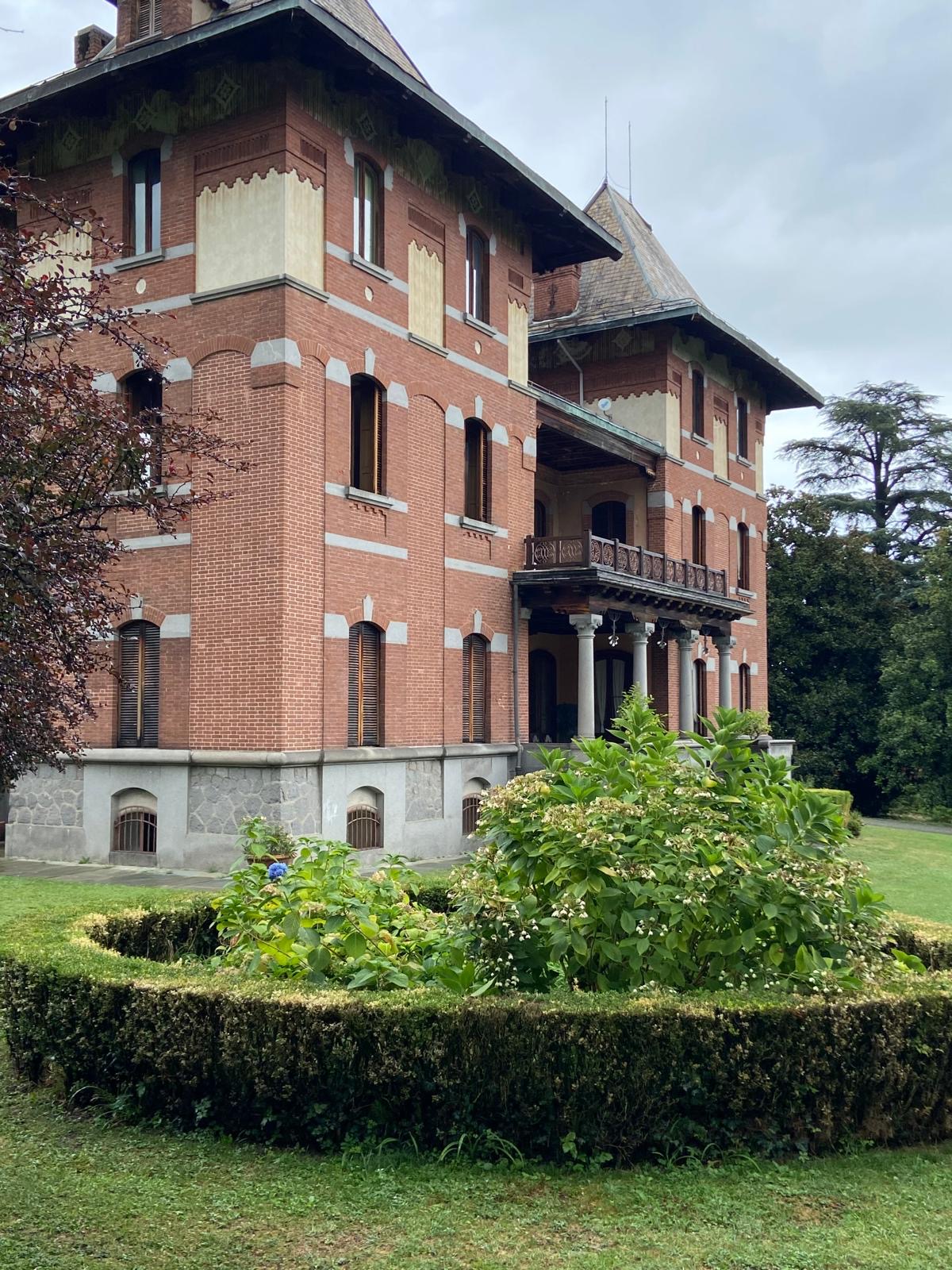
Villa Cernigliaro is a historic villa situated in the pre-Alpine foothills of northwestern Italy, near the border of the Aosta Valley and Piedmont at approximately 45.57° N, 7.98° E. The villa stands within a landscape shaped by centuries of Savoyard noble culture, characterised by aristocratic residences, vineyards, and mountain scenery that drew patrician families from Turin and the Alpine valleys from the 18th century onward.
At a glance
- Type
- Historic villa and estate
- Period
- 18th–19th century; exact construction date to be confirmed
- Style
- Piedmontese neo-classical or late Baroque villa architecture
- Location
- Pre-Alpine foothills, northwestern Italy (Aosta Valley / Piedmont border area)
- Coordinates
- 45.5699° N, 7.9809° E
Overview
Villa Cernigliaro occupies a scenic position in the pre-Alpine landscape of northwestern Italy, where the Aosta Valley opens toward the Piedmontese plain. The area around these coordinates has historically been a territory of Savoyard influence, its valleys dotted with aristocratic residences, fortified towers, and ecclesiastical complexes dating from the medieval period through the 19th century. The villa belongs to this layered tradition of elite residential architecture in the foothills of the western Alps.
History
The Aosta Valley and adjacent Piedmontese territories came under the House of Savoy from the 11th century, with Humbert I receiving the title Count of Aosta in 1031–1032. Over subsequent centuries, noble families affiliated with the Savoyard court built residential villas and estates in the pre-Alpine valleys as summer retreats from Turin, exploiting the cooler climate and productive agricultural land. Villas such as Cernigliaro reflect this tradition of patrician investment in the mountain foothills, combining residential comfort with the management of agricultural estates during the 18th and 19th centuries.
What you see
Set against a backdrop of Alpine foothills, the villa presents the characteristic features of Piedmontese country architecture: a formal facade, likely with symmetrical windows and a central portal, and grounds that may include formal gardens, agricultural outbuildings, or a private chapel typical of estates of this class. The surrounding landscape offers views of the valley floor and the lower slopes of the western Alps, a setting unchanged in its essential character since the villa’s construction.
Cultural significance
Villas of the Piedmontese and Aosta Valley pre-Alpine zone represent a distinctive regional variant of Italian villa culture, shaped by the Savoyard court tradition rather than the Tuscan or Venetian models that dominate Italian architectural history. They are an underrepresented category of heritage, important for understanding the aristocratic and agricultural landscape of northwestern Italy. Villa Cernigliaro contributes to this picture of distributed noble culture beyond the major urban centres of the region.
Practical information
- Location
- Pre-Alpine foothills, northwestern Italy
- Visiting
- Check official sources for current access arrangements; the villa may be privately owned
Getting there
The area around 45.57° N, 7.98° E in the pre-Alpine foothills is served by road connections from Aosta (approximately 30–40 km west) and from the Piedmontese cities of Biella and Ivrea. The A5 motorway (Turin–Aosta) provides the main access corridor. The nearest railway station is in the valley towns below, with connections to Turin and the national rail network. Turin Airport (TRN) is the most convenient international gateway, approximately 80–100 km south.
Sources & resources
See the place
Find it on the map
See this place and what’s around it →Historical events at this place (1)
- 2022 Befry - 33!
📷 Become a Cultural Heritage Online photographer
Share your photos of places: they stay published under your name as the author. The more they're seen, the more you get noticed — and soon a contest will reward the most appreciated photos.
Log in or sign up free to add a photoIs this page about you?
This page is read by travellers and heritage enthusiasts who find it on Google. Tell us how you are connected to this place and we will take it from there.