
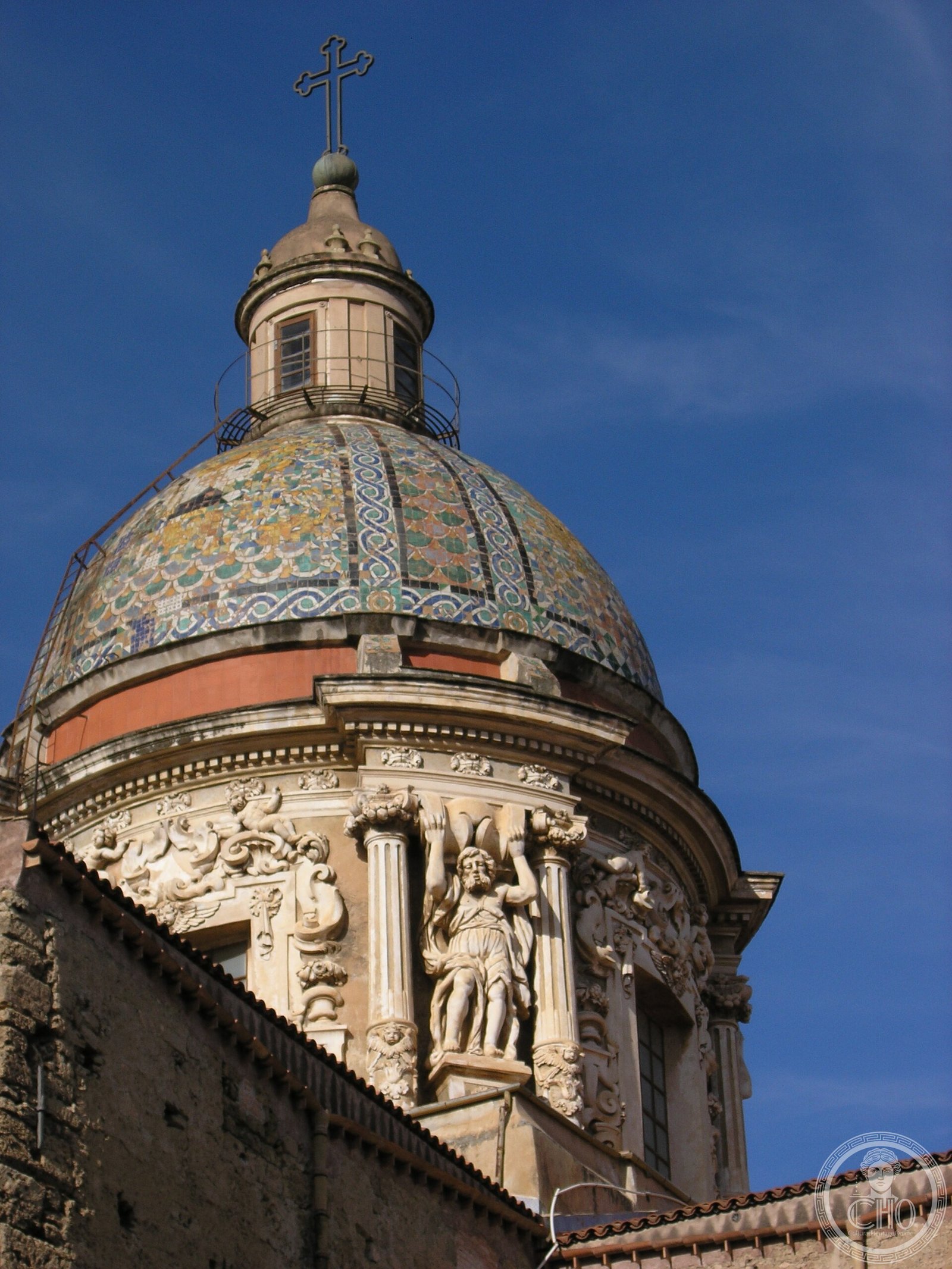
The Church of the Carmine Maggiore is a Roman Catholic baroque church located on Piazza del Carmine in the Ballarò district of Palermo, Sicily, facing one of the city’s most vibrant open-air markets. Built by the Discalced Carmelites in the seventeenth century, the church is distinguished by its polychrome majolica-tiled dome, a landmark of Palermitan baroque that rises above the dense streetscape of the old city. Its interior houses notable stucco decoration and paintings by Sicilian masters of the period.
At a glance
- Type
- Roman Catholic church (Discalced Carmelites)
- Period
- 17th century (construction began c. 1627)
- Style
- Sicilian Baroque
- Location
- Piazza del Carmine, Ballarò district, Palermo, Sicily, Italy
- Coordinates
- 38.1111° N, 13.3614° E
Overview
The Carmine Maggiore stands in the heart of Ballarò, Palermo’s oldest and most culturally layered market district, where Arab, Norman, and Spanish influences have left their mark over more than a millennium. The church faces the daily Mercato di Ballarò, one of the largest and liveliest street markets in southern Italy, giving its baroque facade an unusually vivid popular context. Together with the nearby churches of Sant’Anna and the Gancia, it forms part of the dense religious heritage of the Albergheria quarter within the historic core of Palermo.
History
The Discalced Carmelites established their presence in Palermo in the early seventeenth century, and construction of the Carmine Maggiore is generally dated to around 1627, though the church was completed and embellished over subsequent decades. The distinctive polychrome majolica dome, one of the most photographed features of the Palermo skyline, was added in the late seventeenth century in a technique characteristic of Sicilian baroque church architecture. The conventual complex originally included a monastery, of which portions survive. Restoration campaigns in the twentieth and twenty-first centuries have preserved the fabric of the building, which remains an active parish church.
What you see
The facade is a sober late-baroque composition in local limestone, surmounted by the dramatic polychrome majolica-tiled dome whose green, yellow, and white geometric patterns are visible from the surrounding rooftops. Inside, the single nave is lined with elaborate stucco decoration typical of the Palermitan school, with gilded cornices, relief panels, and painted altarpieces by Sicilian painters active in the seventeenth and eighteenth centuries. Side chapels dedicated to Carmelite saints preserve devotional images that have attracted local veneration for centuries. The church’s position on the piazza means it opens directly onto the noise and colour of the market outside, creating an unusual juxtaposition of sacred and secular.
Cultural significance
The Carmine Maggiore’s dome is one of the defining silhouettes of the Palermo skyline and a symbol of the city’s baroque identity. Set within the Ballarò market district, which UNESCO has recognised as part of the Arab-Norman Palermo World Heritage Site buffer zone, the church exemplifies how religious architecture in Palermo has always been embedded in the commercial and social fabric of daily life.
Practical information
- Address
- Piazza del Carmine, 90134 Palermo PA, Italy
- Admission
- Free entry; donations welcome
Getting there
The church is a 10-minute walk from Palermo Centrale railway station, heading west through the Ballarò market. City buses operated by AMAT serve the surrounding streets; the nearest stop is on Via Maqueda. Palermo Falcone–Borsellino Airport connects the city to major Italian and European destinations, with a direct train link to the city centre.
Sources & resources
Find it on the map
See this place and what’s around it →📷 Become a Cultural Heritage Online photographer
Share your photos of places: they stay published under your name as the author. The more they're seen, the more you get noticed — and soon a contest will reward the most appreciated photos.
Log in or sign up free to add a photoIs this page about you?
This page is read by travellers and heritage enthusiasts who find it on Google. Tell us how you are connected to this place and we will take it from there.