
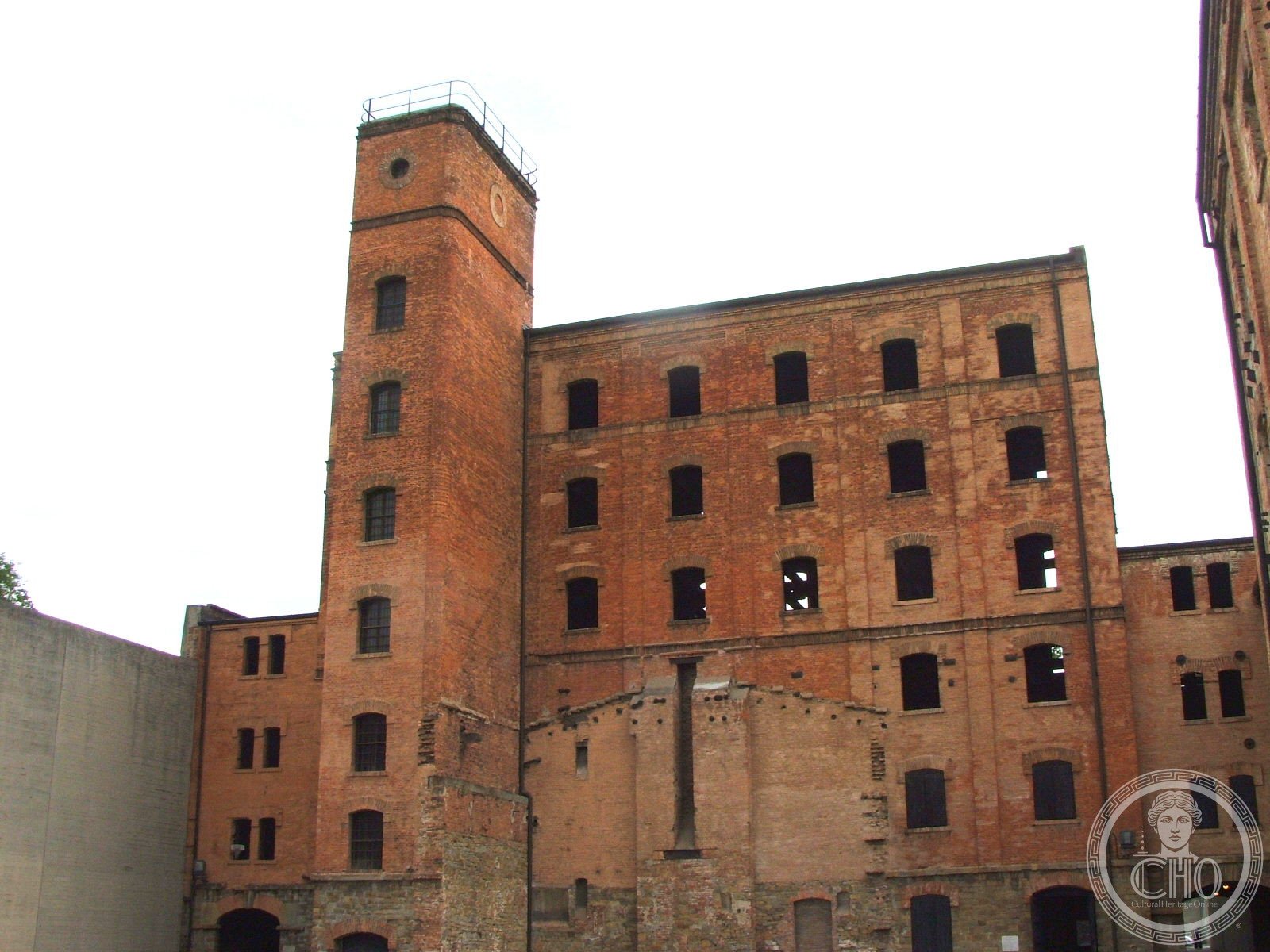
Risiera di San Sabba
The Risiera di San Sabba was a Nazi concentration and transit camp that operated in Trieste from October 1943 until April 1945. The only camp on Italian territory equipped with a crematorium, it served simultaneously as a detention facility for partisans and political prisoners, a transit point for Jewish deportees bound for Auschwitz, and an execution site. Today it is preserved as a national monument and museum, designated a site of conscience for the victims of Nazi occupation in the Adriatic Littoral.
- Type
- Nazi concentration camp (Polizeihaftlager); now national monument and museum
- Period
- Active October 1943 – April 1945; monument since 1965; museum opened 1975
- Style
- Industrial complex (former rice-husking factory, early 20th century); memorial conversion by architect Romano Boico (1975)
- Location
- Via Giovanni Palatucci 5, Trieste, Friuli Venezia Giulia, Italy
Overview
The Risiera di San Sabba is a former industrial rice-husking facility that was converted by the SS into the operational headquarters of the Operational Zone of the Adriatic Littoral (OZAK) from late 1943. It functioned as a police detention camp (Polizeihaftlager) and was the only camp on Italian soil to have a functioning crematorium. The complex held political prisoners, resistance fighters, Jews, and Slovene civilians before many were executed or deported to extermination camps in the east.
History
The building was constructed in 1913 as a rice-processing plant. After Germany occupied Trieste in September 1943 following Italy’s armistice, the SS commandant Odilo Globocnik repurposed it as a detention and processing facility. A crematorium was installed in late 1943 to destroy the bodies of those executed on site; estimates of the dead range from 3,000 to 5,000 individuals, though exact figures remain uncertain. Jewish prisoners were typically held briefly before being transported in convoy to Auschwitz-Birkenau. The camp was evacuated and partially demolished by the SS in April 1945 to destroy evidence. In 1965 the Italian state declared the site a national monument, and architect Romano Boico oversaw its conversion into a public memorial opened in 1975.
What you see
The memorial preserves the original industrial structure: the large courtyard, the detention cells, the area where the crematorium stood (partially demolished by the Nazis in 1945, now marked by a cast-iron slab), and two watchtowers. Boico’s conversion left the brick fabric largely intact while adding understated architectural elements — an entrance ramp, a void in place of the destroyed crematorium — that draw visitors into a meditative confrontation with absence. The permanent exhibition documents the history of the camp, the OZAK, and the fate of Trieste’s Jewish community.
Cultural significance
The Risiera di San Sabba is one of the most important Holocaust memorial sites in Italy and the only one located on the site of a functioning crematorium. It represents the convergence of anti-partisan repression and the Final Solution on Italian territory, and serves as a symbol of the complex wartime experience of the northeastern border region. The site is protected under Italian national monument status and is a member of international networks of Holocaust memorial institutions.
Practical information
Address: Via Giovanni Palatucci 5, 34148 Trieste TS. Coordinates: 45.6215° N, 13.7862° E. The museum is managed by the Comune di Trieste. Opening hours and guided tour availability — check the official Trieste city website or contact the museum directly before visiting. Admission is free.
Getting there
From Trieste Centrale station, take bus lines 10 or 20 towards the San Sabba district (approximately 20 minutes). By car, head south on Via Flavia toward the industrial port area and follow signs for Risiera di San Sabba. Parking is available on surrounding streets.
Sources & resources
Find it on the map
See this place and what’s around it →📷 Diventa un fotografo di Cultural Heritage Online
Condividi le tue foto dei luoghi: restano pubblicate con la tua firma come autore. Più vengono viste, più ti fai conoscere — e presto un concorso premierà le foto più apprezzate.
Accedi o registrati gratis per aggiungere una fotoDo you manage this place?
This page is read by travellers and heritage enthusiasts who find it on Google. Keep it accurate — and make it work for you. Free for non-profit heritage institutions.