
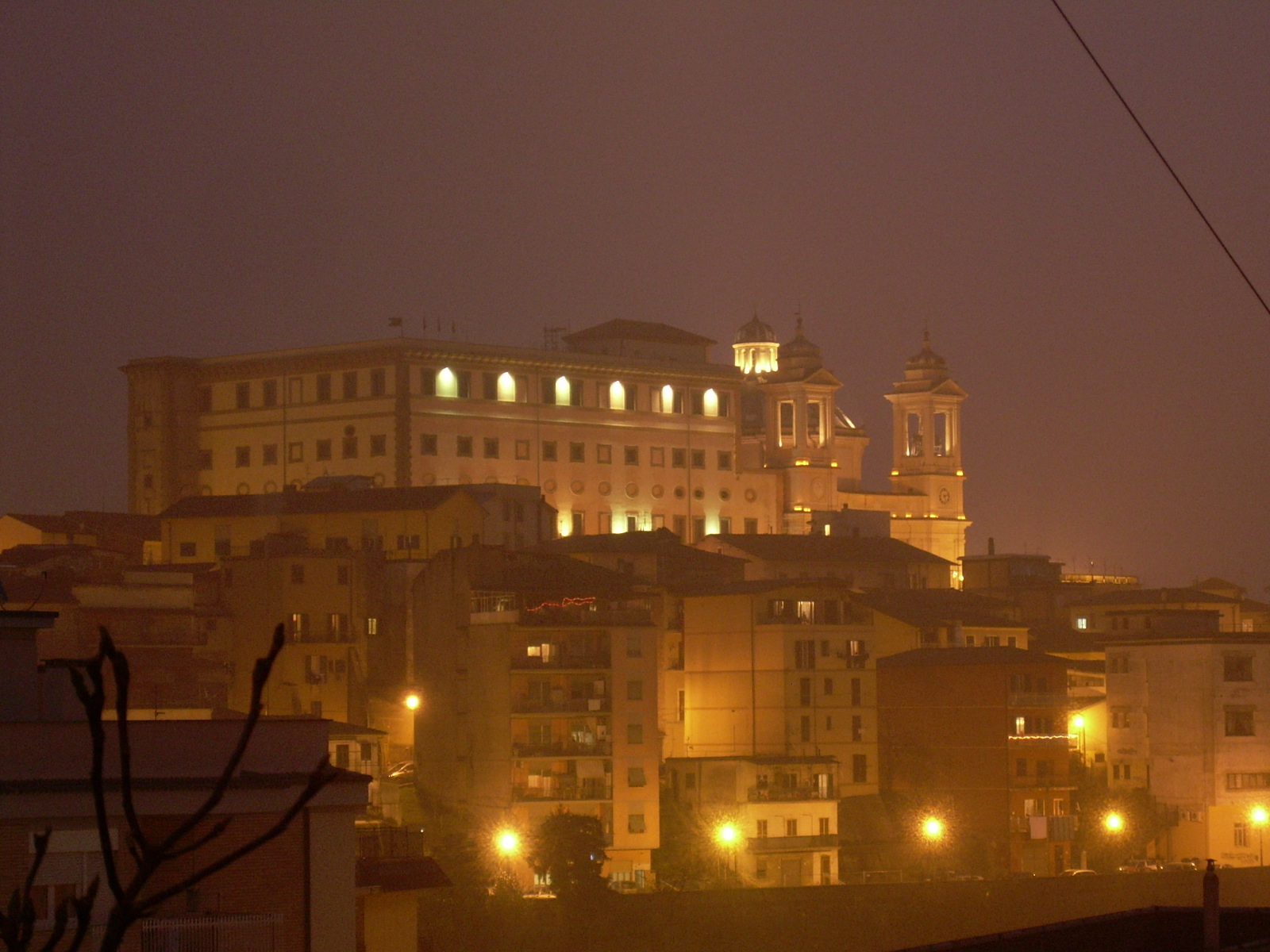
Valmontone is a hilltop town in the Metropolitan City of Rome, located approximately 45 kilometres southeast of the capital in the Castelli Romani area of the Alban Hills. Its historic centre is dominated by the monumental Palazzo Pamphilj, built between 1644 and 1668 by the powerful Roman noble family of Pope Innocent X, and by the collegiate church of the Assunta. The town was largely destroyed by Allied bombing in 1944 and subsequently rebuilt, making the survival of its Baroque palaces a remarkable heritage achievement.
- Type
- Historic hilltop town; heritage site
- Period
- Medieval origins; major Baroque building phase 17th century; reconstruction after 1944
- Style
- Baroque (Palazzo Pamphilj and collegiate church); medieval street plan
- Location
- Valmontone, Metropolitan City of Rome, Lazio, Italy
Overview
Valmontone sits at 319 metres on a spur of the Alban Hills, commanding views over the Roman Campagna and the Lepini Mountains. The town belonged to successive feudal lords before passing to the Pamphilj family in the 17th century, who transformed it into a showcase of Baroque patronage. The Palazzo Pamphilj, with its frescoed halls painted by Gaspard Dughet, Francesco Cozza, and other artists of the Roman Baroque, is the principal heritage monument.
History
The town’s origins are medieval, built over a Roman-era settlement on the via Latina. It was held by various Roman noble families — including the Colonna — before Pope Innocent X (Giovanni Battista Pamphilj) granted it to his nephew Camillo Pamphilj in the mid-17th century. Camillo commissioned the vast palace and transformed the town’s urban fabric, bringing Roman Baroque architecture to the provincial countryside. During the Italian Campaign of World War Two, Valmontone was a key objective in the Allied advance from Anzio towards Rome; the town was bombed repeatedly in May–June 1944 and suffered catastrophic damage. Postwar reconstruction preserved fragments of the historic centre while rebuilding the residential fabric in a 1950s vernacular.
What you see
The Palazzo Pamphilj dominates the hilltop, its austere facade concealing elaborately frescoed salons that are among the finest surviving examples of mid-17th-century decorative painting outside Rome itself. The adjacent collegiate church of Santa Maria Assunta retains Baroque altarpieces and decorative elements. The medieval street plan of the upper town, with its narrow alleys and views over the Campagna, survives in the zones least affected by the 1944 bombing. The surrounding area includes remnants of Roman-era infrastructure along the ancient via Latina.
Cultural significance
Valmontone’s Palazzo Pamphilj represents the extension of high Roman Baroque culture to the provincial hinterland and documents the extraordinary patronage power of the papacy-linked nobility in 17th-century Lazio. The town’s wartime destruction and subsequent survival as a heritage site makes it an important case in the study of Italy’s reconstruction and the relationship between bombing, memory, and historic preservation.
Practical information
Address: Piazza Umberto I, 00038 Valmontone RM. Coordinates: 41.7767° N, 12.9183° E. The Palazzo Pamphilj is managed as a museum; for opening times and admission charges, check the official website of the Comune di Valmontone or contact local tourism information.
Getting there
From Rome Termini station, take the Trenitalia regional service on the Rome–Cassino line to Valmontone station (approximately 40 minutes); the town centre is a short uphill walk or taxi ride from the station. By car, take the A1 motorway (Rome–Naples) and exit at Valmontone.
Sources & resources
See the place
Find it on the map
See this place and what’s around it →Historical events at this place (2)
📷 Become a Cultural Heritage Online photographer
Share your photos of places: they stay published under your name as the author. The more they're seen, the more you get noticed — and soon a contest will reward the most appreciated photos.
Log in or sign up free to add a photo