
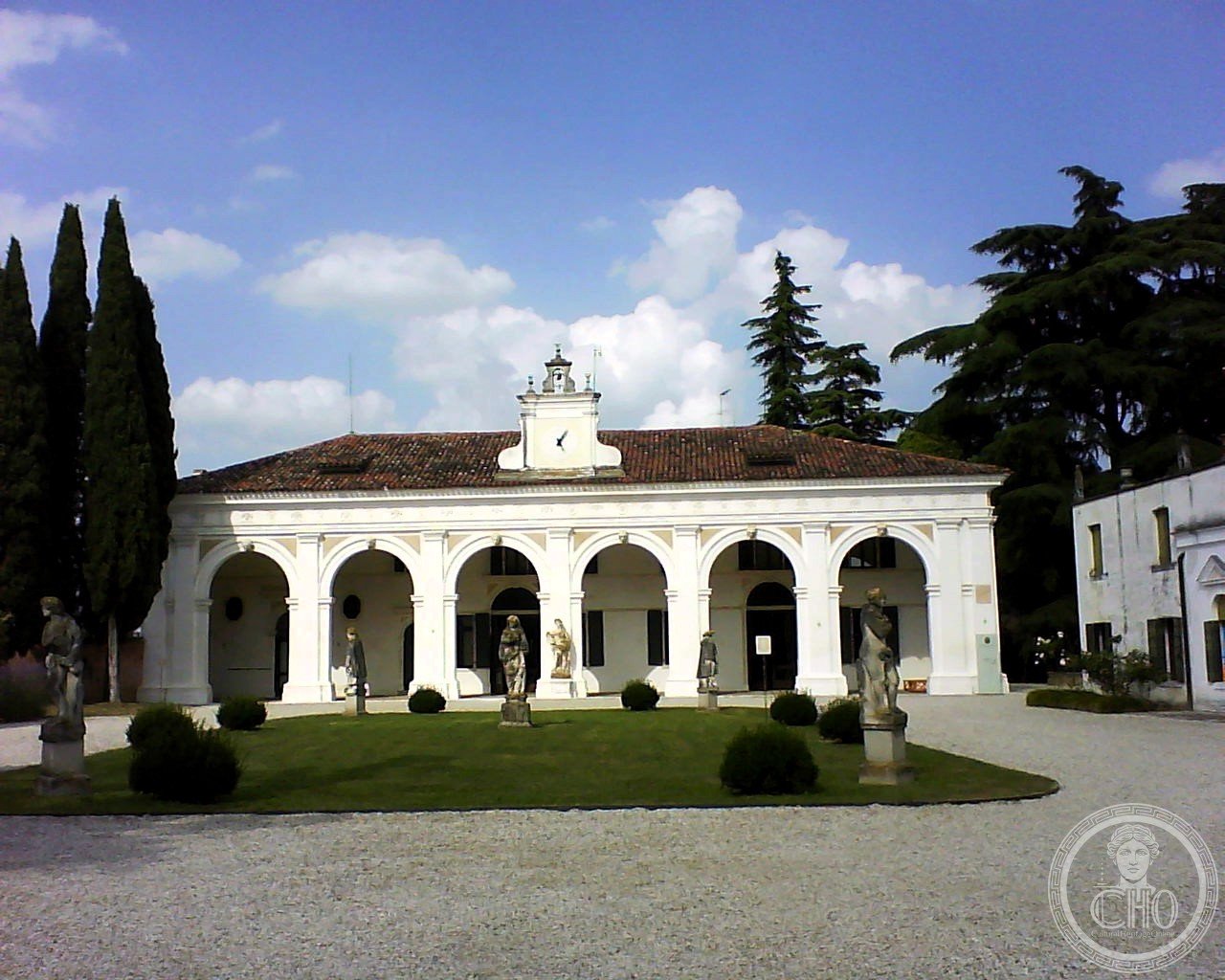
Ca’ Zenobio degli Armeni is a three-storey Baroque palace in the Dorsoduro sestiere of Venice, built on fourteenth-century Gothic foundations and reconstructed from 1664 to 1690 to designs by architect Antonio Gaspari for the Zenobio family. The palace is celebrated for its Hall of Mirrors ballroom, whose ceiling and walls bear early frescoes by Giovanni Battista Tiepolo, Ludovico Dorigny, and Gregorio Lazzarini, and for its romantic garden — added in 1848–49 — with sculpted hills and a bridge. From 1850 to 1997 it served as the Moorat-Raphael College for Armenian students; today it hosts events and exhibitions during the Venice Biennale.
At a glance
- Type
- Patrician Baroque palace (palazzo)
- Period
- 14th-century Gothic foundations; Baroque reconstruction 1664–1690; garden 1848–49
- Style
- Venetian Baroque; Neoclassical archive (1777); Romantic garden
- Location
- Calle del Forno, Dorsoduro, Venice
- Architects
- Antonio Gaspari (Baroque rebuild, 1690); Tommaso Temanza (library and archive, 1777)
- Patron
- Zenobio family; later Samuel Mkrtich Moorat and Edward Raphael (Armenian College)
- Coordinates
- 45.4337° N, 12.3208° E
- Current use
- Events venue and exhibition space; Moorat-Raphael Armenian cultural association
Overview
Ca’ Zenobio stands as one of the more atmospheric palaces of Venice’s Dorsoduro district, distinguished by the quality of its interior fresco cycle and by its rare surviving walled garden. The Zenobio were a family of Greek origin who rose to Venetian patrician status; their palace commission from Antonio Gaspari resulted in a façade and plan that exemplify late seventeenth-century Venetian Baroque. The palace’s subsequent history as an Armenian educational institution for nearly 150 years added a distinctive cultural layer, making it a point of connection between Venice and the Armenian diaspora in a city already home to the Armenian monastery of San Lazzaro degli Armeni.
History
The Zenobio family acquired the property in 1664 and entrusted its reconstruction to Antonio Gaspari, completing the building around 1690 on the skeleton of an earlier Gothic structure. In 1777 the Neoclassical architect Tommaso Temanza redesigned the archive and library wing. The Romantic-style garden with artificial hills, statuary, and a bridge was added in 1848–49 after the palace was purchased by Count Salvi of Vicenza. In 1850 it became the Moorat-Raphael College, founded on bequests from two wealthy Armenian businessmen — Samuel Mkrtich Moorat and Edward Raphael — whose separate foundations merged in 1871. The college enrolled students from seven countries but closed in 1997 due to insufficient funding. The palace has since operated as a cultural and events venue.
What you see
The principal showpiece is the portego and ballroom, where a ceiling fresco by Ludovico Dorigny depicts the Allegory of the Dawn with Aurora welcoming Apollo, flanked by compositions by Gregorio Lazzarini and early work by the young Giovanni Battista Tiepolo. The portego walls display veduta paintings and etchings by Luca Carlevarijs. The Neoclassical library designed by Tommaso Temanza offers a measured contrast to the exuberant Baroque of the main rooms. The walled garden, unusual in a city where green space is scarce, retains its Romantic character with rolling terrain and a small ornamental bridge.
Cultural significance
Ca’ Zenobio holds the distinction of containing early work by Tiepolo, placing it in the trajectory of Venetian painting just before the artist’s mature masterworks transformed European decorative art. Its long life as an Armenian college also makes it a monument to the transnational cultural networks of Venice, which from the Renaissance onwards served as a hub connecting Western Europe with the Eastern Mediterranean and beyond. The palace featured in Madonna’s 1984 “Like A Virgin” music video and in productions of the Commissario Brunetti television series, extending its cultural reach into popular consciousness.
Practical information
Ca’ Zenobio is accessible for events, private visits, and during open-house periods aligned with the Venice Biennale. It is not a standard daily-entry museum. Check the official Moorat-Raphael Association website for access arrangements and upcoming events. Address: Calle del Forno, Dorsoduro, Venice.
Getting there
The palace is in Dorsoduro, a short walk from the Ca’ Rezzonico vaporetto stop (Lines 1 and 2 on the Grand Canal). From Santa Lucia railway station, take the vaporetto to Ca’ Rezzonico (approx. 15 minutes) and walk south through the Dorsoduro neighbourhood. Water taxis and gondolas also serve the area.
Sources & resources
See the place
Find it on the map
See this place and what’s around it →Historical events at this place (1)
📷 Become a Cultural Heritage Online photographer
Share your photos of places: they stay published under your name as the author. The more they're seen, the more you get noticed — and soon a contest will reward the most appreciated photos.
Log in or sign up free to add a photoIs this page about you?
This page is read by travellers and heritage enthusiasts who find it on Google. Tell us how you are connected to this place and we will take it from there.