
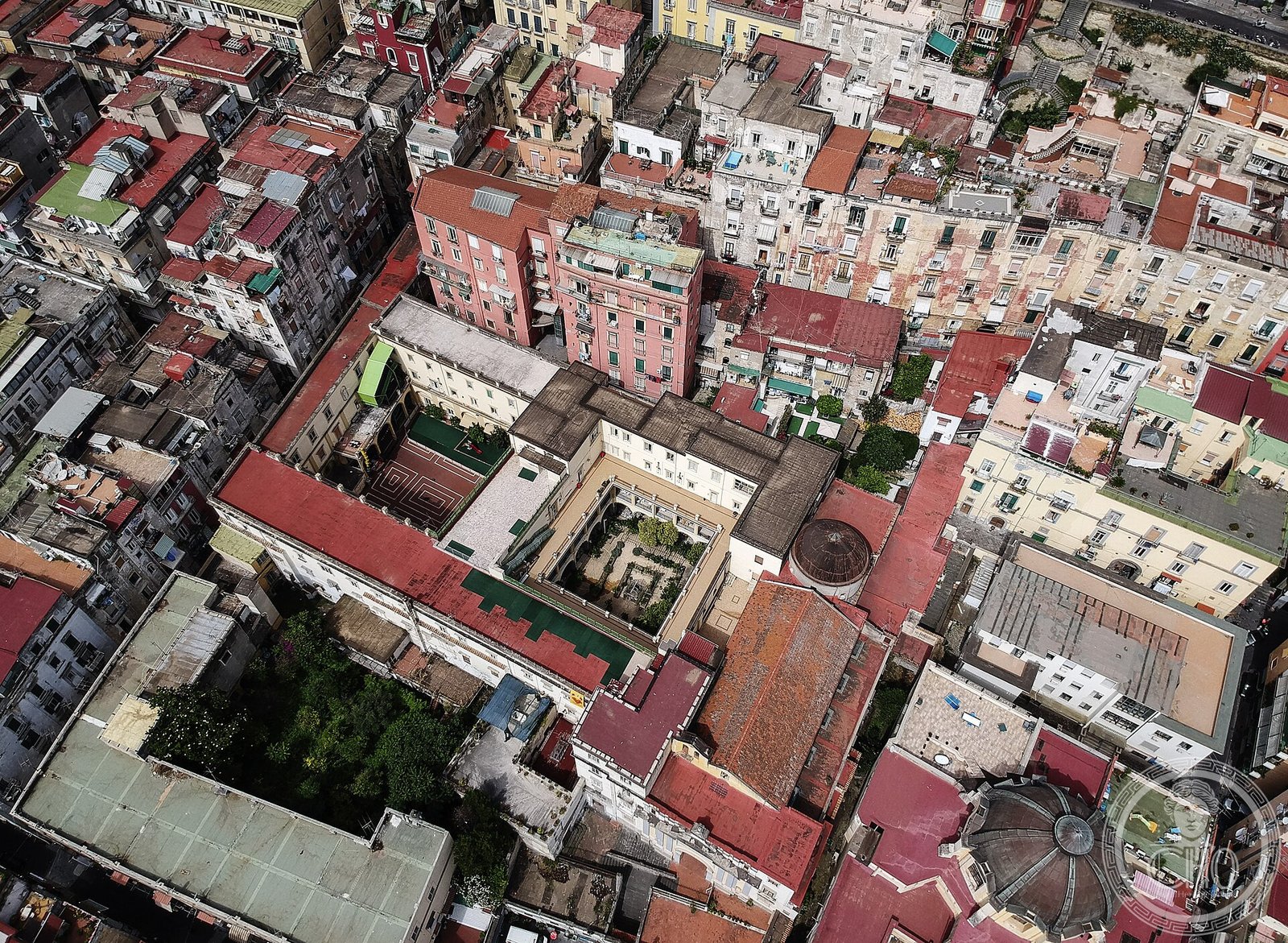
Toledo is a Naples Metro Line 1 station that opened on 17 April 2012 and has been acclaimed as one of the most beautiful underground stations in the world. Designed by Spanish architect Óscar Tusquets Blanca, the station transforms an engineering challenge — an underground aquifer — into a central design theme, wrapping the descent in shimmering blue mosaic evoking water and light. Major artworks by William Kentridge, Robert Wilson, and Oliviero Toscani make Toledo a living gallery beneath the streets of the Quartieri Spagnoli.
At a glance
- Type
- Underground metro station (Line 1) and public art installation
- Period
- Opened 17 April 2012
- Style
- Contemporary; immersive art and architecture
- Location
- Via Toledo / Quartieri Spagnoli, Naples, Campania, Italy
- Coordinates
- 40.8425° N, 14.2467° E
- Awards
- 2013 Emirates LEAF Award, Public Building of the Year; 2015 ITA Award; named “most beautiful metro station in Europe and the world” by The Daily Telegraph
Overview
Toledo station sits beneath Via Toledo, the main commercial artery of central Naples, in the densely populated Quartieri Spagnoli neighbourhood. The station is part of the Metropolitana dell’Arte project, Naples’s ambitious programme to commission world-class artists and architects for each Line 1 stop. Toledo stands out even within this exceptional programme: its sheer depth (40 metres below street level), the sweep of its blue-mosaic tunnel walls, and the quality of its permanent artworks have drawn visitors from across the globe who descend purely to experience the station as a destination in its own right.
History
Planning for the Toledo stop began in the 1990s as Naples expanded Line 1 southward. The original alignment would have placed the station at Piazza Carità, but geological surveys revealed a substantial underground aquifer that complicated conventional construction; the station was consequently relocated approximately 100 metres and the water theme was incorporated into the design concept. Óscar Tusquets Blanca won the architectural commission and oversaw a decade of construction and artistic programming. The station opened to the public in April 2012, immediately drawing international media attention and a series of prestigious awards.
What you see
Descending from street level, visitors pass through hexagonal blue and ochre tile skylights that filter natural light into the upper concourse. The walls of the main tunnel are covered in a gradated blue mosaic that deepens in intensity as one descends, evoking an underwater world. William Kentridge contributed two large mosaic friezes and the bronze equestrian sculpture Il Cavaliere di Toledo; Robert Wilson designed the “Sea Gallery,” an entirely mosaic-clad grotto space with marine imagery; and Oliviero Toscani’s photographic panels depict faces of Neapolitan citizens. A cosmic-ray detector installed by the Italian National Institute for Nuclear Physics (INFN) adds a scientific dimension to the artistic environment.
Cultural significance
Toledo is the flagship of Naples’s internationally recognised policy of integrating contemporary art into public transport infrastructure, a model that has been studied and admired by city planners worldwide. The station demonstrates how urban infrastructure can function simultaneously as civic artwork, elevating the daily experience of commuters and attracting cultural tourism to one of Europe’s most historically layered cities.
Practical information
- Address
- Via Toledo, 80134 Napoli NA, Italy
- Metro line
- Line 1 (Piscinola–Garibaldi); stops at Toledo between Dante and Municipio
- Hours
- Metro operating hours (approximately 06:30–23:00; check ANM website for current timetable)
- Admission
- Standard metro fare; no additional charge to view the artworks
Getting there
Toledo station is directly accessible via Naples Metro Line 1; board at Piscinola, Università, or Garibaldi and alight at Toledo. From Naples Centrale railway station take Line 1 (direction Piscinola) three stops. The station entrance is on Via Toledo in the heart of the city centre, within walking distance of the Royal Palace, Piazza del Plebiscito, and the historic Spaccanapoli axis.
Sources & resources
See the place
Find it on the map
See this place and what’s around it →📷 Become a Cultural Heritage Online photographer
Share your photos of places: they stay published under your name as the author. The more they're seen, the more you get noticed — and soon a contest will reward the most appreciated photos.
Log in or sign up free to add a photoIs this page about you?
This page is read by travellers and heritage enthusiasts who find it on Google. Tell us how you are connected to this place and we will take it from there.