
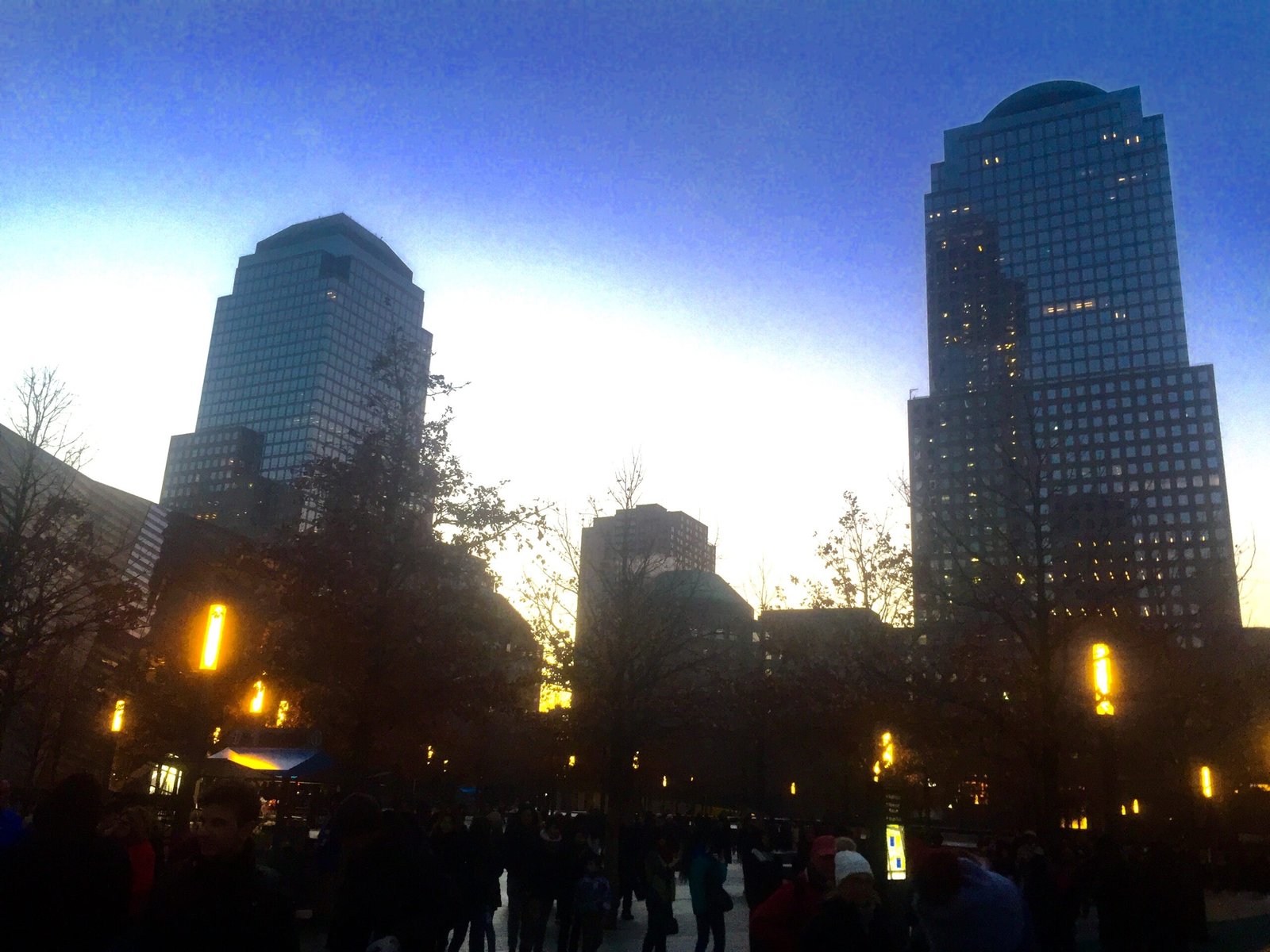
One World Trade Center, also known as the Freedom Tower, is the tallest building in the United States and the Western Hemisphere, rising 541 metres (1,776 feet) above Lower Manhattan. Designed by David Childs of Skidmore, Owings & Merrill and opened in 2014, it anchors the rebuilt World Trade Center site and serves as a global symbol of resilience, built on ground that carries the memory of the September 11, 2001 attacks.
- Type
- Supertall office skyscraper and observation tower
- Period
- Construction 2006–2014; opened November 2014
- Style
- Contemporary high-rise; prismatic glass and steel
- Location
- 285 Fulton Street, Lower Manhattan, New York City, USA
- Coordinates
- 40.7118° N, 74.0127° W
- Current use
- Office tower, One World Observatory, memorial complex
At a glance
- Type
- Supertall office skyscraper and observation tower
- Period
- Construction 2006–2014; opened November 2014
- Style
- Contemporary; prismatic glass curtain wall
- Location
- 285 Fulton Street, Lower Manhattan, New York City, USA
Overview
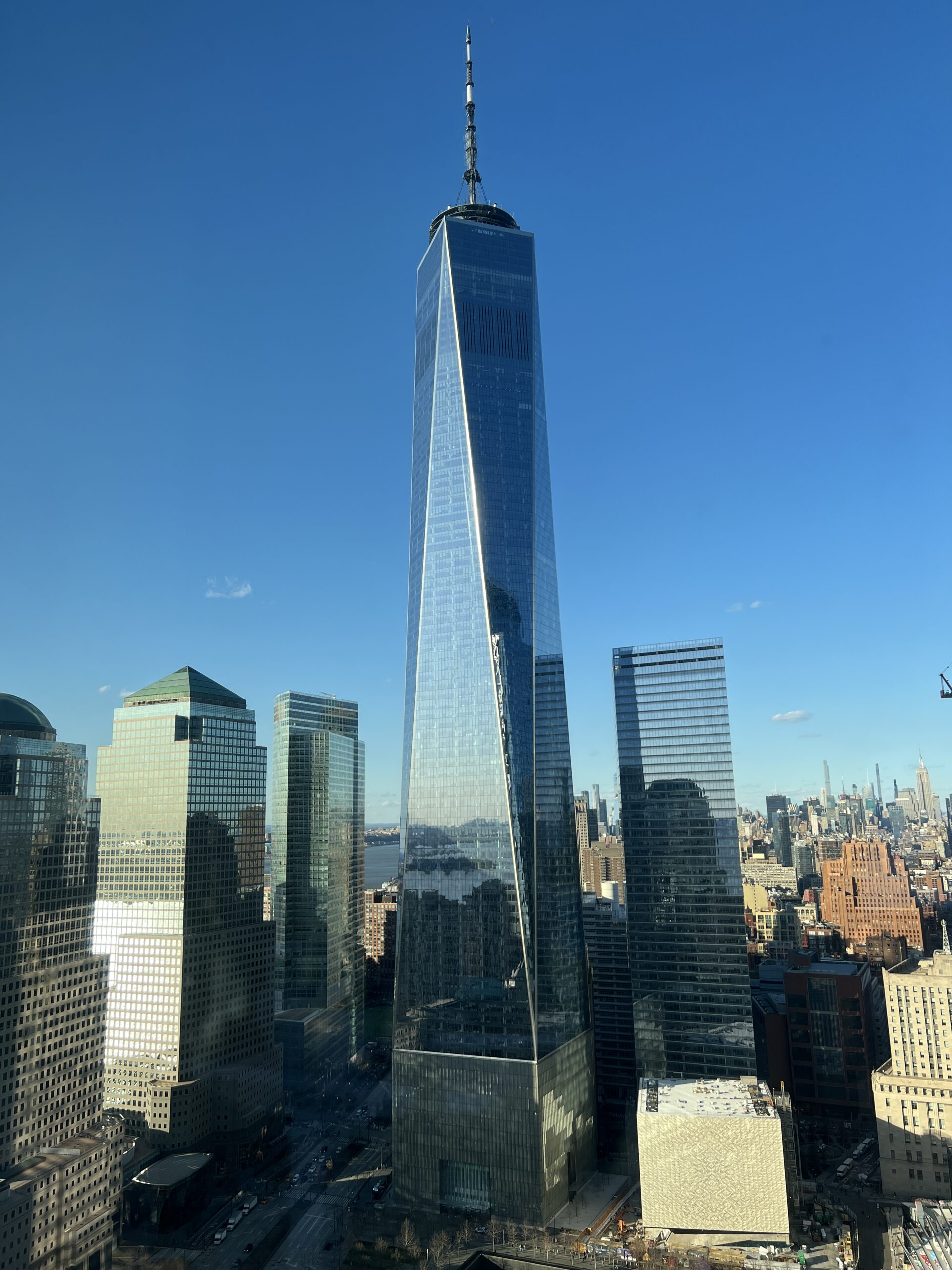
One World Trade Center is the main building of the rebuilt World Trade Center complex in Lower Manhattan, occupying the northwest corner of the 16-acre site bounded by West, Vesey, Fulton, and Washington streets. Designed by David Childs of Skidmore, Owings & Merrill, the 104-storey tower stands 541 metres to the tip of its antenna, a height that deliberately echoes 1776, the year of American independence. It is the seventh-tallest building in the world and the defining feature of the New York skyline since its completion.
History
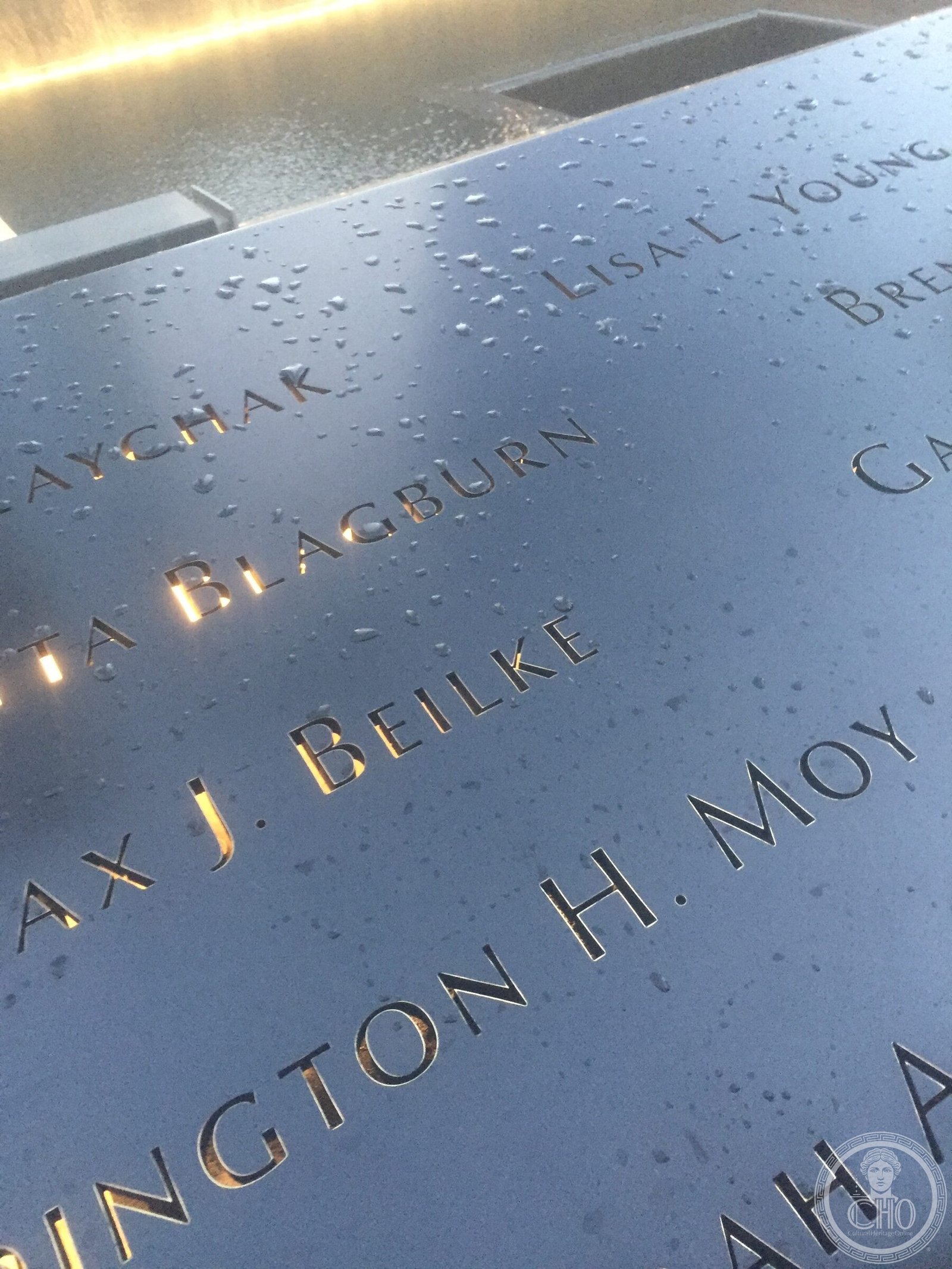
Construction of One World Trade Center began on 27 April 2006, five years after the September 11, 2001 attacks destroyed the original Twin Towers on the same site. The design went through multiple iterations as the project navigated security requirements, engineering challenges, and intense public debate about the appropriate form for a rebuilding on the most sensitive plot of urban land in America. The building was structurally topped out in August 2012, the antenna set in place in May 2013, and the first tenants moved in during November 2014. The adjacent 9/11 Memorial & Museum, incorporating the footprints of the original towers as reflecting pools, opened in 2011 and 2014 respectively.
What you see
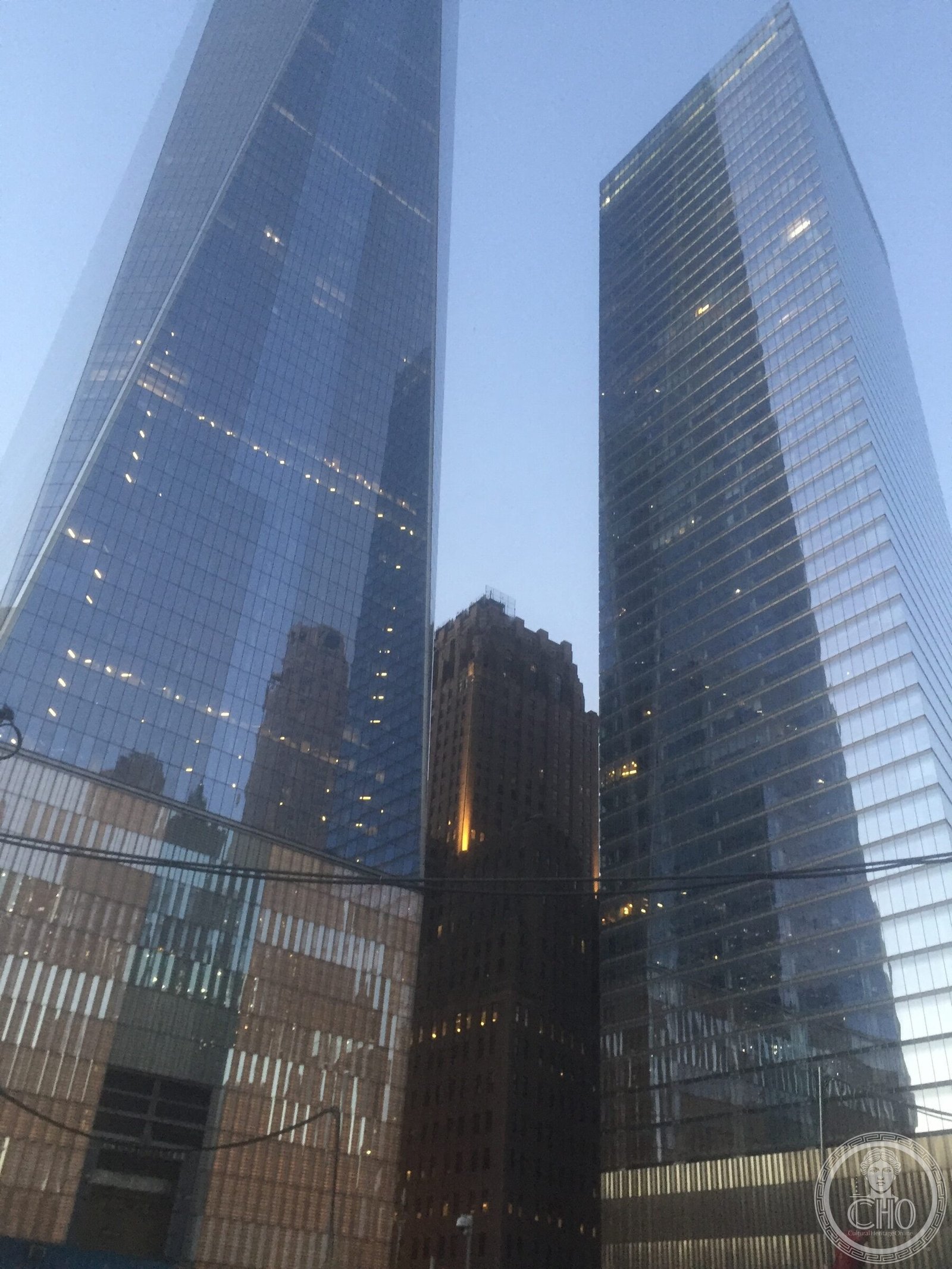
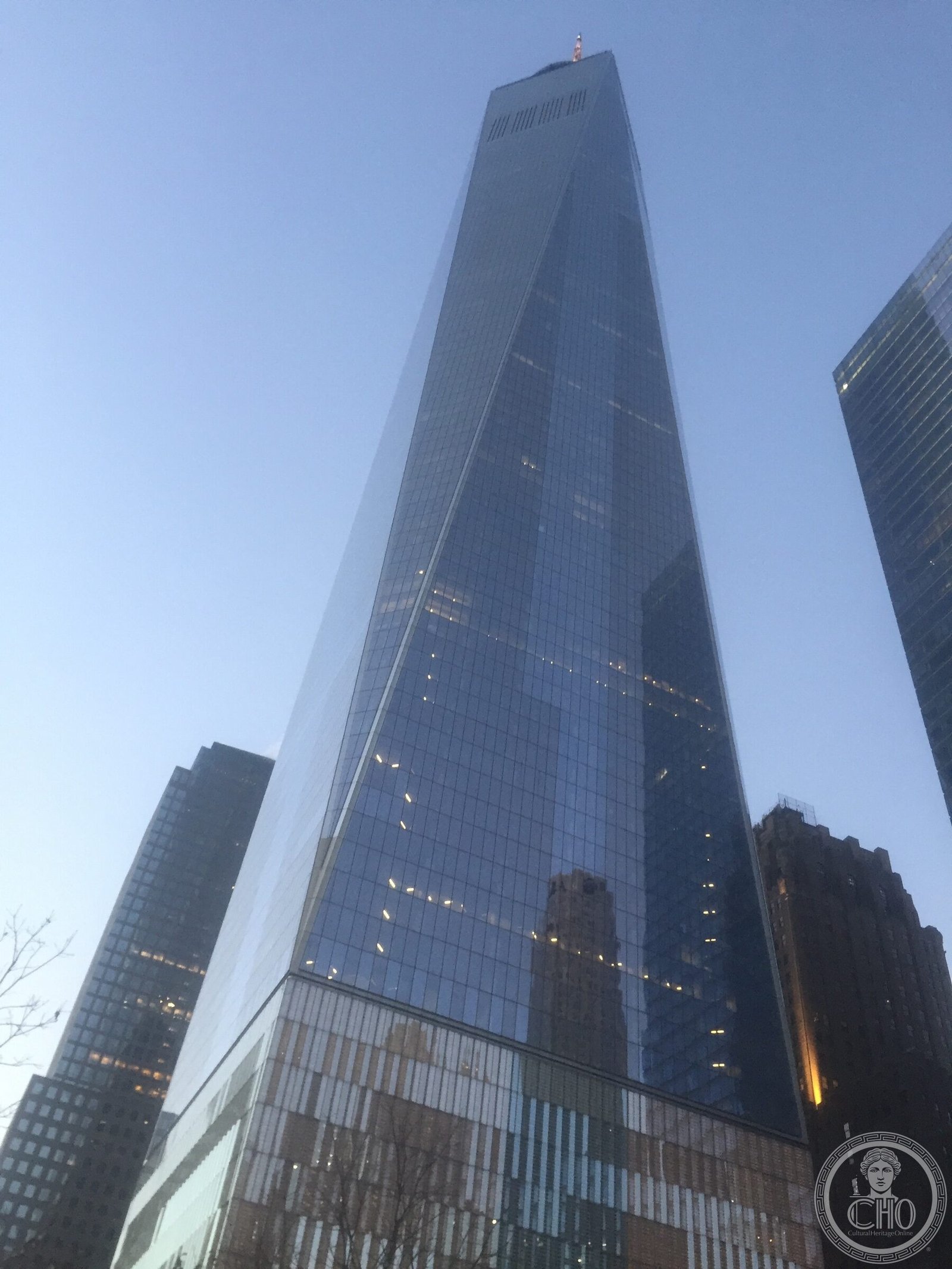
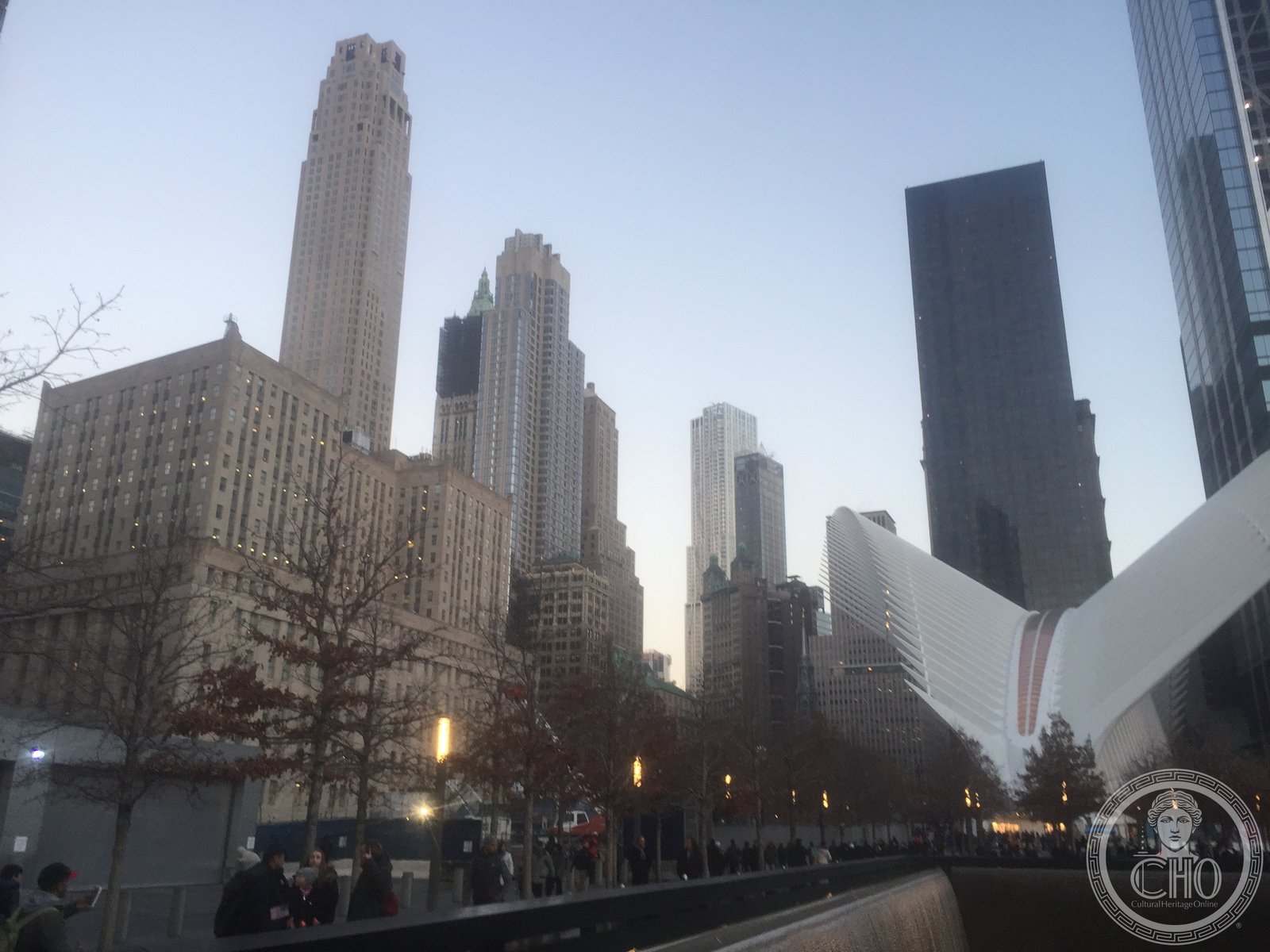
The tower’s form transitions from a square base to a series of chamfered triangular faces that create an octagonal mid-section, then tapers toward an antenna at the summit; the effect at ground level is a clean prismatic glass monolith that shifts in colour with the light and weather. The One World Observatory on floors 100–102 offers 360-degree panoramic views across New York City, New Jersey, and on clear days as far as Connecticut and Pennsylvania. At street level the building meets the World Trade Center Transportation Hub — the Oculus — designed by Santiago Calatrava as a light-filled transit cathedral whose white steel ribs are one of the most photographed pieces of contemporary architecture in the world.
Cultural significance
One World Trade Center carries the weight of national memorial and urban regeneration simultaneously, making it perhaps the most symbolically charged piece of contemporary architecture in the United States. Its 1,776-foot height is an explicit patriotic statement, and its presence restored the Lower Manhattan skyline erased in 2001. The surrounding memorial landscape — the two reflecting pools set within the original tower footprints — has become one of the most visited commemorative sites in the world.
Practical information
- Address
- 285 Fulton Street, New York, NY 10007, USA
- Observatory
- One World Observatory open daily; tickets required, book in advance
Getting there
The World Trade Center Transportation Hub (Oculus) is served by the Port Authority Trans-Hudson (PATH) trains from New Jersey and by New York City Subway lines E, 2, 3, A, C, J, and Z at the Fulton Street and World Trade Center stations. The site is within walking distance of the Battery Park waterfront and the Fulton Center transit hub.
Sources & resources
Gallery
Photographs by Luigi De Marchi.
Gallery
Find it on the map
See this place and what’s around it →📷 Become a Cultural Heritage Online photographer
Share your photos of places: they stay published under your name as the author. The more they're seen, the more you get noticed — and soon a contest will reward the most appreciated photos.
Log in or sign up free to add a photoIs this page about you?
This page is read by travellers and heritage enthusiasts who find it on Google. Tell us how you are connected to this place and we will take it from there.