
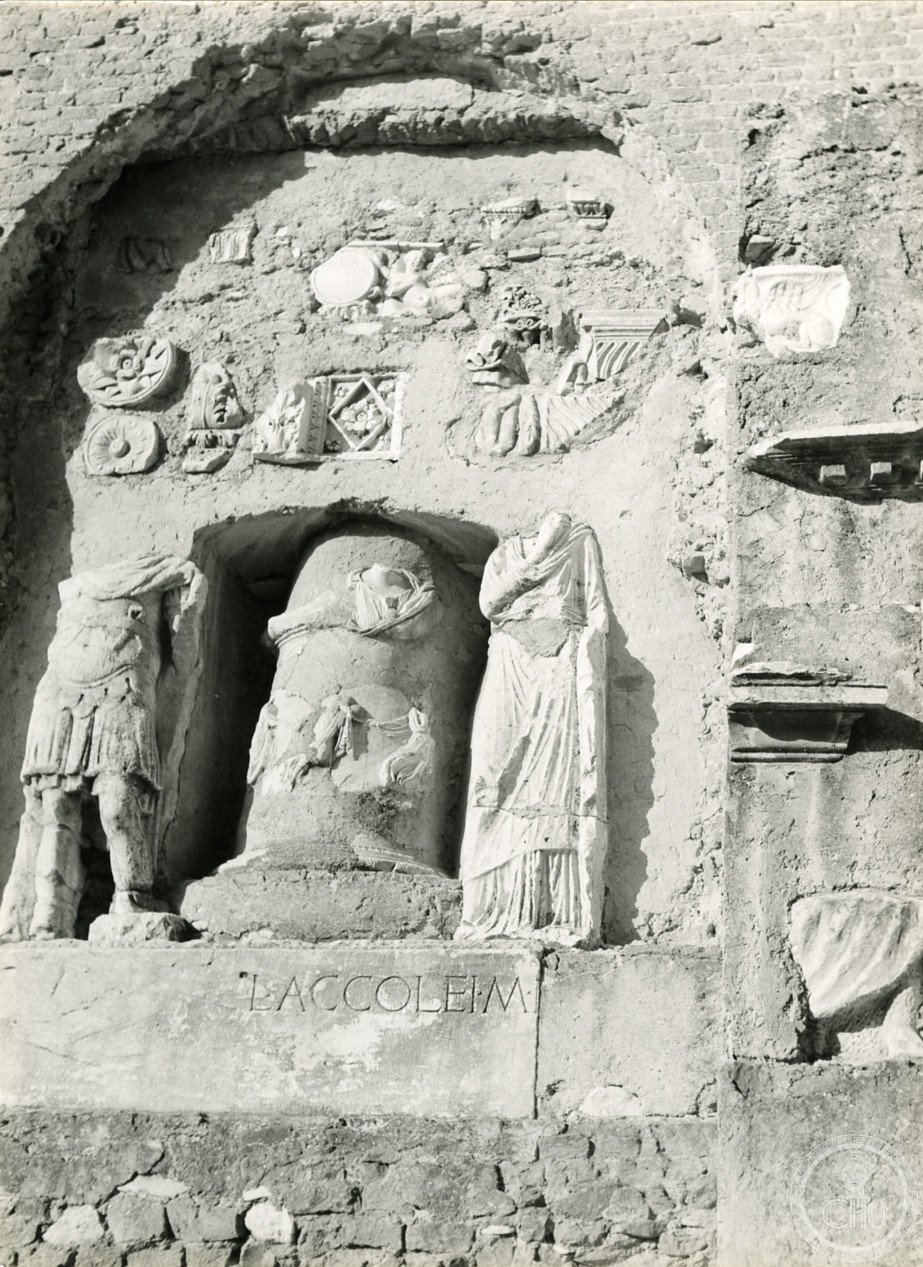
The Mausoleum of Cecilia Metella is one of the best-preserved ancient Roman tombs in the world, standing on the third mile of the Via Appia Antica south of Rome. Built around 50 BC for Cecilia Metella, daughter of Quintus Caecilius Metellus Creticus, its massive cylindrical drum of travertine and opus reticulatum sits on a square base and rises nearly 11 metres before the medieval battlements added by the Caetani family in the fourteenth century. The monument has defined the skyline of the Appian Way for over two millennia and remains a symbol of Roman funerary grandeur.
At a glance
- Type
- Roman circular mausoleum
- Period
- c. 50 BC (mausoleum); 14th-century battlements added by the Caetani family
- Style
- Late Republican Roman funerary architecture; medieval military additions
- Location
- Via Appia Antica 161, 00178 Rome, Italy (41.8521° N, 12.5209° E)
Overview
The Mausoleum of Cecilia Metella crowns the third milestone of the ancient Via Appia, Rome’s oldest consular road, which once connected the capital to Brindisi on the Adriatic coast. The cylindrical drum, approximately 29 metres in diameter, is faced with blocks of travertine limestone and was originally topped by a tumulus of earth planted with cypresses. It is one of the finest examples of the large circular tomb type favoured by wealthy Romans in the late Republican and early Imperial periods.
History
Cecilia Metella was the daughter of the consul Quintus Caecilius Metellus Creticus and the wife of Marcus Licinius Crassus, son of the triumvir. The scale and quality of her mausoleum reflect the enormous prestige of the Metelli family in the final decades of the Roman Republic. In the early fourteenth century, the Caetani family — the most powerful Roman noble clan of that era — incorporated the mausoleum into a fortified tower complex called Capo di Bove, transforming the tomb into a fortress that controlled traffic on the Appian Way and levied tolls on travellers. The complex remained in Caetani hands until Pope Boniface VIII confiscated it at the turn of the century.
What you see
Visitors approach a tall cylindrical drum sitting on a square podium, both built in opus incertum and faced with travertine slabs bearing a carved frieze of garlands, bucraniums (ox skulls), and military trophies — emblems of Roman aristocratic virtue. The original entrance corridor leading to the burial chamber can still be entered, though the sarcophagus was removed long ago. Above the Roman drum rise the crenellated Caetani battlements, giving the monument a hybrid appearance that fascinated Grand Tour artists for centuries. The surrounding estate retains medieval walls and a small Gothic church, now part of the state-run archaeological site.
Cultural significance
The Mausoleum of Cecilia Metella has been a landmark on the Grand Tour since the sixteenth century, studied and painted by Raphael, Piranesi, Goethe, and Turner. It is protected within the Parco Regionale dell’Appia Antica and remains one of the anchor monuments of one of the world’s most important archaeological landscapes.
Practical information
The site is managed by the Soprintendenza Speciale di Roma and is open Tuesday to Sunday; entry is included in a combined ticket with the Circus and Villa of Maxentius on the same stretch of road. Check the official Coopculture website for current hours and pricing.
Getting there
Take bus line 118 or 218 from the Circo Massimo metro station (Line B) heading south along the Via Appia Antica. The mausoleum is approximately 6 km from the city centre; cycling along the traffic-free section of the ancient road from the Porta San Sebastiano is a popular option on weekdays and Sundays.
Sources & resources
See the place
Find it on the map
See this place and what’s around it →📷 Become a Cultural Heritage Online photographer
Share your photos of places: they stay published under your name as the author. The more they're seen, the more you get noticed — and soon a contest will reward the most appreciated photos.
Log in or sign up free to add a photo