
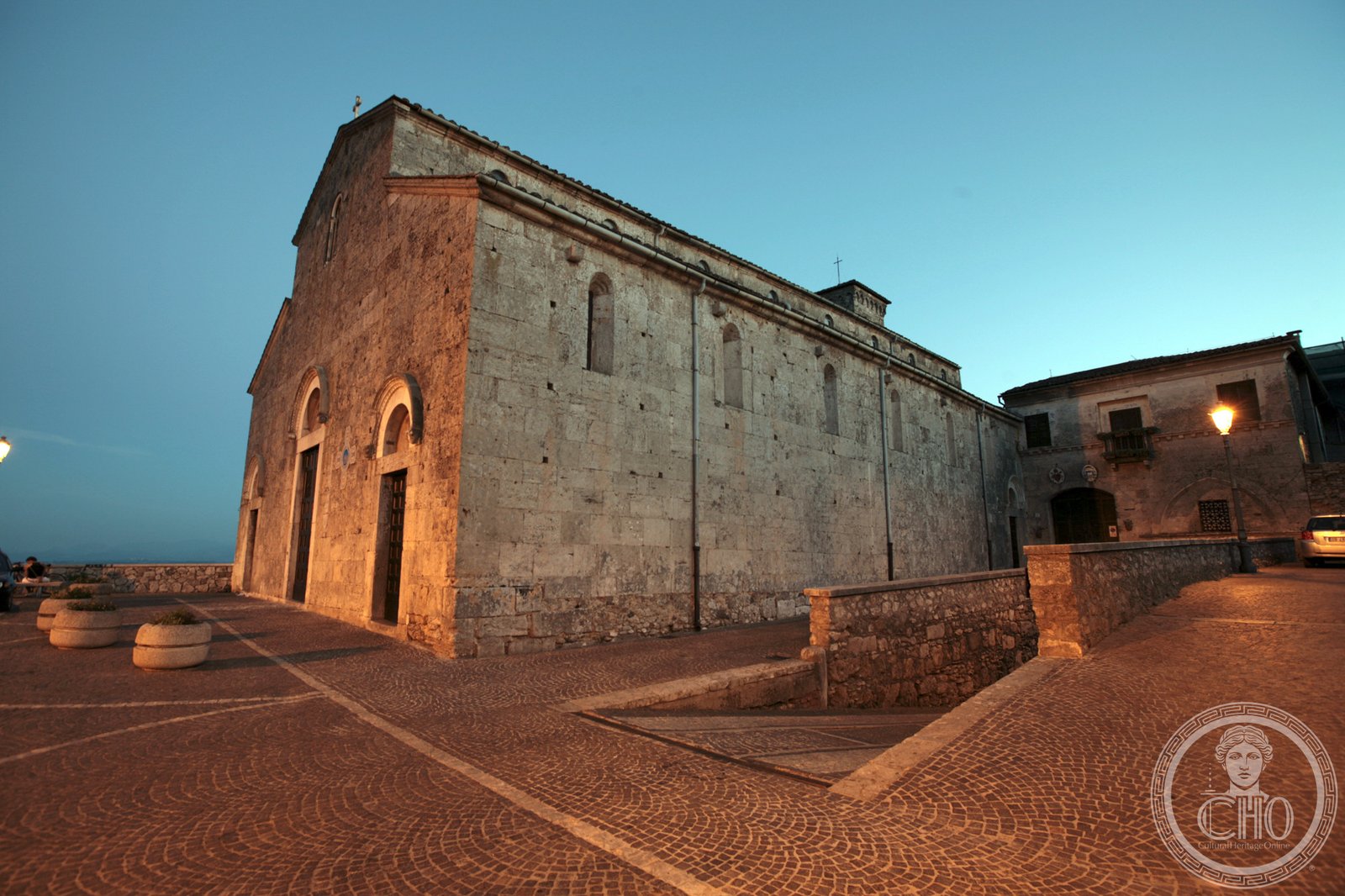
Ferentino is a historic hilltop town in the province of Frosinone, Lazio, 65 kilometres southeast of Rome, set 400 metres above sea level in the Monti Ernici area. Inhabited since the Bronze Age and once a city of the ancient Hernici people, Ferentino retains an exceptional concentration of pre-Roman and Roman monuments within its medieval street pattern, including a well-preserved acropolis, Roman-era market buildings, and one of the finest sets of Cyclopean walls in central Italy. Its ancient and medieval heritage makes it one of the most archaeologically significant small towns in Lazio.
At a glance
- Type
- Historic hilltop town and comune
- Period
- Pre-Roman (Hernici) to medieval; Roman municipium from 361 BC
- Style
- Cyclopean/polygonal walling, Roman civic architecture, medieval urban fabric
- Location
- Province of Frosinone, Lazio, Italy
- Coordinates
- 41.6924° N, 13.2536° E
Overview
Ferentino is a town of roughly 20,000 inhabitants occupying a strategic spur in the Sacco river valley, enclosed by ancient defensive walls dating back to the Hernici period. It became a Roman municipium after the Latin War and grew into a prosperous town under the empire. Today it is visited primarily for its extraordinary density of ancient monuments — acropolis, market, walls, bishop’s palace — within a largely intact medieval townscape.
History
Ferentino was one of the principal cities of the Hernici, a people allied with Rome from 358 BC before being fully absorbed as a Roman municipium in 361 BC. Under the empire the town flourished: the forum, the market building (Mercato Romano), and the acropolis temples date largely from the 1st century BC to the 2nd century AD. In the medieval period Ferentino was a papal seat and the birthplace of Pope Innocent III’s family; its cathedral and bishop’s palace overlie the Roman acropolis. The town’s walls — built in multiple phases using polygonal limestone blocks — survive to a height of several metres in many sections.
What you see
The most striking monuments are the Cyclopean acropolis walls, built in polygonal limestone blocks some of which exceed two metres in length. The Mercato Romano (Roman market) is a two-storey vaulted structure of the 1st century BC, one of the best-preserved market buildings outside Rome. The medieval cathedral of Santa Maria Maggiore sits at the summit of the hill on the Roman acropolis platform. The town’s medieval gates, tower houses, and narrow lanes complete a townscape largely unchanged in plan since antiquity.
Cultural significance
Ferentino’s polygonal walls represent a pre-Roman building tradition of great scholarly importance, offering some of the clearest evidence of Hernican civic architecture in Lazio. The layering of pre-Roman, Roman, and medieval heritage within a single continuously inhabited hilltop makes Ferentino a rare living palimpsest of central Italian urban history.
Practical information
- Address
- Ferentino, 03013, Province of Frosinone, Lazio, Italy
- Access
- Open town; monuments have varying hours — check the Comune di Ferentino website for current opening times
Getting there
Ferentino is served by regular train services on the Rome–Cassino–Naples line; the station is at the foot of the hill, with a short uphill walk or local bus to the historic centre. By car, take the A1 autostrada (Roma–Napoli) to the Ferentino exit. From Rome, journey time is approximately 70 minutes by train or 60 minutes by car.
Sources & resources
See the place
Find it on the map
See this place and what’s around it →📷 Become a Cultural Heritage Online photographer
Share your photos of places: they stay published under your name as the author. The more they're seen, the more you get noticed — and soon a contest will reward the most appreciated photos.
Log in or sign up free to add a photo