
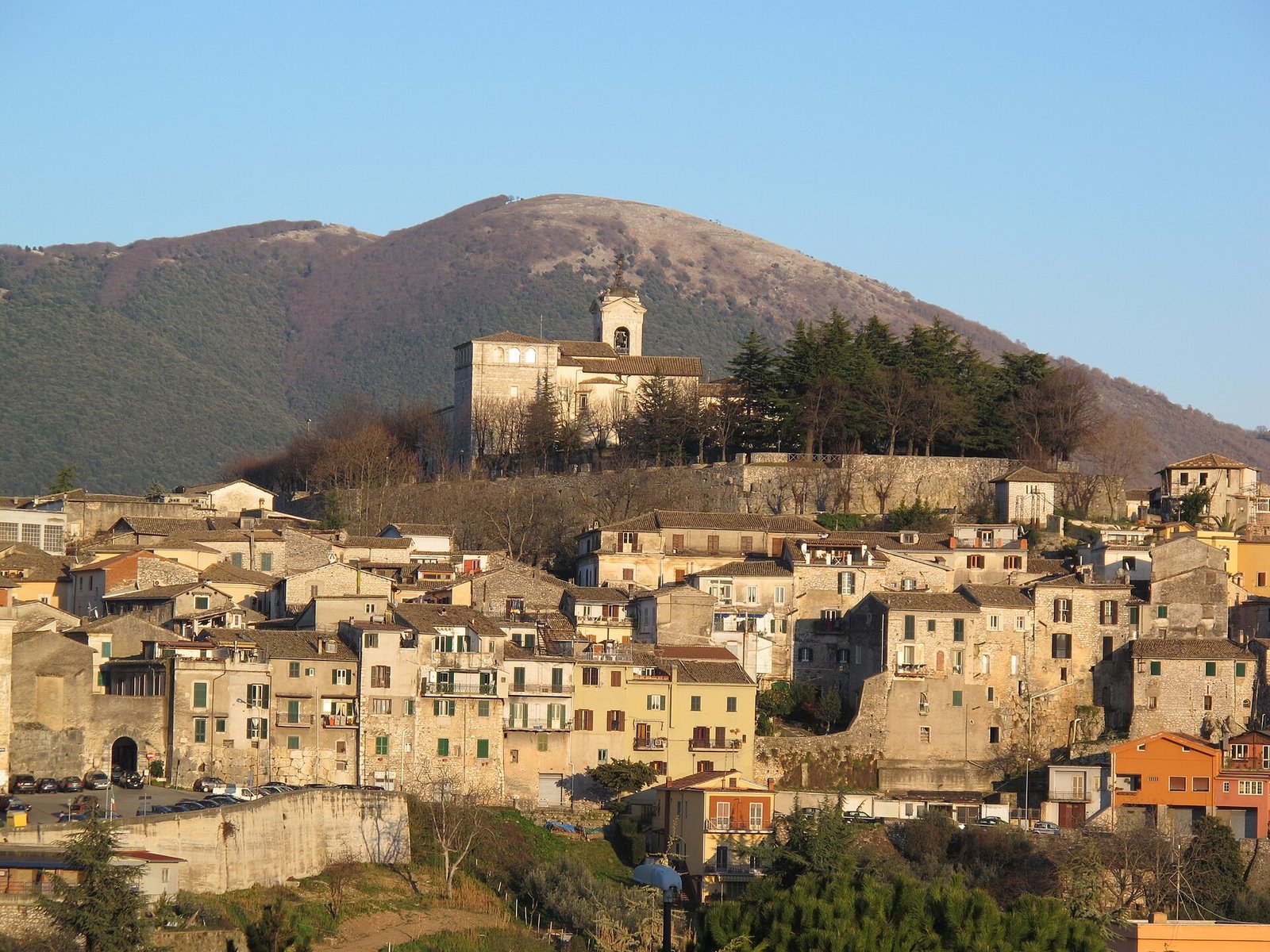
Alatri is an ancient hilltop town in the province of Frosinone, Lazio, with a population of around 30,000, renowned for one of the most complete and impressive megalithic acropolises in Italy. Once a city of the Hernici people, Alatri preserves an extraordinary circuit of Cyclopean polygonal walls enclosing its acropolis summit, built without mortar from massive limestone blocks that have resisted more than two millennia of time. The acropolis and its temples, together with the medieval urban fabric of the lower town, make Alatri an outstanding example of layered civilisation in the Ciociaria region of southern Lazio.
At a glance
- Type
- Historic hilltop town with megalithic acropolis
- Period
- Pre-Roman Hernici period (c. 4th–3rd century BC acropolis); Roman municipium; medieval
- Style
- Polygonal/Cyclopean megalithic walling; Roman civic; medieval
- Location
- Province of Frosinone, Lazio, Italy
- Coordinates
- 41.7266° N, 13.3424° E
Overview
Alatri is an ancient city of the Hernici, one of the indigenous Italic peoples of central Lazio who were allied with and later absorbed by Rome during the 4th century BC. The town is celebrated above all for its acropolis walls — among the best-preserved polygonal fortifications in the world — which enclose the summit plateau where two pre-Roman temples once stood. The lower town retains its Roman and medieval street grid, punctuated by Romanesque and Gothic churches and civic buildings.
History
The Hernici inhabited the Sacco valley and surrounding hills well before Rome’s expansion, and Alatri (ancient Aletrium) was one of their principal centres. The monumental acropolis walls were constructed, probably in the 4th or 3rd century BC, using the polygonal technique in which irregular limestone blocks are fitted together without mortar in interlocking courses. Alatri became a Roman municipium and later flourished in the medieval period as a bishop’s seat; the cathedral of San Paolo is built on the acropolis platform, integrating ancient temple foundations. Renaissance and baroque layers were added in subsequent centuries.
What you see
The acropolis walls of Alatri are the defining spectacle: circuits of polygonal limestone blocks, some weighing tens of tonnes, rise several metres high and are pierced by two monumental gateways — the Porta Maggiore and the Porta Minore — each formed by a single lintel stone of extraordinary size. Inside the acropolis, the cathedral of San Paolo and the bishop’s palace occupy the ancient sacred platform. The lower town presents a dense medieval streetscape with Romanesque church facades, tower houses, and a Roman-era gate (Porta San Pietro) incorporated into the medieval circuit.
Cultural significance
Alatri’s acropolis is one of the finest examples of pre-Roman polygonal architecture in Europe, drawing archaeologists and heritage visitors seeking to understand Italic building traditions before Romanisation. The site illustrates the scale of civic ambition among the peoples of ancient Lazio and remains a touchstone for the study of Cyclopean and polygonal walling techniques across the Mediterranean world.
Practical information
- Address
- Alatri, 03011, Province of Frosinone, Lazio, Italy
- Access
- The acropolis and historic centre are freely accessible; individual monuments have varying hours — check the Comune di Alatri website for details
Getting there
Alatri lies about 80 kilometres southeast of Rome. By train, take the Rome–Cassino line to Frosinone, then a local bus or taxi to Alatri (approximately 10 km). By car, take the A1 autostrada to the Frosinone exit and follow signs toward Alatri; journey time from Rome is approximately 80 minutes.
Sources & resources
See the place
Find it on the map
See this place and what’s around it →Historical events at this place (1)
- 2023 Visita ad Alatri
📷 Become a Cultural Heritage Online photographer
Share your photos of places: they stay published under your name as the author. The more they're seen, the more you get noticed — and soon a contest will reward the most appreciated photos.
Log in or sign up free to add a photo