
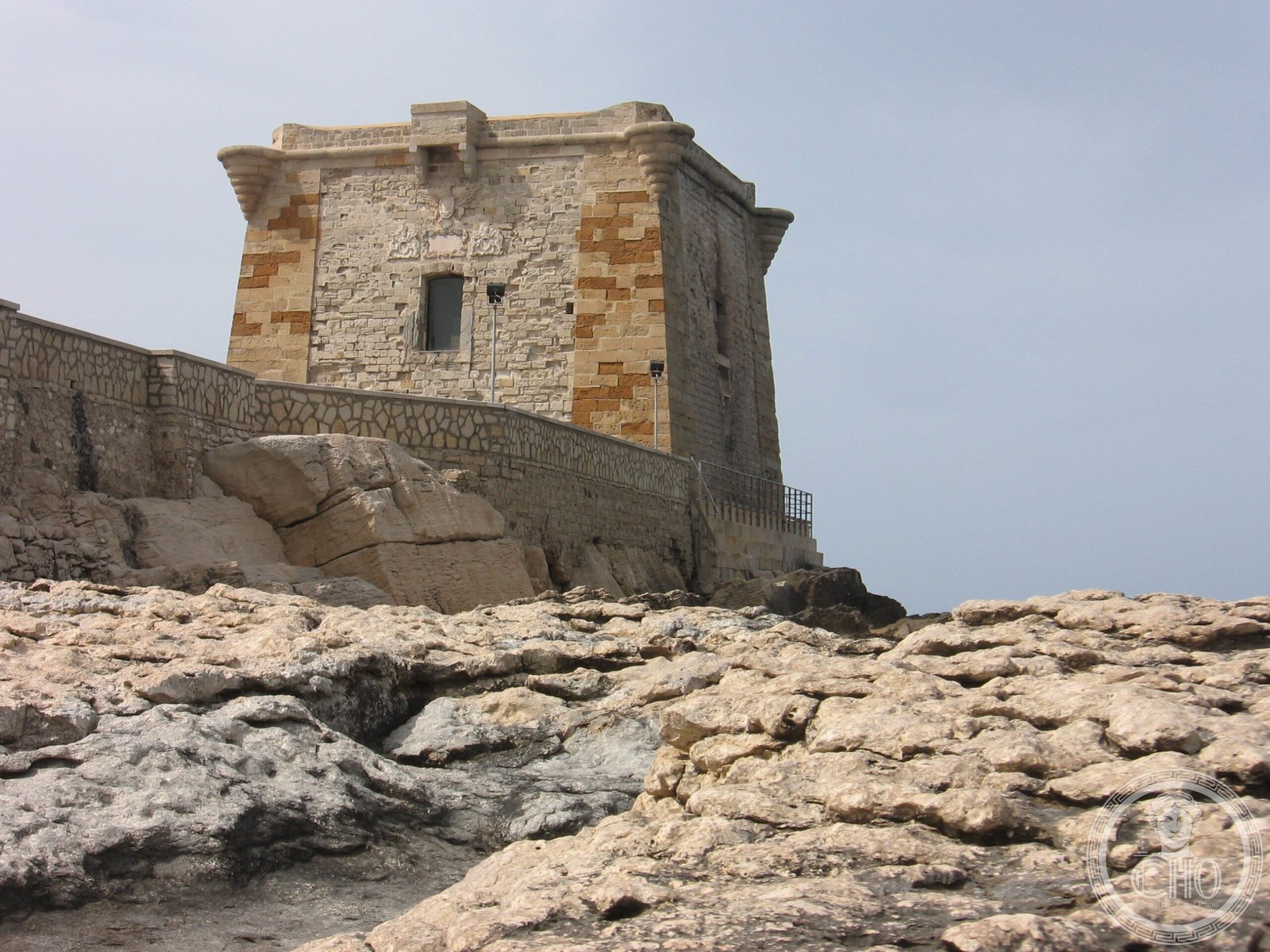
The Tower of Ligny is a 17th-century coastal watchtower at the westernmost tip of Trapani’s crescent-shaped peninsula in western Sicily, built between 1671 and 1672 to defend the city’s harbour from seaborne attack. Named after the Spanish governor who commissioned it, the tower is today in excellent condition and serves as an archaeological museum — the Civic Museum Ligny Tower — housing prehistoric, Punic, and ancient maritime finds excavated from the surrounding sea and coastline.
- Type
- Coastal watchtower and civic archaeological museum
- Period
- Built 1671–1672 under Spanish rule of Sicily
- Style
- Military tower architecture; Spanish colonial fortification
- Location
- Via Torre di Ligny, 91100 Trapani TP, Sicily, Italy
- Coordinates
- 38.0195° N, 12.4971° E
- Current use
- Civic Archaeological Museum (Museo Civico Torre di Ligny)
At a glance
- Type
- Coastal watchtower / civic archaeological museum
- Period
- 1671–1672
- Style
- Spanish Baroque military fortification
- Location
- Punta Ligny, westernmost tip of Trapani peninsula, Sicily, Italy
Overview
Torre di Ligny stands at the far western extremity of Trapani’s distinctive peninsula, where the Tyrrhenian Sea and the Mediterranean meet. Its position gave it complete visual command of the approaches to Trapani’s port, one of the most strategically important harbours in the central Mediterranean throughout the early modern period. The tower now serves a peaceful purpose as the home of Trapani’s civic prehistoric and underwater archaeological collection, making it one of Sicily’s few museums where the building itself is an exhibit.
History
The tower was constructed in 1671–1672 on the orders of the Prince of Ligny, then Spanish Governor of Sicily, at a time when coastal piracy and Ottoman naval activity made the western Sicilian coast particularly vulnerable. Its robust square form with battlement top was designed for cannon emplacements overlooking the sea. After the end of the Spanish viceroyalty the tower passed through various uses, including a lighthouse function, before being restored and converted into a museum by the Municipality of Trapani in the latter decades of the 20th century.
What you see
The museum collection housed within the tower focuses on prehistoric finds from the Trapanese area — including obsidian tools and Bronze Age ceramics — and a significant group of artefacts recovered from the seabed, among them ancient anchors, amphoras, and remnants of Punic and Roman vessels that sank in the waters off Trapani. The tower’s exterior walls and parapet offer panoramic views of the Egadi Islands, the Sicilian saltpans, and the open sea. The building’s thick walls, cannon ports, and construction details are themselves an exhibit in 17th-century military engineering.
Cultural significance
The Ligny Tower is one of the best-preserved examples of Spanish colonial coastal fortification in Sicily and is a listed cultural heritage asset under Italian law. Its location at the convergence of two seas, together with the maritime archaeological collection inside, make it a key point for understanding Trapani’s millennia-long role as a crossroads of Mediterranean trade and conflict.
Practical information
The Civic Museum Ligny Tower is managed by the Municipality of Trapani. Opening hours and admission fees vary seasonally. Check the official Comune di Trapani website or contact the museum directly for current schedules before visiting. The museum is generally closed on Mondays.
Getting there
The tower is located at the westernmost point of the Trapani peninsula, reachable on foot from the city centre in approximately 15–20 minutes along the seafront promenade. From Trapani’s main train and bus station, walk west along Via Fardella and continue to the waterfront. No dedicated parking at the tower itself, but street parking is available along the promenade.
Sources & resources
See the place
Find it on the map
See this place and what’s around it →📷 Become a Cultural Heritage Online photographer
Share your photos of places: they stay published under your name as the author. The more they're seen, the more you get noticed — and soon a contest will reward the most appreciated photos.
Log in or sign up free to add a photo