
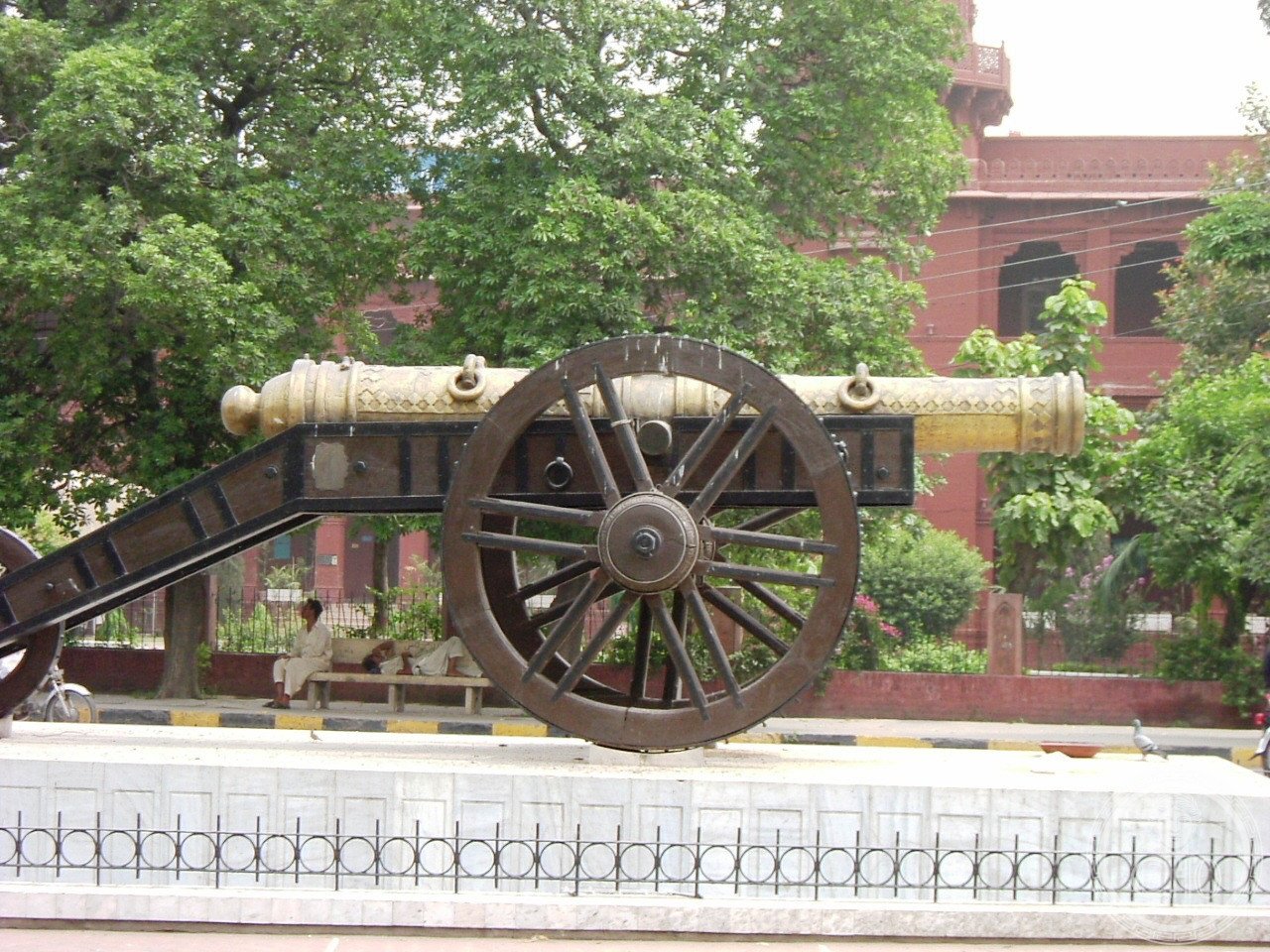
The Lahore Museum is one of the oldest and most important museums in South Asia, founded in 1865 during the British colonial period and housed since 1894 in a monumental Indo-Saracenic building on The Mall, Lahore’s ceremonial boulevard. Its collections span five millennia of civilisation in the Indus Valley and the broader Indian subcontinent, with particular distinction in Gandharan Buddhist sculpture, Mughal miniature painting, and decorative arts of the Punjab. The museum is immortalised in English literature as the “Wonder House” described in the opening pages of Rudyard Kipling’s novel Kim.
At a glance
- Type
- National general collection museum
- Period
- Founded 1865; current building opened 1894
- Style
- Indo-Saracenic Revival (Mughal-Gothic fusion)
- Location
- The Mall, Lahore, Punjab, Pakistan
- Coordinates
- 31.5684° N, 74.3059° E
Overview
The Lahore Museum is administered by the Government of Punjab and is considered Pakistan’s premier cultural repository. Its encyclopedic collections encompass Gandharan sculpture, Mughal and Pahari miniature paintings, Islamic calligraphy, arms and armour, coins and seals, natural history specimens, and ethnographic objects from across the Punjab and neighbouring regions. The museum also holds artefacts from excavations at Harappa and Mohenjo-daro, two of the defining sites of the Indus Valley Civilisation, making it an essential destination for understanding the deep prehistory of South Asia.
History
The museum traces its origins to the Punjab Exhibition of 1864, which brought together natural and industrial products from across the region; a permanent collection was established the following year. Lockwood Kipling, father of Rudyard Kipling, served as principal of the Lahore School of Art and as the museum’s curator from 1875 to 1893, significantly shaping its collections and display practices. The purpose-built Indo-Saracenic building on The Mall, designed by Bhai Ram Singh under the supervision of Lockwood Kipling, opened in 1894. After partition in 1947, the museum became a national institution of Pakistan and has since been substantially expanded and reorganised.
What you see
The museum’s most celebrated holding is the Fasting Siddhartha, a Gandharan schist sculpture of the 2nd–3rd century CE depicting the emaciated Buddha in a state of advanced asceticism — among the most powerful and reproduced images in South Asian art. The Gandharan galleries more broadly display Buddhist narrative friezes, bodhisattva figures, and architectural ornaments recovered from monasteries and stupas across the ancient Gandhara region (modern Khyber Pakhtunkhwa and eastern Afghanistan). Mughal miniatures, illustrated manuscripts, and Sikh court paintings form another highlight, along with the famous Zamzama cannon immortalised in Kim, displayed outside the main entrance.
Cultural significance
The Lahore Museum holds a position in South Asian cultural consciousness comparable to that of the British Museum in European heritage discourse — a 19th-century encyclopedic institution shaped by colonial collecting but now serving as the primary custodian of indigenous heritage. Its Gandharan collection is recognised globally as among the finest outside the Kabul Museum and British Museum, documenting the remarkable fusion of Hellenistic and Buddhist artistic traditions that flourished in the region between the 1st and 5th centuries CE. Rudyard Kipling’s description of the museum as the “Wonder House” in Kim (1901) has made it one of the few South Asian institutions with a significant profile in Western literary culture.
Practical information
- Address
- The Mall (Shahrah-e-Quaid-e-Azam), Lahore, Punjab 54000, Pakistan
- Opening hours
- Check official website for current hours; closed on some national holidays
- Admission
- Ticketed; reduced rates for students and children
Getting there
The museum is located on The Mall in central Lahore, one of the city’s principal thoroughfares. It is accessible by Lahore Metro Bus (stop: GPO Chowk or Lakshmi Chowk area) and by auto-rickshaw or taxi from any part of the city. Lahore is served by Allama Iqbal International Airport, with direct connections to Middle Eastern hubs and several European cities. From the airport, the museum is approximately 20–30 minutes by taxi depending on traffic.
Sources & resources
See the place
Find it on the map
See this place and what’s around it →📷 Become a Cultural Heritage Online photographer
Share your photos of places: they stay published under your name as the author. The more they're seen, the more you get noticed — and soon a contest will reward the most appreciated photos.
Log in or sign up free to add a photo