
Oliewenhuis Art Museum
Oliewenhuis Art Museum is a public art museum housed in a Cape Dutch Revival residence set within a landscaped garden in the northern suburbs of Bloemfontein, Free State. Established in 1956, it forms part of the National Museum group and holds an important collection of South African art spanning two centuries, from colonial-era paintings to contemporary works by artists from across the country. Its tranquil parkland setting — planted with indigenous trees including the wild olive trees from which it takes its Afrikaans name — makes it one of the most distinctive museum environments in southern Africa.
At a glance
- Type
- Public art museum affiliated to the National Museum, Bloemfontein
- Period
- Building erected c. 1941–1943; opened as museum in 1956
- Style
- Cape Dutch Revival architecture; landscaped heritage garden
- Location
- Bloemfontein, Free State, South Africa
Overview
Oliewenhuis — meaning “olive tree house” in Afrikaans — is named for the wild olive trees (Olea europaea subsp. africana) that grow throughout its extensive grounds. The museum presents a broad survey of South African fine art and craft, with particular strength in landscapes, portraiture, and works by artists associated with the Free State. It also hosts a rolling programme of temporary exhibitions, workshops, and cultural events that make it an active hub for the arts in central South Africa.
History
The house at Oliewenhuis was built in the early 1940s as a residence and was subsequently acquired by the National Museum in Bloemfontein, which opened it to the public as an art museum in 1956. The building’s Cape Dutch Revival style — characterised by its whitewashed walls, thatched roof, and gabled façade — reflects the architectural vocabulary of 20th-century Afrikaner cultural institutions. Over the following decades, the collections grew to encompass works from across the full history of South African art, including significant acquisitions of contemporary and post-apartheid art.
What you see
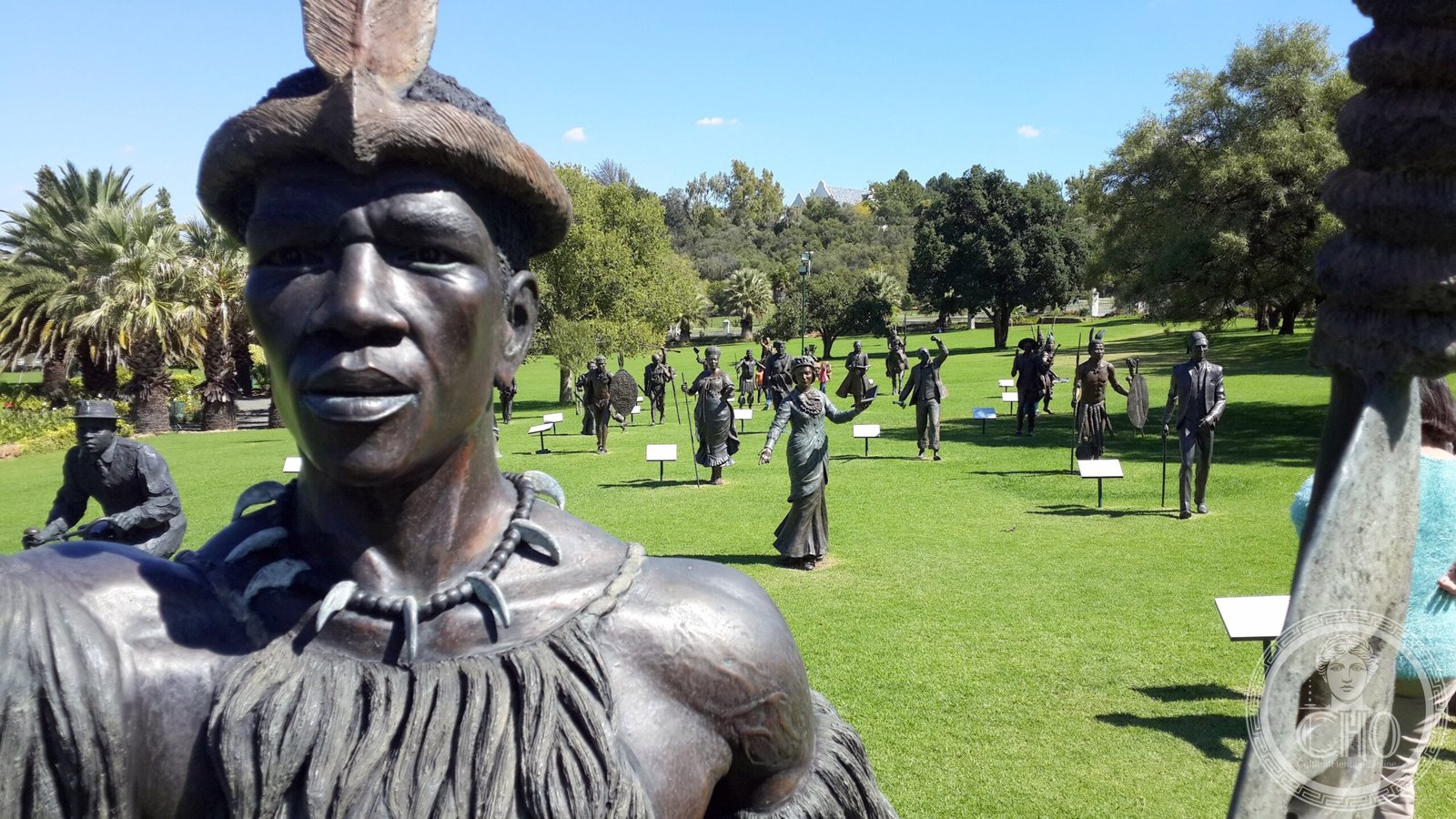
The museum’s galleries display paintings, sculptures, prints, drawings, and decorative art objects representing the diverse traditions of South African artistic production. Highlights include 19th-century landscape paintings of the Free State plains, figurative and abstract works by mid-20th-century South African modernists, and a growing collection of works by Black South African artists whose contributions to national cultural life are now being more fully recognised. The gardens surrounding the house are themselves a significant attraction, featuring indigenous plantings, sculpture installations, and walking paths through mature woodland.
Cultural significance
Oliewenhuis occupies a distinctive position in the South African museum landscape as an institution embedded within a living natural environment. Its collections document the complex, contested history of representation in South African art, from the European-inflected traditions of the colonial period to the assertive contemporary voices that have emerged since 1994. As Bloemfontein’s primary dedicated art venue, it plays an essential role in supporting artists, educators, and communities across the Free State and beyond.
Practical information
- Address
- 16 Harry Smith Street, Bloemfontein, 9301, South Africa
- Coordinates
- 29.0986° S, 26.2176° E
- Opening hours
- Check official website for current hours
- Admission
- Check official website for current fees
Getting there
Bloemfontein is served by Bram Fischer International Airport. Oliewenhuis is located approximately 4 km north of the city centre on Harry Smith Street, in a quiet residential area. It is best reached by car or taxi; the garden grounds are ample enough to make a half-day visit worthwhile combined with other Bloemfontein heritage sites such as the nearby Anglo-Boer War Museum.
Sources & resources
Find it on the map
See this place and what’s around it →📷 Diventa un fotografo di Cultural Heritage Online
Condividi le tue foto dei luoghi: restano pubblicate con la tua firma come autore. Più vengono viste, più ti fai conoscere — e presto un concorso premierà le foto più apprezzate.
Accedi o registrati gratis per aggiungere una foto