
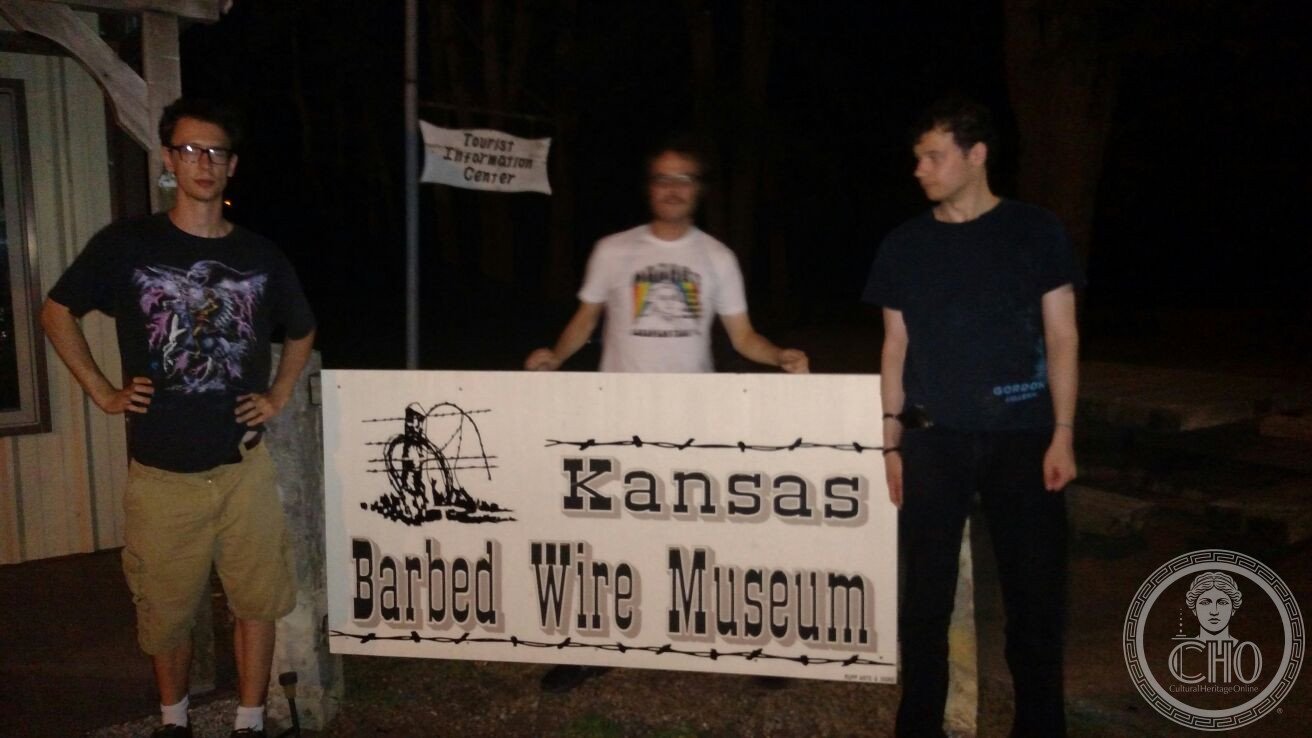
The Barbed Wire Museum in La Cygne or LaCrosse, Kansas, USA (38.524° N, -99.313° W), is a specialist museum dedicated to the history, manufacture, and cultural impact of barbed wire — the industrial fencing technology that transformed the American West in the late 19th century. The museum holds one of the largest collections of barbed wire designs in the world, documenting the hundreds of patents and variants that reshaped ranching, land ownership, and the landscape of the Great Plains.
At a glance
- Type
- Specialty history museum — barbed wire and agricultural heritage
- Period
- Objects and patents primarily from 1867 to early 20th century; museum established 20th century
- Style
- Regional history museum in a rural Kansas community
- Location
- Rush County, Kansas, USA
- Coordinates
- 38.5246° N, 99.3138° W
Overview
Barbed wire may seem an unlikely subject for a museum, but it stands as one of the most consequential technological inventions in American history. When Joseph Glidden patented his design in 1874, inexpensive fencing became possible for the first time on the treeless Great Plains, fundamentally restructuring land use, cattle ranching, and conflict between settlers and ranchers. The Barbed Wire Museum in Kansas preserves this history through an extraordinary collection of wire samples, tools, documents, and artefacts from the fencing industry’s formative decades.
History
The story of barbed wire begins in 1867, when Lucien Smith filed the first patent for a pronged wire fence, and accelerates with Glidden’s commercially successful double-strand design of 1874. Within a decade, hundreds of competing manufacturers had produced over 500 distinct barbed wire designs, each with minor variations in strand configuration, barb shape, and spacing — all of which were meticulously documented in US patent records. The introduction of barbed wire effectively ended the era of open-range cattle drives and catalysed the so-called Range Wars between cattlemen and homesteaders in the 1880s. Kansas, at the heart of the Great Plains cattle economy, was a natural home for an institution dedicated to this heritage.
What you see
The museum’s core display is one of the world’s largest collections of distinct barbed wire designs — sometimes described as “the Devil’s Rope” — showing the remarkable variety of 19th-century patent designs mounted on wooden boards for comparison. Additional exhibits cover the tools used to string and cut wire, the social and legal history of fencing disputes on the Plains, and the broader transformation of the American agricultural landscape. Photographs, documents, and period equipment contextualise the technical collection within the human story of Plains settlement.
Cultural significance
The museum is recognised as a leading institution for the documentation of American agricultural and frontier heritage. Barbed wire collecting is an active hobby in the United States, and the museum serves as a reference point for collectors, historians, and educators interested in the material culture of the 19th-century West. Its collection illustrates how a single industrial innovation can profoundly reshape society, landscape, and law.
Getting there
The museum is located in rural north-central Kansas. The nearest commercial airport is Salina Regional Airport (SLN), approximately 50 km to the east. The area is best reached by car via US-183 or I-70. There is no regular public transport service to this part of Kansas; a rental car from Salina or Wichita is the most practical option for most visitors.
Sources & resources
See the place
Find it on the map
See this place and what’s around it →📷 Become a Cultural Heritage Online photographer
Share your photos of places: they stay published under your name as the author. The more they're seen, the more you get noticed — and soon a contest will reward the most appreciated photos.
Log in or sign up free to add a photo