
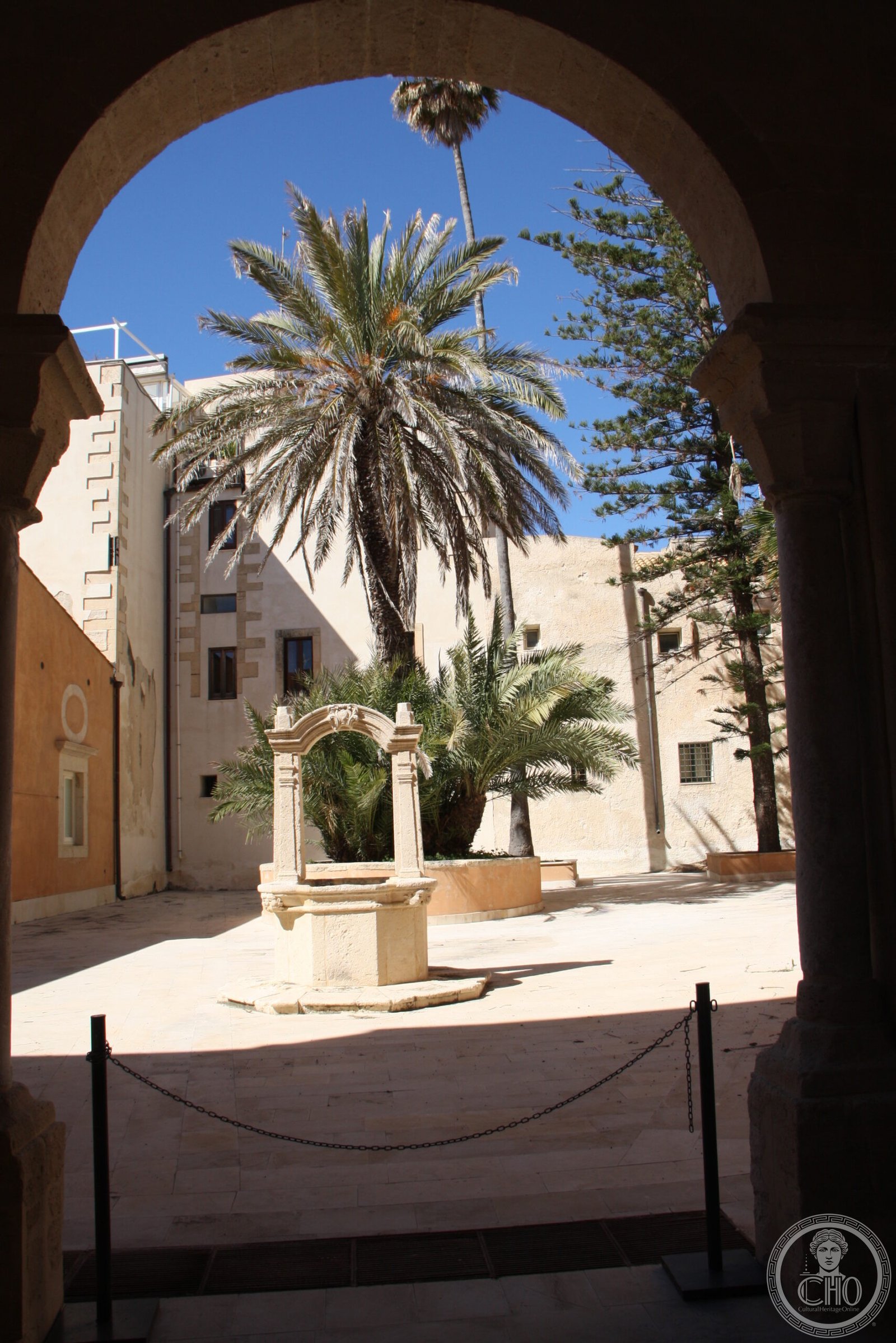
The Corrado Basile Papyrus Museum in Syracuse, Sicily, is a specialist institution dedicated to the study, conservation, and public communication of papyrus culture and its central role in the history of civilisation. Founded in 1987 by scholars Corrado Basile and Anna Di Natale, it is managed by the International Papyrus Institute, a non-profit cultural body, and is unique in Europe for its focus on the papyrus plant native to the Ciane river near Syracuse.
At a glance
- Type
- Specialist museum of papyrus and writing heritage
- Period
- Founded 1987
- Style
- Thematic museum with scientific and historical collections
- Location
- Via Nizza 14, 96100 Siracusa, Sicily, Italy
- Coordinates
- 37.0604° N, 15.2981° E
Overview
The museum is managed by the International Papyrus Institute (Istituto Internazionale del Papiro), a non-profit institution with legal personality. Its mission encompasses recovery of papyrus artefacts, documentation of papyrus use across different populations, and research into ancient manufacturing techniques. The institution is particularly engaged in the protection of wild papyrus along the Ciane river, one of the few places outside Africa where Cyperus papyrus grows naturally.
History
Papyrus has grown along the Ciane river and the springs of Aretusa in Syracuse since antiquity, an anomaly that gave the city a unique relationship with the material that underpinned ancient Mediterranean literacy. Corrado Basile and Anna Di Natale founded the museum in 1987 to formalise research that had been ongoing for years around this local botanical and historical curiosity. Their work bridged botany, Egyptology, and the history of writing, and the institution they created became a reference point for international scholarship on papyrus technology and conservation.
What you see
The museum’s collections illustrate the full lifecycle of papyrus — from the living plant to finished documents — through specimens, reproductions of ancient manufacturing tools, and examples of papyrus sheets produced using reconstructed ancient techniques. Displays cover the role of papyrus in Egyptian, Greek, and Roman civilisations, with attention to its use as a writing support, a material for baskets and boats, and a dietary plant. Research archives document the papyri of the Ciane valley and the museum’s ongoing conservation interventions.
Cultural significance
The Ciane papyrus stands as a living link between Sicily and the ancient Mediterranean world, and the museum is the only institution in Europe dedicated exclusively to this heritage. By combining botanical conservation with historical research and hands-on demonstrations, it preserves knowledge of a craft and a plant that shaped the intellectual history of the Western world.
Practical information
- Address
- Via Nizza 14, 96100 Siracusa (SR), Sicily, Italy
- Hours
- Check official website for current opening times
- Admission
- Check official website
- Website
- museodelpapiro.it
Getting there
The museum is located in central Syracuse on Via Nizza, within walking distance of the Ortygia island historic centre. Syracuse is served by Catania–Fontanarossa Airport (approximately 60 km), with bus and train connections to the city. Local AST buses and taxis connect the station to the city centre.
Sources & resources
See the place
Find it on the map
See this place and what’s around it →📷 Become a Cultural Heritage Online photographer
Share your photos of places: they stay published under your name as the author. The more they're seen, the more you get noticed — and soon a contest will reward the most appreciated photos.
Log in or sign up free to add a photoIs this page about you?
This page is read by travellers and heritage enthusiasts who find it on Google. Tell us how you are connected to this place and we will take it from there.