
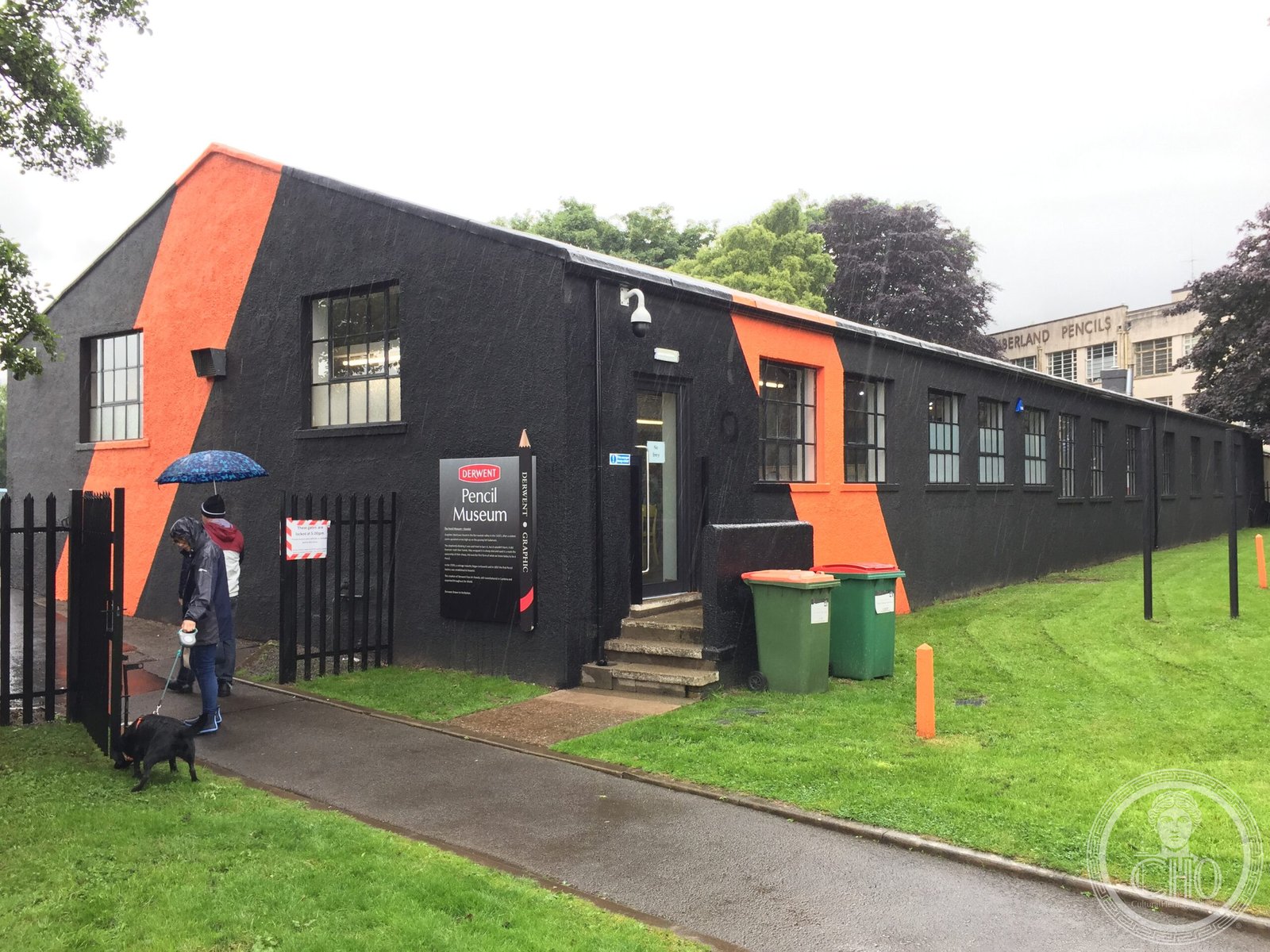
The Derwent Pencil Museum in Keswick, Cumbria, is dedicated to the manufacturing history of pencils and the graphite deposits that made the English Lake District the birthplace of the modern pencil industry. Opened in 1981 on the site of the Cumberland Pencil Company’s Southey Works, the museum traces four centuries of craftsmanship from the discovery of Borrowdale graphite to contemporary coloured-pencil production.
At a glance
- Type
- Industrial and craft heritage museum
- Period
- Opened 1981; original factory site operational from 1832
- Style
- Converted factory building with interactive exhibits
- Location
- Southey Works, Keswick, Cumbria CA12 5NG, England
- Coordinates
- 54.6039° N, 3.1441° W
Overview
The Derwent Pencil Museum celebrates the unique industrial heritage of Keswick, a town whose history has been shaped by the discovery of the world’s purest graphite deposit in nearby Borrowdale in the 16th century. The museum receives over 80,000 visitors annually and holds one of the most comprehensive collections of pencil-making artefacts in existence. Its most celebrated exhibit is a record-breaking coloured pencil measuring 7.91 metres in length and weighing over 446 kilograms, completed in 2001.
History
The Cumberland Pencil Company established its first pencil factory in Keswick in 1832, building on a tradition of local graphite use that stretched back to the 1560s when Borrowdale shepherds first noted the black mineral’s utility for marking sheep. The current Southey Works factory was constructed in the 1920s and completed by 1950, operating as a production site until 2007 when manufacturing relocated to Workington. The museum opened in 1981 to preserve the site’s industrial legacy. A serious flood caused by Storm Desmond in December 2015 badly damaged the collection, destroying many artefacts including an irreplaceable limited-edition set; the museum reopened on 15 June 2017 after full restoration.
What you see
Visitors walk through a full-scale replica of a Seathwaite graphite mine, complete with atmospheric lighting and sound, before exploring displays of historic pencil-making machinery and hand tools spanning nearly two centuries of production. The centrepiece of the main hall is the giant 7.91-metre coloured pencil — one of the world’s largest — housed in a specially constructed display case. An extensive archive of vintage Derwent pencil tins, product catalogues, and artists’ correspondence traces the brand’s evolution from a regional manufacturer to an internationally recognised artists’ supplier.
Cultural significance
The museum is a rare example of an industrial heritage site that narrates both the geology and the craft economics of a single region: the Borrowdale graphite seam, the only commercially viable pure graphite deposit ever found in England, made Keswick the centre of the global pencil trade for two centuries. The site was featured in the BBC children’s series Come Outside in 1997 and served as a filming location for the 2012 feature film Sightseers, demonstrating its continued cultural presence.
Practical information
Address: Southey Works, Keswick CA12 5NG, England. The museum includes a gift shop stocked with Derwent pencils and art supplies. Opening hours and admission prices: check the official website at pencilmuseum.co.uk before visiting as hours vary seasonally.
Getting there
Keswick is in the northern Lake District, approximately 30 km south of Carlisle. There is no direct rail link to Keswick; the nearest station is Penrith (about 18 km east), served by trains on the West Coast Main Line. Stagecoach operates bus route X5 between Penrith and Keswick. By car, take the A66 from the M6 motorway (junction 40). The museum is signposted from Keswick town centre and has nearby public parking.
Sources & resources
See the place
Find it on the map
See this place and what’s around it →📷 Become a Cultural Heritage Online photographer
Share your photos of places: they stay published under your name as the author. The more they're seen, the more you get noticed — and soon a contest will reward the most appreciated photos.
Log in or sign up free to add a photo